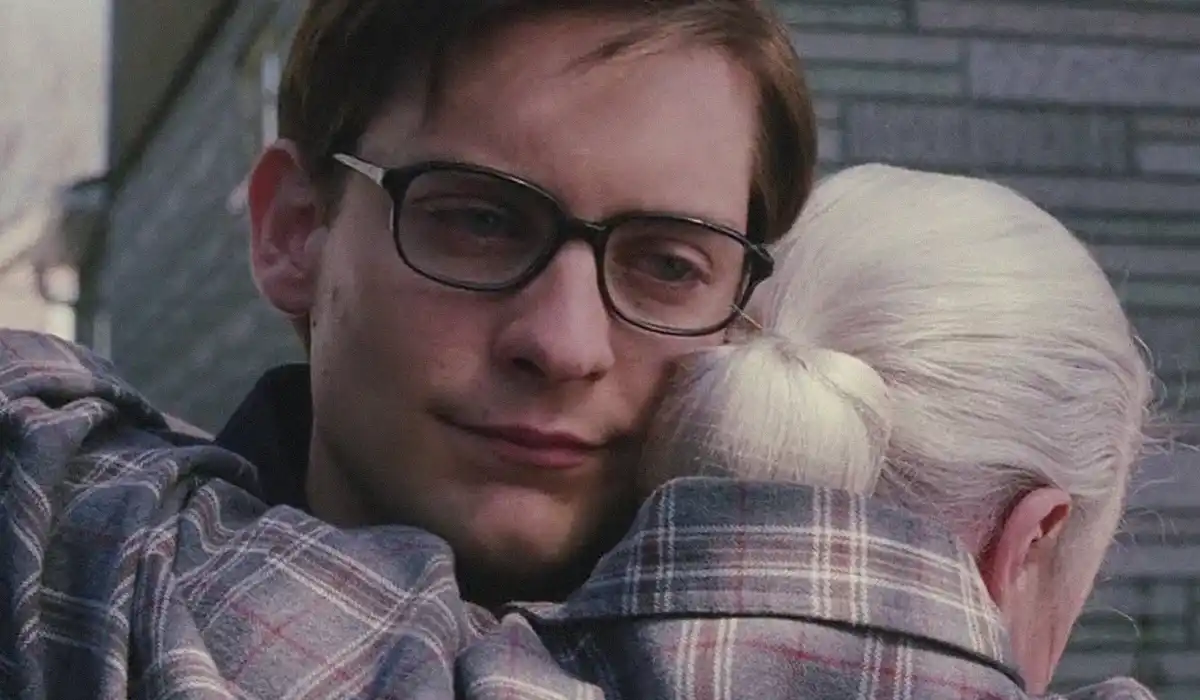
I was rewatching Spider-Man 2 the other day. The one from 2004. Aunt May lies
asleep, head down over her small dining table. Peter gentles her awake.
“Oh, what, Ben? Hmm?” She mistakes him for his uncle.
“For a second there, I thought I was years ago… Did you enjoy your party?” Everybody had left by then. Peter nods.
“You okay?”
“Of course!” May whisks him off. “But be careful, I don’t like that scooter thing you drive around.”
“I’m worried about you.” He stays seated by her at the dining table while she starts to tidy up. “I saw the letter from the bank.”
“So? I’m a little behind.” She tries her best to brush it off. “Everybody is.” She goes to her purse, and calls Peter closer.
“Here, kiddo,” with a tired smile. “Happy birthday!” She folds a weathered twenty-dollar bill into his hand. His eyes widen.
“May, I can’t take that—”
“Yes, you can!” Her voice cracks. “You can take this money from me! For god’s sake, it’s not much, now take it—” Tears swell. “—and don’t you dare leave it here!” She takes a breath and begins to fix Peter’s collar. “Oh, I’m sorry… I just miss your Uncle Ben so much…”

I paused the movie.
Maybe it’s because I hadn’t rewatched the movie in years, or because of the cosmic, world-ending scale of modern superhero movies that I had gotten used to in recent years, but this scene felt so real. This scene paints a picture of a real life, of a college student struggling to get by, frustrated that he can’t do more to help his aging aunt.
This is Spider-Man. He’s just barely keeping his head above the water while he balances part-time jobs and school and relationships and fighting crime. He isn’t an infallible beacon of hope that never wavers. Like everybody, he contemplates giving up. He asks himself why he goes on. He needs to be reminded why he’s Spider-Man.

This moment is the first of many throughout the movie that act as a tipping point for Peter. At his height of stress and panic — he can’t hold a job, he can’t keep up with rent, he can’t maintain his relationship with MJ, Aunt May is facing eviction — his powers fade. In a shot paralleling a similar moment in the comics, Peter throws away the suit. He gives up. Peter Parker is no longer Spider-Man. This moment of ultimate self-doubt is crucial to the mythology of Spider-Man, and why he is such a mainstay in American culture and identity.
In the early sixties, the Silver Age of comic books began. While the Golden Age of the late thirties and early forties saw the creation of heroes like Superman and Captain America, monolithic gods of good against evil, as the fifties crept in, these idyllic and simple superhero stories started to lose out against darker horror and crime comics. World War II was over, and audiences were no longer looking to escape into easily digestible good-guy-beats-bad-guy stories, they wanted something with depth and grit.
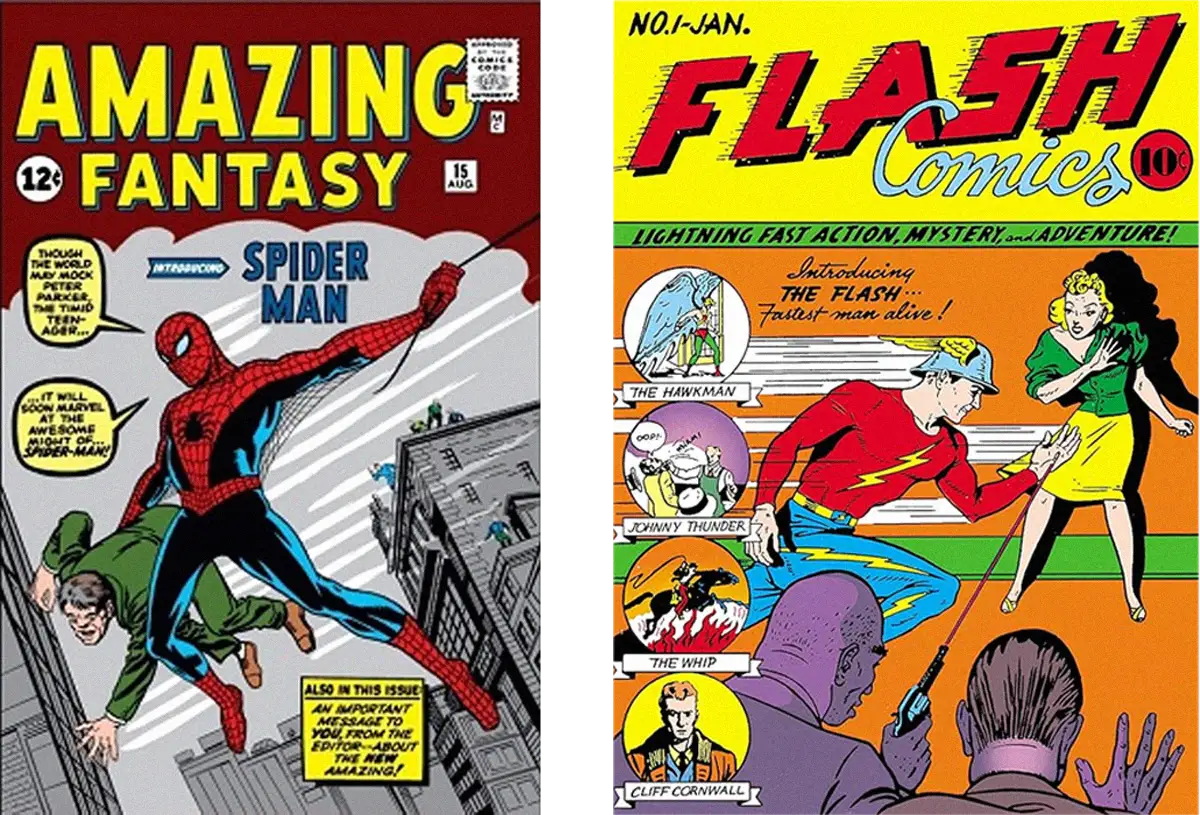
DC Comics’ release of Barry Allen as The Flash is widely considered the beginning of the Silver Age — not only because it was the first successful superhero character launch in years, but because it made the writers and artists over at Marvel — chiefly Stan Lee, Jack Kirby, and Steve Ditko — put stock in superheroes again. Marvel responded by building on the superhero format by creating characters that weren’t god-like representations of American ideals, but human.
This is when Marvel Comics exploded in popularity. A whole generation of superheroes was introduced that resonated with college students in the sixties. The hearts of anti-establishment ate up characters like Spider-Man, The Fantastic Four, and the X-Men, characters that had real emotions, real day-to-day problems, needed to pay rent, and faced discrimination. These characters didn’t always do the right things; they didn’t always make the right choices. This not only led to more interesting storytelling focused on flawed characters, but to characters that told the audience: “It’s okay to be human.”
Audiences were no longer looking for perfect heroes who upheld societal ideals. They were looking for heroes that were just like them, everyday beacons to look up to. It’s easy to fight Nazis. It’s not so easy to make rent. If the odds in your day-to-day life were stacked against you, a simple reminder that Spider-Man was able to get through it might have been the push you needed to get through the day.

Just like Spider-Man, there’s going to be the voice in my head that tells me to give up. Maybe I’ll start to listen to it. Maybe I’ll start missing days at work, maybe I’ll start to fall behind on rent, maybe I’ll start pulling away from the person I love, because the weight of my life is becoming too much on me. The cost of living is rising constantly. As I seemingly work more and more, the dollars I’m earning are stretching less and less. The news that I tune into speaks only of insurmountable evils that I can’t even begin to comprehend yet am seemingly surrounded by. How did Spider-Man push through it? Is he just stronger than I am?
I unpaused the movie. I watched a powerless Peter give up under the weight of it all, and towards the end (before the obligatory final battle), he goes to visit May again. She’s moving out of her house in Queens, getting ahead of the eviction notice.
“Why didn’t you tell me?” Peter asks her.
“I’m able to take care of things myself. And Henry Jackson across the street is giving me a hand, and I’m giving him five dollars.” She laughs. Henry runs up to Peter. “You take Spider-Man’s pictures, right?”
Peter shuffles awkwardly. “I used to.”
“Where is he?” Henry asks. Trying to come up with some kind of a cover, Peter fumbles an excuse.
“He, uh, quit. Wanted to try different things.”
It’s here where May delivers a speech that, to me, is not only the heart of this movie, but the heart of why Spider-Man persists as the great American superhero. I’ll let her speak for herself.
“You’ll never guess who he wants to be… Spider-Man! He knows a hero when he sees one. Too few characters like that… saving old girls like me. Lord knows, kids like Henry need a hero. Courageous, self-sacrificing people, setting examples for all of us. Everybody loves a hero. People line up for them, cheer them, scream their names, and years later they’ll tell how they stood in the rain for hours just to get a glimpse at the one who taught them to hold on a second longer.
“I believe there’s a hero in all of us. That keeps us honest, gives us strength, makes us noble, and finally allows us to die with pride, even though sometimes we have to be steady and give up the thing we want the most. Even our dreams. Spider-Man did that for Henry, and he wonders where he’s gone. He needs him.”
The reality is, Spider-Man is not just Peter Parker. Without Aunt May, without the people in his life that love him, without the people of New York City literally holding him up when he’s at his lowest, there is no Spider-Man. He is a beacon of community. A friendly neighborhood Spider-Man.
He’s a hero that we in real life look to for inspiration because he’s just like us, but since he’s just like us, he’s nothing without the people around him. Throughout the movie, he turns away from Aunt May, from his best friend Harry, from MJ. He isolates himself from the source of his power, literally draining himself of his abilities. Only when he realizes this, when he realizes that strength comes from your community, does he regain his powers, and, of course, save the day.
We’re pulled away from each other a lot today. In our own bubbles of worry and self-doubt. In moments of powerlessness, of not knowing how to go on, maybe the answer goes back to the same thing I would’ve said when I was six years old, drawing silly little pictures and watching this same movie: “Maybe, we just have to be more like Spider-Man.”
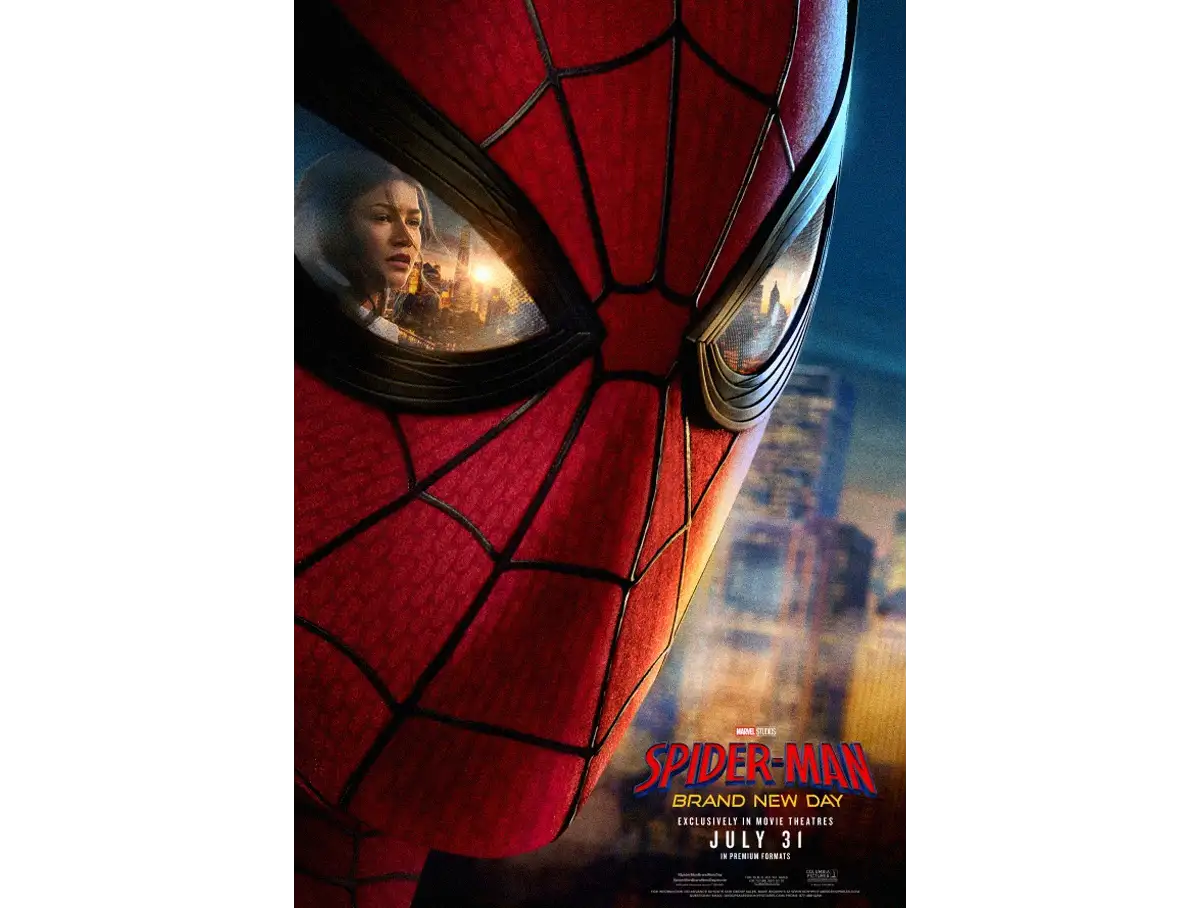
This leaves us in an interesting place for the latest Spider-Man movie — Brand New Day, the start of a supposed new Spider-Man trilogy within the MCU. Gone is the Tony Stark-backed high schooler getting sucked up into cosmic, Avengers-level threats. Hello Peter Parker the college student, behind on his bills, struggling to get by. Perfect. Now THAT’S my Spider-Man. Only this time around, Peter doesn’t have his community to keep himself up. Aunt May is gone, MJ and Ned don’t remember him, no one does. There is no Peter Parker.
The big question — for me at least — is how is Peter going to grapple with having no one in his life? Without any reminders of why he keeps going, this new Spider-Man movie has the potential to be a return to form for the character. A return to the Raimi era, small-scale, street-level Spider-Man. Not fighting Thanos on a different planet but keeping up with crime in New York City while balancing his regular life. The big question isn’t “Will Spider-Man save the universe?” but “Will Spider-Man discover what being a hero means?” There we go.