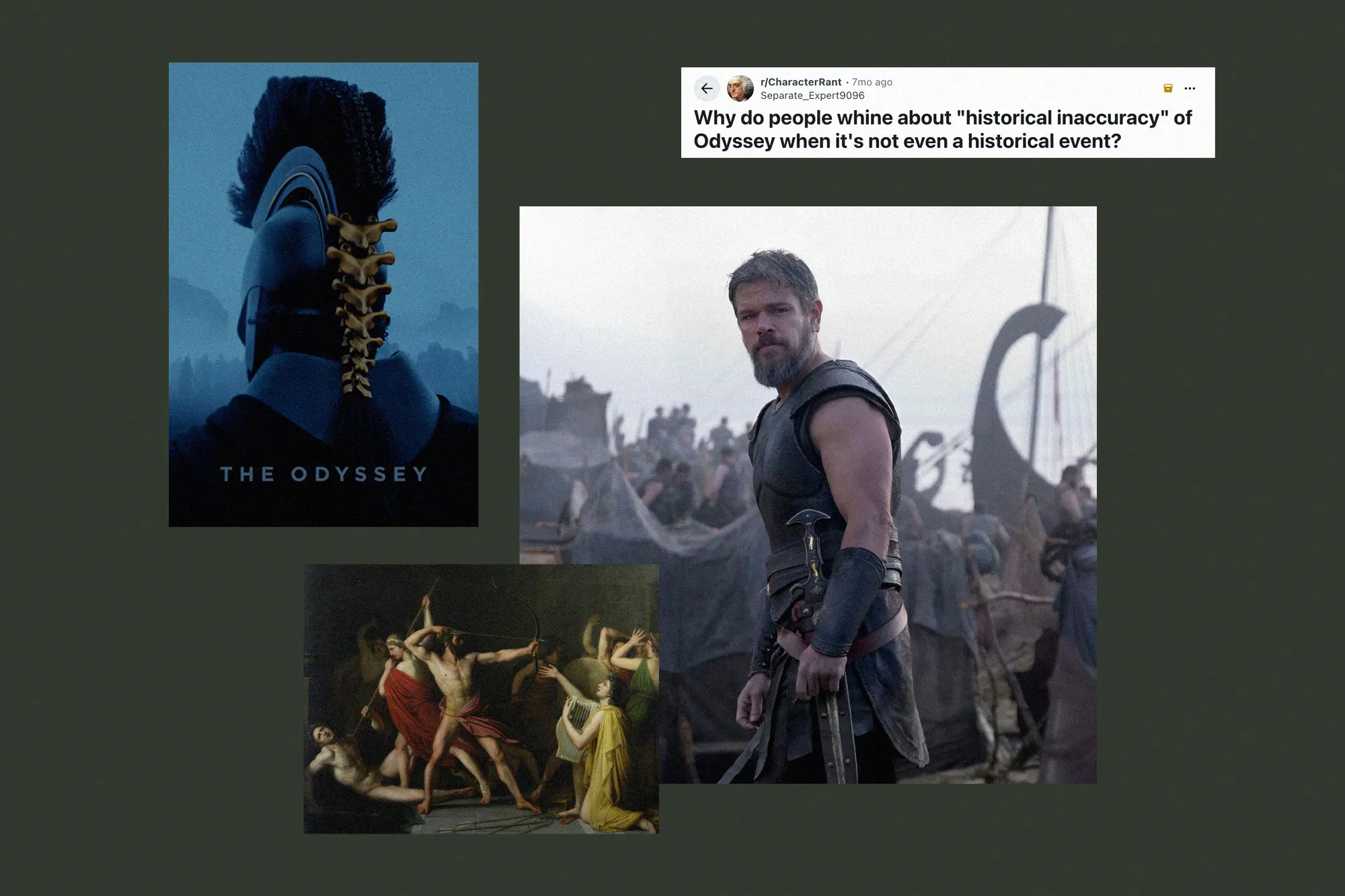
When it was announced in December of 2024 that the filmmaker Christopher Nolan was tackling Homer’s The Odyssey, there were many skeptics, myself included. How could a director possibly compress one of the oldest and most influential pieces of literature in the Western world into a three-hour film? This was nothing short of a heraclean task fit for only the bravest—or, depending on your view, foolish among us.
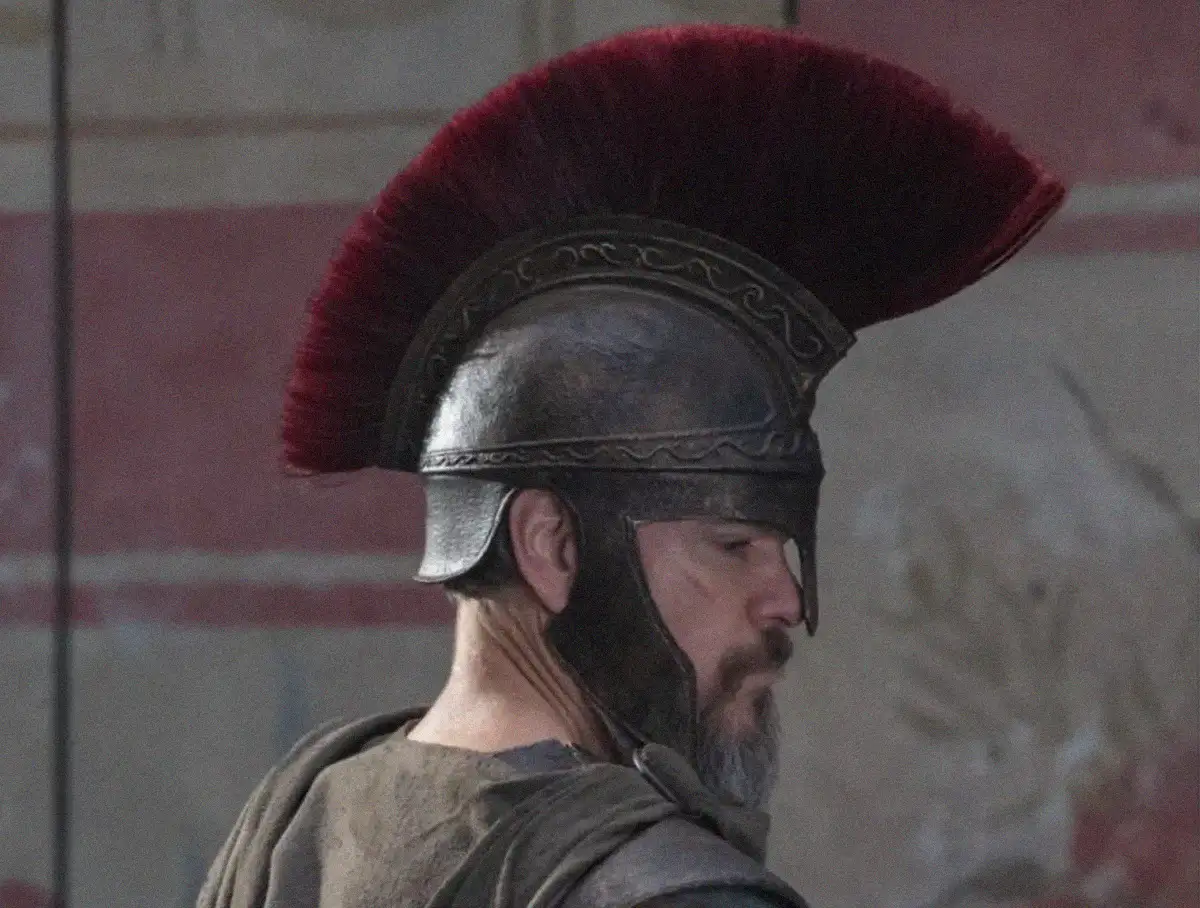
Then, in February of 2025 a poster of Matt Damon as Odysseus was released, and the internet went wild again—this time over “historical accuracy.” Damon's plumed helmet, borrowing from Corinthian or Galea (late Roman) styles, stood in stark contrast to his boar tusk helmet as described by Homer: “the outside was cleverly adorned all around with rows of white tusks from a shiny-toothed boar, the tusks running in alternate directions in each row.” The camps were split as historians and film bros debated Mycenaean accuracy versus stylization and anachronistic relatability. The argument ramped up yet again when the full cast and trailer were released later that year. While professional and amateur historians dissected the historical realities of the Bronze Age (often merged with the Age of Heroes), film lovers emphasized the poem’s mythological nature (a word hotly thrown around in this debate), declaring period accuracy insignificant.
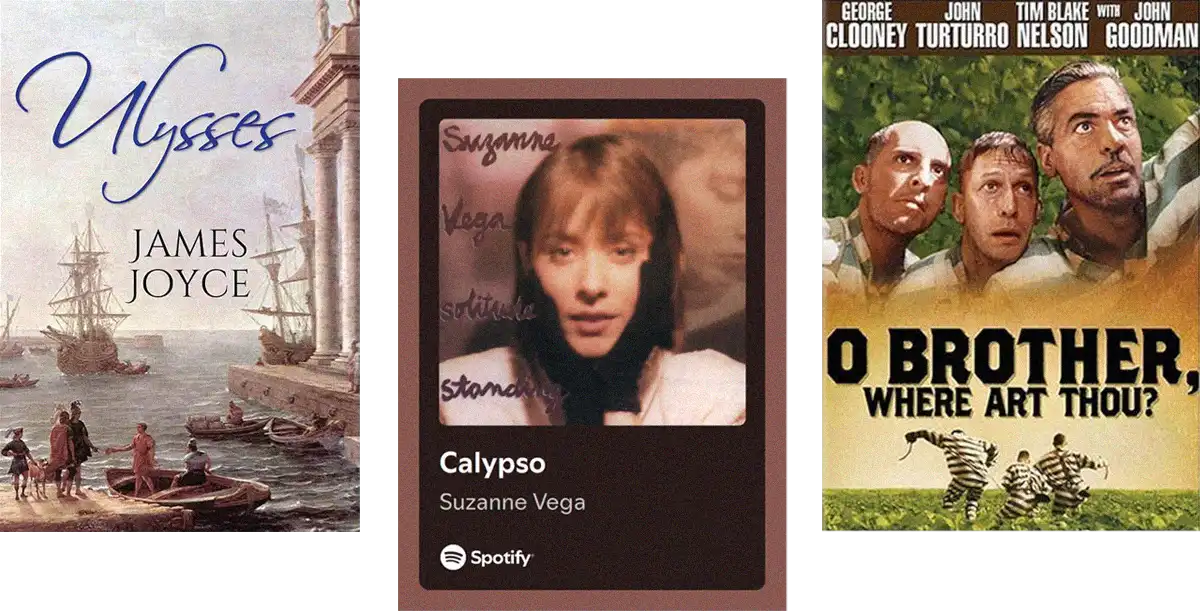
Zooming out a little, it’s impossible not to see that stories like Homer’s have become so embedded in modern pop culture—from film to music to literature—that their origins aren't always immediately recognizable. Think James Joyce's Ulysses, Suzanne Vega's song “Calypso,” or O Brother, Where Art Thou?, to name only a few. These mutations and new adaptations not only demonstrate the enduring appeal of Greek myth, but also speak to one of the existential questions of our time: is anything truly original anymore?
From growing up reading mythology, and later studying Greek theatre, I was among the skeptics who doubted the project from the start. Even after the film earned over 250 million dollars at the box office this past weekend, I'm still not entirely convinced by Nolan's vision. But my perspective on where “accuracy” can be found has shifted. By flattening Homer’s epic into a black-and-white battle over historical accuracy versus cinematic spectacle, we may be missing the point of The Odyssey entirely. Homer's epic chronicles Odysseus' battles with gods, monsters, and ultimately his own pride as he journeys home after the Trojan War. The story asks what it means to attempt the impossible, and what we become in the process of trying.
In fact, when I set out to approach this piece, I thought I’d find the answers. Scrolling through Instagram feeds, Bronze Age history sites, and flicking through folders of research, I thought I’d find a definitive answer to who was “correct” and why. I thought, by writing this piece, I’d fully grasp where I stand in the debate, and if our latest cinematic spectacle could ever match the historical realities of the Ancient Greeks. But all of that went out the window as I did some digging. The deeper I went, I found myself mythologizing myth itself and realised how little we can know with certainty about Homer’s world. We can argue over helmets and ships, but the irony is that much of the ancient record is fragmentary. So instead of trying to plant a flag of “truth,” I want to sketch a few of the worlds behind The Odyssey and invite you to decide where you sit within this debate. Here's a quick reintroduction to the ancients.

A Brief History of Homer’s World
The history of the ancient Greek world stretches across several millennia, from the Bronze Age civilizations of the Aegean to the Roman conquest of Greece in the second century BCE. Scholars often date “ancient Greece” from roughly 3000-30 BCE. The epic poems The Iliad and The Odyssey are believed to have been first recorded around 800-700 BCE. While these stories look back to a mythic Late Bronze Age, or ‘Age of Heroes,’ they came in at the tail end of the Greek Dark Age and into the Archaic period. While Homer is often credited as the sole author, these stories grew out of oral traditions and the various translations of the text which we now have access to are all adaptations of a millennia-old story that was told and passed down for generations before it was ever written down. This then brought in the Archaic period c. 750-490 BCE, which saw mythology flourish. It wasn't until the Classical period in c. 490-323 BCE that older myths were further developed and reinterpreted by popular playwrights such as Euripides and Sophocles, alongside the historian Herodotus, who often blended mythology and history.
What “Mythology” Actually Is
Mythology granted ancient communities a way to explain the world around them, becoming a belief system that shaped everyday life through spoken traditions passed down within families and cities. It is not limited to the ancient Greeks; it was preceded by the mythic traditions of the ancient Egyptian and ancient Sumerian peoples (southern Mesopotamia, now modern-day Iraq), which were already flourishing by around 4000 BCE. While “mythology” is the most widespread English word to describe this phenomenon, other cultures have their own words to describe it, such as the Maya’s Popol Vuh and the Japanese’s Shinto (神道).
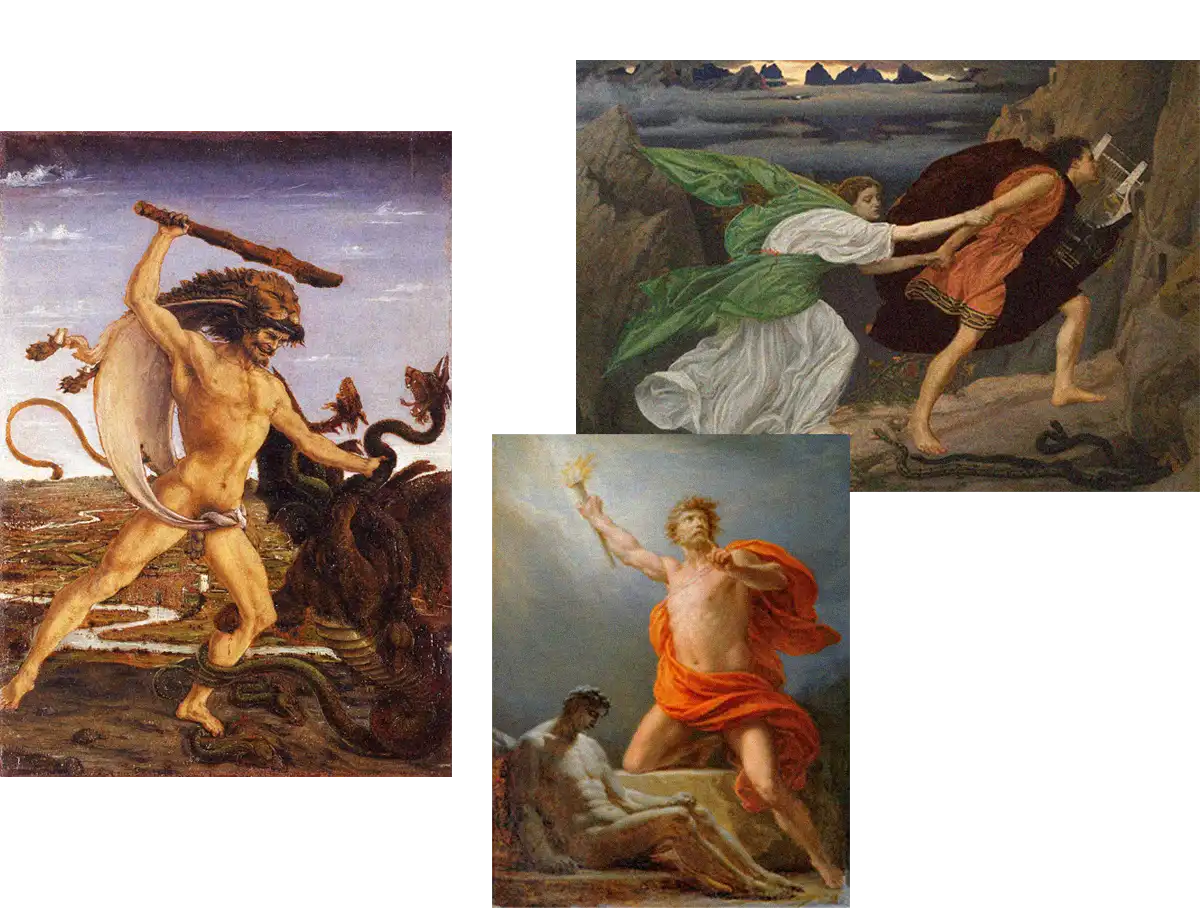
The English word mythology, however, is the term most commonly used in Western vernacular. Mythology itself is derived from the Greek word mythologia (μυθολογία) and is comprised of two words, mythos (μῦθος) and logos (λόγος). When separated, mythos means story or myth, and logos means word or speech; together, they can be understood as the “spoken story of a people.” Just as the classics we know and love today often reflected the sociological circumstances of their author’s eras, the twelve labours of Heracles, the tragedy of Orpheus and Eurydice, and the rebellion of Prometheus reflected the burgeoning culture shifts around the Ancient Greeks. These stories weave in fantastical elements, dramatizing everyday problems and anxieties so that people could make sense of the world through symbolism and metaphor. These stories have become familiar to us through adaptations, retellings, and explicit citations, illustrating the consistent appeal of Greek myth as something larger than ourselves.
Myth as Lived Performance–Greek Theatre
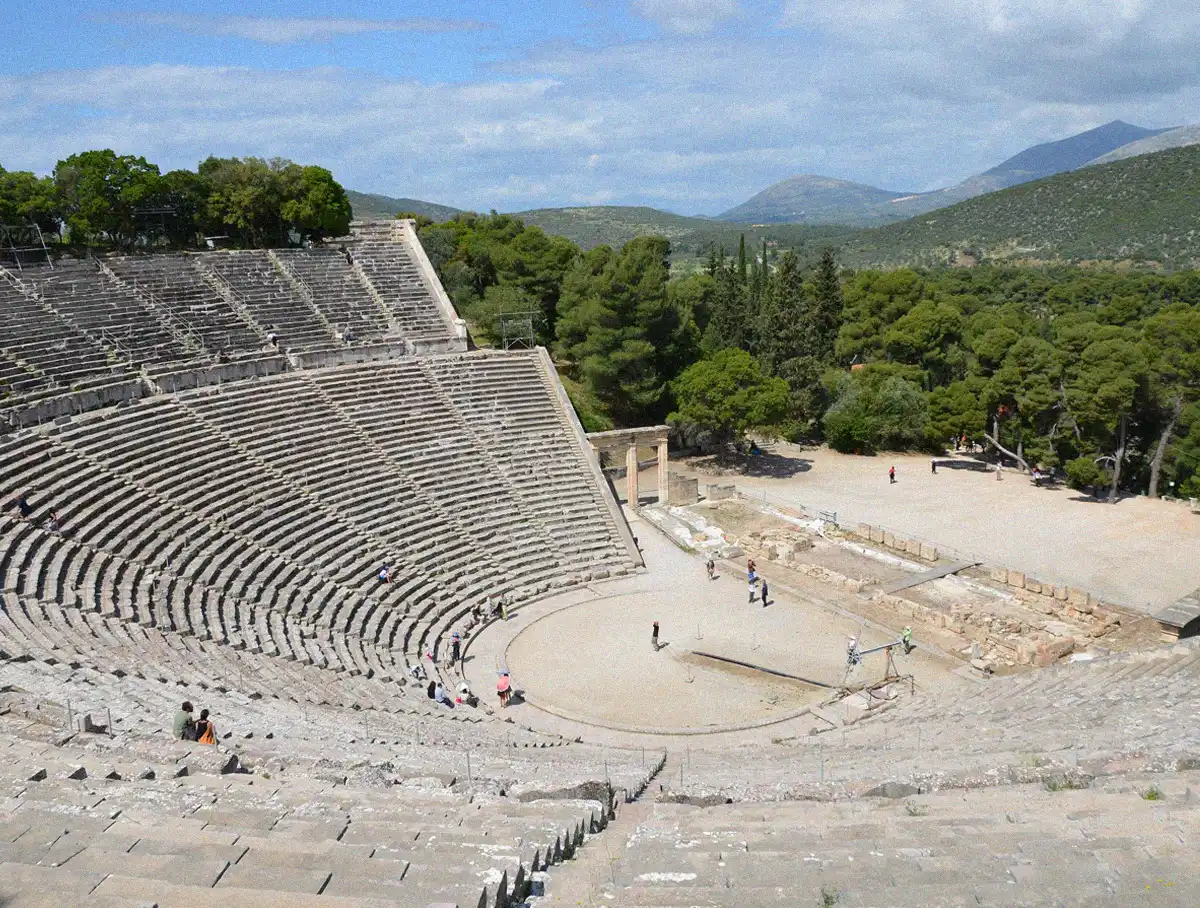
While digging online, discussing with friends, and watching modern theatrical reinterpretations of classical Greek plays, I was struck that in a debate so obsessed with accuracy, no one mentioned Ancient Greek theatre, which I find surprising given how synonymous myth and performance were for the Ancient Greeks. The earliest recorded Athenian theatrical performance was in 534 BCE, in honour of the god Dionysus. Despite The Odyssey being written in a format that lends itself to oral recitation, historians debate whether or not The Odyssey would have been read aloud, simply because it consists of around 12,000 or more lines of poetry and would therefore take around twenty hours to deliver. If it were performed with The Iliad (at around 15,000 lines), a Greek bard—a singer-poet—would need approximately fifty hours, and therefore be a major event usually sponsored by wealthy patrons or held at large festivals.
Continuing the tradition of celebrating Dionysus, Greek theatre grew into festivals where playwrights competed for glory. Choruses, masks, and shifting roles forged many of the conventions we still recognise in modern performance today. If The Odyssey's key question is who we become in the process of attempting the impossible, then the enduring appeal of theatre, adaptation, and reinvention, once again highlights the question of originality.
Intriguingly, this can be seen in plays with overlapping plots and characters, with Sophocles's Oedipus Rex and Antigone explored alternatively in Euripides’ single play, The Phoenician Women, or even both playwrights having their own versions of Electra. Euripides' Medea and The Bacchae, while they don't share similar plots, share the same rage and violence of the female protagonists in many other Greek tragedies. These plays are still staged today, leaning into the absurd, incredibly non-naturalistic elements of the text. It's a testament to the enduring nature of Greek theatre and myth that practitioners and performers are still choosing to tell these stories and audiences are still choosing to watch them, despite knowing the outcome, because it's not just the text that we're seeing, it's the innovation, artistry, and humanity that speaks to us.

The Myth of Accuracy
Innovation, artistry and humanity lie at the heart of The Odyssey, no matter how messy its characters may become. Why then does it feel like Nolan's version is lacking all of these things? For starters, antiquity was much brighter than Hollywood would ever have you believe, so the dark colour palettes and low exposure settings create a moodier appearance and makes it seem like just another generic Gladiator-esque film. Highlighting the use of a Norse longship in the trailer doesn't make sense in The Odyssey, since it was composed c. 800-700 BCE and the Viking Age didn’t emerge until 800-1050 CE (their Longships weren't first recorded until centuries after Homer). Geographically and historically, there would have been no overlap between these two cultures; a penteconter, a fifty-oared Aegean galley would have made more historical sense, or so I can tell from competing sources online. Robert Pattinson was reportedly the only cast member to request to read the script before accepting Nolan’s offer. (If this is true, then the era of anti-intellectualism and low reading rates is worse than we ever realised, which isn't helped by multiple cast members admitting they haven't yet read The Odyssey, either.) Casting Travis Scott as the Bard, Demodocus, and comparing musical traditions in Ancient Greece to rap music was certainly a choice, too—a very odd one.
Nolan's vision for The Odyssey seems more like a Hollywood romanticisation of antiquity. While we won't ever be able to recreate exactly how The Odyssey or other Greek texts would have been performed, modern theatre and its stylised, surrealistic approaches to Ancient Greek plays seem more comfortable with leaning into the text's absurdity. If even Georges Méliès’ 1905 short silent film L'Île de Calypso can lean into the surrealistic, over-exaggerated theatricality, it begs the question: why does Hollywood now have an aversion to innovation and taking creative risks? I've been in spaces where modern theatre has been mocked and misunderstood, so it's not surprising to me that ancient Greek tradition is being treated similarly, only now on a larger global scale. In the process of trying to weigh accuracy in an adaptation of a text as influential as The Odyssey, I realized that accuracy, perhaps, doesn’t live in direct realism at all, but rather, in a willingness to lean into the fantastical nature of mythological stories and make something genuinely new from a story we already think we know.
For More on the World Behind The Odyssey, Read:
Mythology - World History Encyclopedia
Mythology - Etymology, Origin & Meaning
“What Is Mythology? Using Mythology as a Source of History” — Mythology Journal, John Isikli
“Greek Mythology” — Encyclopaedia Britannica
“Greek Mythology Timeline” — Acropolis of Athens
“The Five Ages of Man” — ThoughtCo