As part of Lit Society’s Book Review Program, members are reading and reviewing books by independent writers we think deserve more attention. This review reflects one reader’s honest experience and aims to spotlight exciting new voices.
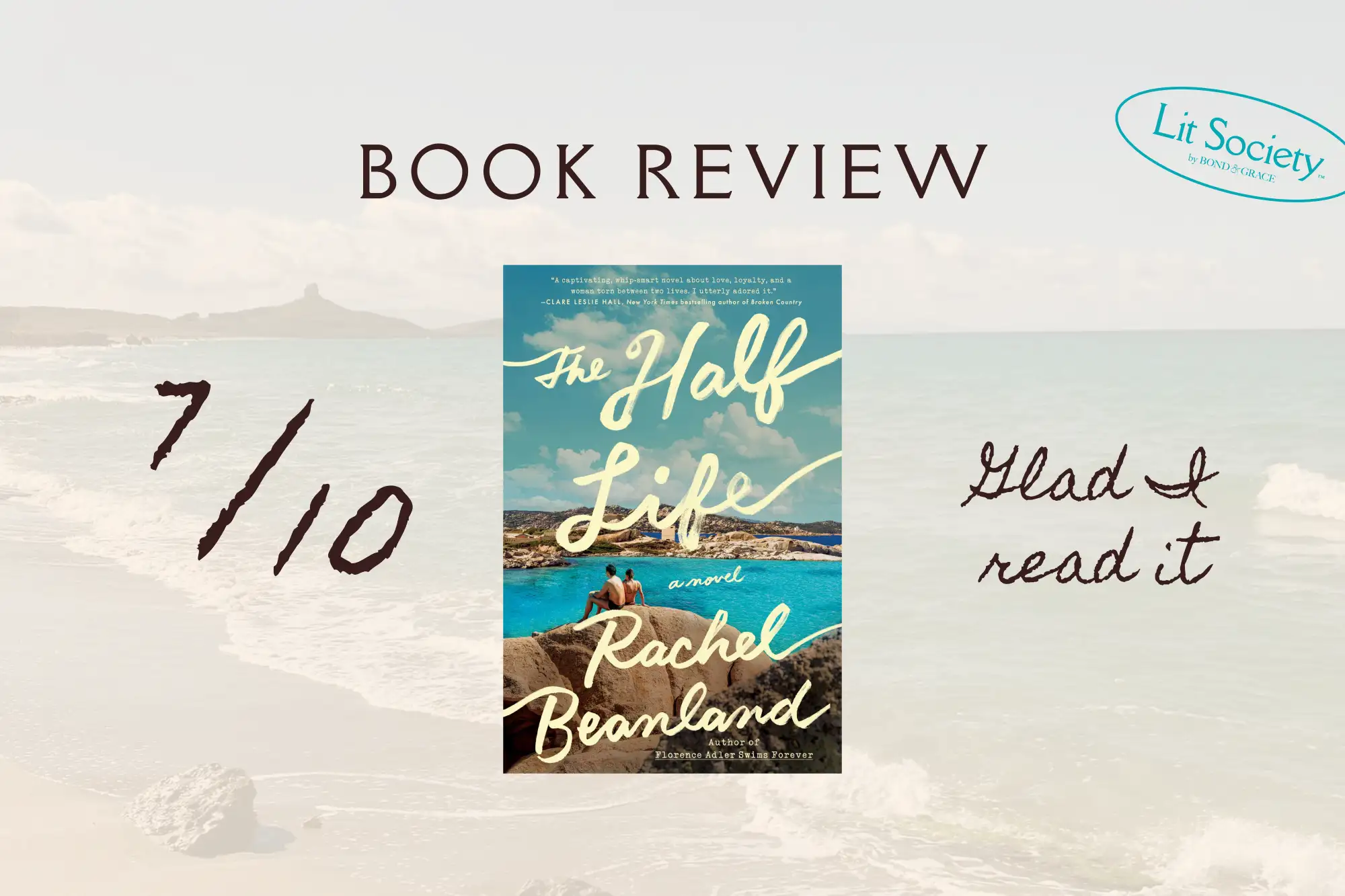
Big Take? What starts as a new chapter of marriage and a move to Italy becomes an unexpected journey of self-discovery as an American woman confronts the gap between the life she imagines and the reality before her. Equal parts love story and historical fiction, this novel is perfect for readers who enjoy complicated relationships, thought-provoking questions about responsibility and belonging, and even a touch of science.
The Verdict? 7/10, Glad I read it.

- Would You Recommend It? Y
- Book Club Worthy? Y
- Would You Read This Author Again? N
- Did It Change How You See Something? Y
- Is It More Plot or Ideas? Ideas
- Pace: Steady
- Emotional Impact: Lingering. There were topics that are devastating to uncover as someone who’s never really looked into the United State’s history of meddling and negligence in countries that we are friendly with.
- Best For: A vacation read
- Skimmable or Demands Attention? Its portrayal of love and relationships was skimmable. If you’re a heavy history reader I recommend close reading. She did a great job researching.
- Would You Reread It? N

I recommend this novel to readers who enjoy character-driven historical fiction, morally complex characters, and immersive settings. The Half Life (published by Simon and Schuster this July) transports readers to La Maddalena, a Mediterranean island off the coast of Sardinia, Italy, in the 1970s. The novel follows a young woman whose life has been suspended by grief and uncertainty in the aftermath of war and personal loss. When she quickly marries a U.S. Navy sailor and relocates to the Mediterranean island where he is stationed, she is captivated by the island and its people. The island's name, La Maddalena, is tied to Saint Mary Magdalene, a figure often associated with devotion and courage that can also be read as a countercultural figure. That duality mirrors Eileen's own journey throughout the novel. As she becomes increasingly connected to the local community and the other Navy families, she begins to question both her marriage and the role of the American military presence on the island. What follows is a deeply personal journey of self-discovery and finding the courage to define her own values.
The novel succeeds most in its exploration of loyalty and blind faith. Rachel Beanland examines how institutional and social expectations encourage people to conform, whether within a marriage, a military community, or a nation. Through Eileen's experiences, readers witness the cost of challenging accepted norms. While the novel contains elements of romance and coming-of-age fiction, one of its most compelling threads is its critique of a particular historical moment. Beanland uses the American naval presence on the island to explore the effects of foreign meddling, distrust, Americanization, and unquestioning patriotism. She presents these complexities and asks readers to consider when obedience becomes complicity. Ultimately, the novel’s questions feel timeless: How do we decide who we are when the life we've chosen no longer feels like the right fit? And what happens when loyalty to the people we love comes into conflict with our own values?
Early in the novel, Eileen often prioritizes harmony over conviction. This tendency is reflected when she admits, "I rolled my eyes so far back in my head, they were in danger of getting stuck there, but in the end, I followed him behind a big boulder and obliged him" (page 77). Beneath its lighthearted tone, the moment is heartbreaking, revealing a recurring pattern: recognizing discomfort yet choosing compliance. Beanland returns to this tension between autonomy and social expectation throughout the novel. What begins as a personal struggle for Eileen ultimately mirrors a broader culture of silence, from Navy personnel who understand the public health risks to islanders who suspect they are not being told the full truth.
My biggest takeaway from the novel was not the romance but its examination of the consequences of American military presence abroad and the people caught within those systems. While I never fully connected with the character’s relationships and dialogue, I found the larger questions of accountability and moral responsibility compelling. I also came to appreciate Beanland's narrative approach. It's easy to overlook at the start of the novel, but the storytelling feels conversational, almost as though Eileen is recounting her life directly to the reader. That choice takes on greater significance, culminating in a reveal that reframes the narration and reinforces one of the novel's central ideas: the importance of questioning authority, rejecting blind faith, and demanding change. Readers looking for a hot romance may find the novel not quite scratching that itch, but those who enjoy thoughtful historical fiction with rich themes and a strong sense of place will find plenty to discuss long after the final page.

Favorite Lines? A line that conjured cool girl imagery for me: “She took an exceptionally long drag on her cigarette, which gave me the impression that she was intentionally holding out on me. ‘How about Robert Redford?'" (page 88)

Recommended Media?
Mona Lisa Smile (2003) explores the same theme of women prioritizing their husbands' careers over their own education and desires.
“Landslide” by Fleetwood Mac might capture the coming-of-age part of the story.
“Both Sides Now” by Joni Mitchell: “Oh, but now, old friends, they're acting strange. And they shake their heads, and they tell me that I've changed. Well, something's lost, but something's gained. In living every day.”
“Sapore di Sale” by Gino Paoli for the vibes.
Interested in reviewing books for Lit Society? Join our growing team of member reviewers and help champion independent authors and unforgettable reads.