I once wrote an essay arguing that meditations on love in Virginia Woolf’s queer satirical novel Orlando reflected the same Christian perspective outlined by C.S. Lewis in Four Loves. Love, like God, transcends time and place. What is it to love oneself, to love another, to fail to love properly and to confuse love for something else? Though she loathed religion and remained a self-proclaimed atheist, Woolf considered these very questions through the character of Orlando, who, throughout the novel, straddles time and place and transmutes from man to woman.
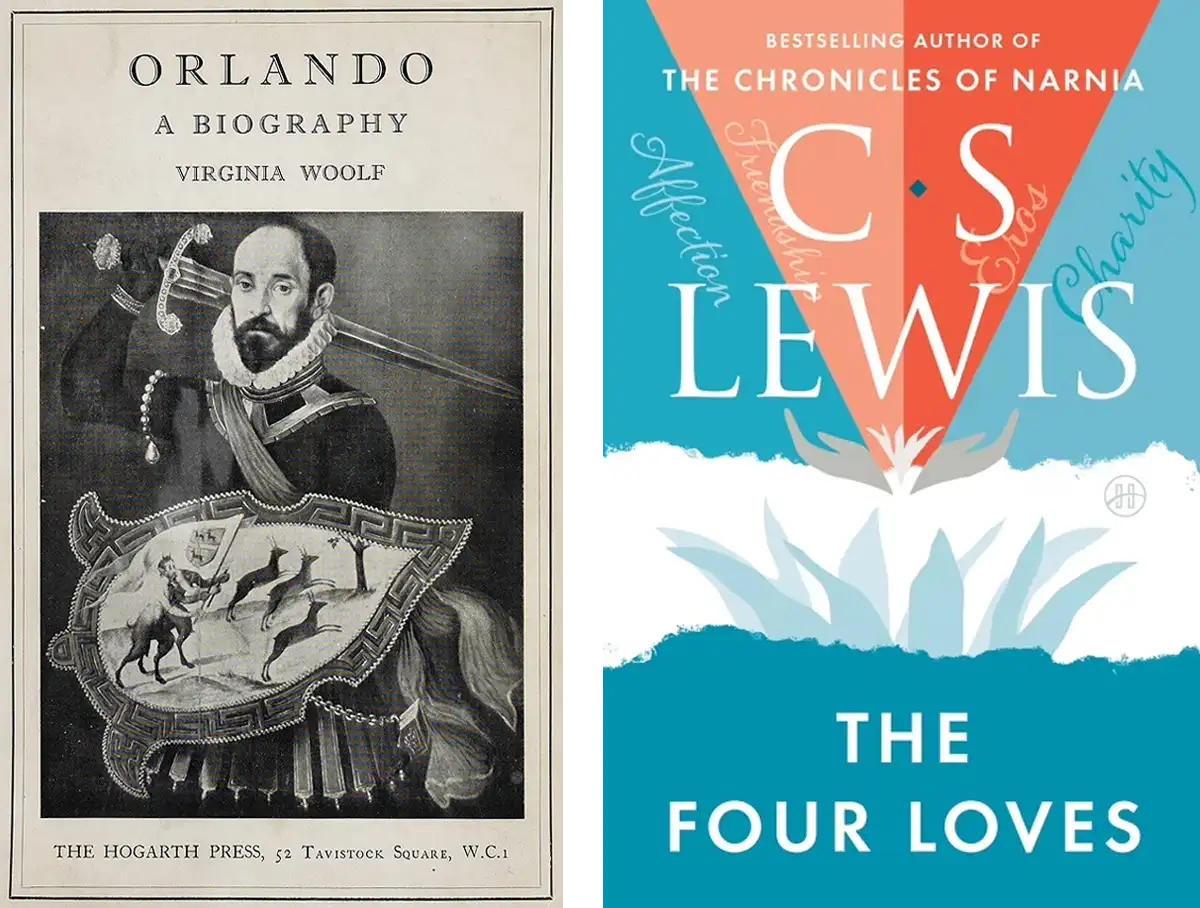
Lewis wrote of love: “There is no safe investment. To love at all is to be vulnerable. Love anything and your heart will be wrung and possibly broken. If you want to make sure of keeping it intact, you must give it to no one, not even an animal.”
I feel about writing what C.S. Lewis felt about love: there is no safe investment. As fearless as it is to pair disparate ideas or to map the failures of my life in a first-person essay, so is the process of writing and daring to share the work.
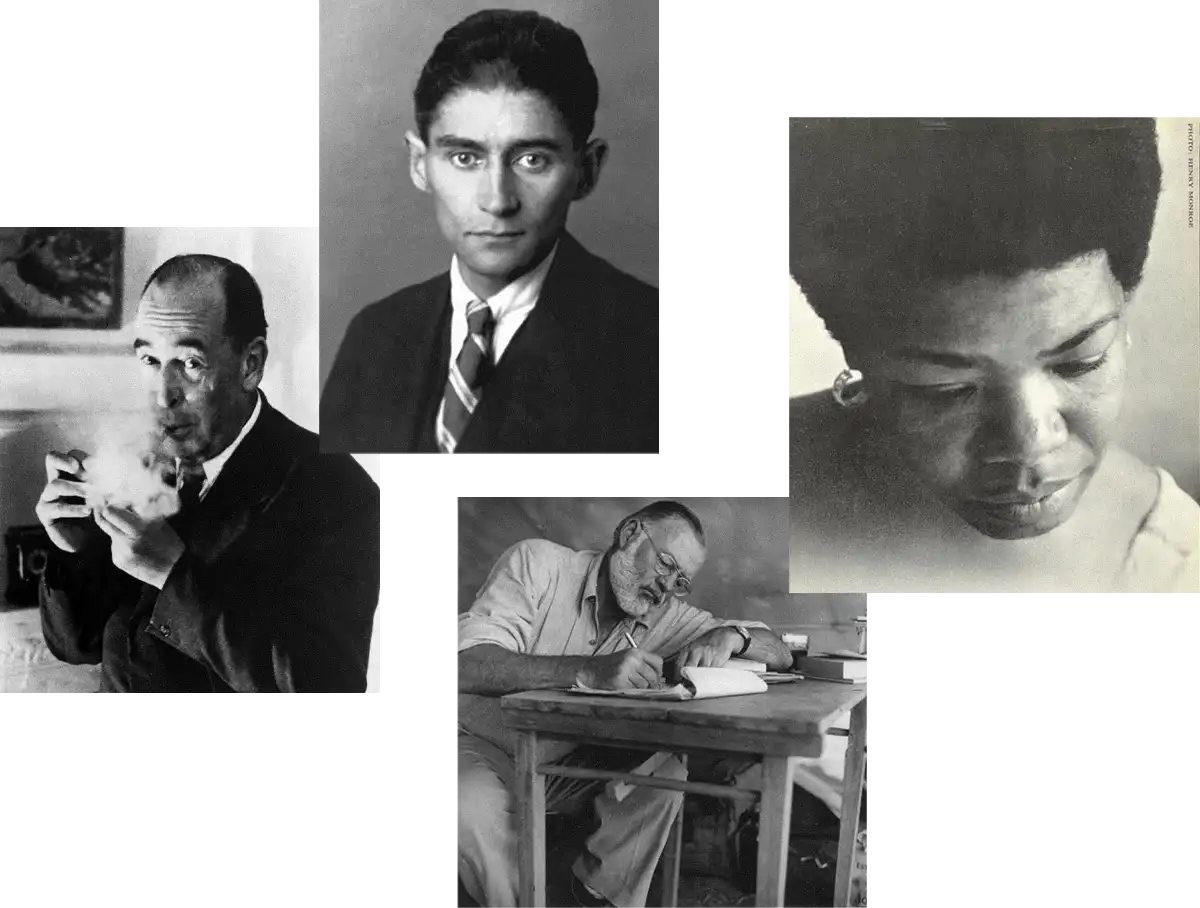
Maya Angelou famously kept a hotel room for the daytime to write in, requesting the staff to remove objects from the walls. The moment the sun rose, Hemingway stood to write, plunking away on his typewriter in his loafers. Kafka kept the quiet hours after 11 o’clock to work after his day shift at a workers’ insurance firm. Some writers rise at the same time every morning, producing mountains of sentences or several pages.
My writing process doesn’t initially include writing. I storyboard constantly–visualizing scenes, seeing lines, then hearing them read out loud. The structure comes together in nature, on a walk, often to music and in motion. Writing comes last. I write the same way I learn music—first is the melody, the arc of the song, and then the lyrics.
I view writing as imagined script work—how we think about dialogue and the subtext, the objective for each line. Seldom should an actor punch every line as if it’s the most meaningful. Sometimes lines of dialogue function merely as connective tissue before arriving at a moment—the metaphorical slap of the scene. Like Lewis’s line I couldn’t shake, certain scenes from plays have stayed with me over the years and serve as a kind of writing framework.
There is a scene in Tony Kushner’s Angels in America between a Mormon couple who’ve just moved to Brooklyn at the dawn of the AIDS epidemic. Joe, a lawyer and apprentice to Roy Cohn, and Harper, his agoraphobic wife addicted to Valium, argue about his coming home late from work. She asks where he’s been and that she’s burned dinner. Line for line, Harper keeps needling, nudging. He deflects by asking how many pills she’s taken. “Stick to the subject.” She tells him.
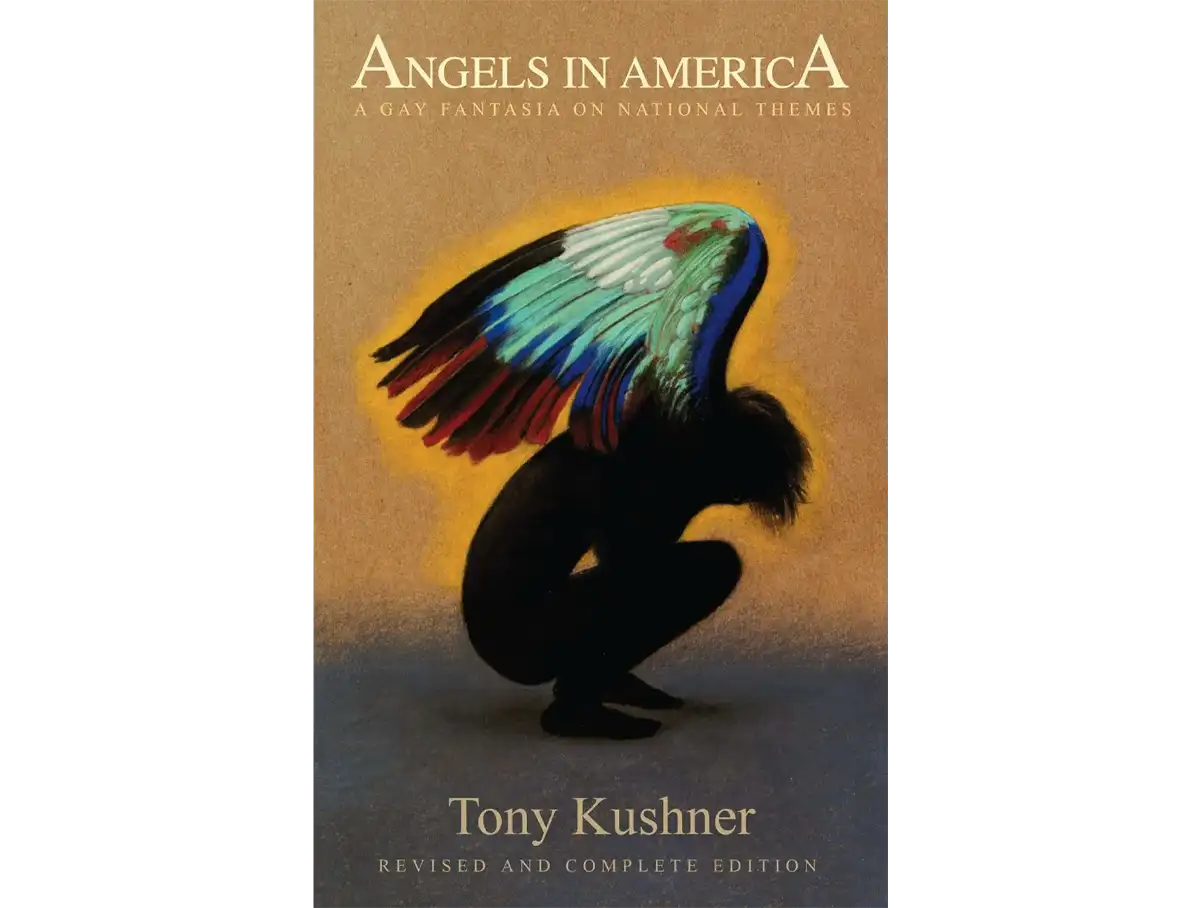
The lines read the way you’d deliver them. Joe’s ambiguous statements evade Harper’s leading questions. She’s stacking lines, sentences growing with meaning, until, finally, pressing him about his whereabouts, why he seems to feel unfamiliar to her even in bed at night, and admits she hates sex with him. He cuts her in half, telling her in the midst of her sweaty, pill-fueled meltdown, “Well, you aren’t pretty.” And she cuts him off, insisting she has to ask him something. “Then ASK! ASK! When in the hell are you…” He says with the heat of a tea kettle boiling over the hot stove. You can read it, even hear it in a rushed exhale: “Are you a homo?”
Writing as a process can be a storm of anxiety and romance. I am fueled by the shame that I should get started, the stress of maintaining the writing once it finally lands in the pocket of a good thought or two, the concern of piecing it together to make sense, and then, finally, the romance of submitting the work. And with the edits of a draft, a shade of the exact same process starts over again.
Sharing work is even trickier. After years of publishing prose and poetry on websites and online magazines–most no one’s ever heard of–it was my journalism that managed to secure some widespread coverage. Given the nature of what I’ve written, for every supportive email, there was a nasty one. I couldn’t be sure who was actually reading my work, but when it started to shape the public perception of something, I imagined that it was a significant number of people. Eventually the moment would pass, and I would be back at square one. A friend of mine from grad school, now writing a book, commiserated that at the height of his publishing articles, he never felt more hollow than after work was out in the world. Perhaps what he had wanted, just as I had, was to know someone even read it.
Like love, we open our hearts to the same possibility through writing, meeting the moment or sometimes missing it. Pain and triumph are always two sides of the coin. But there was forever this incessant wondering about whether we could ever be sure this work was actually doing anything.
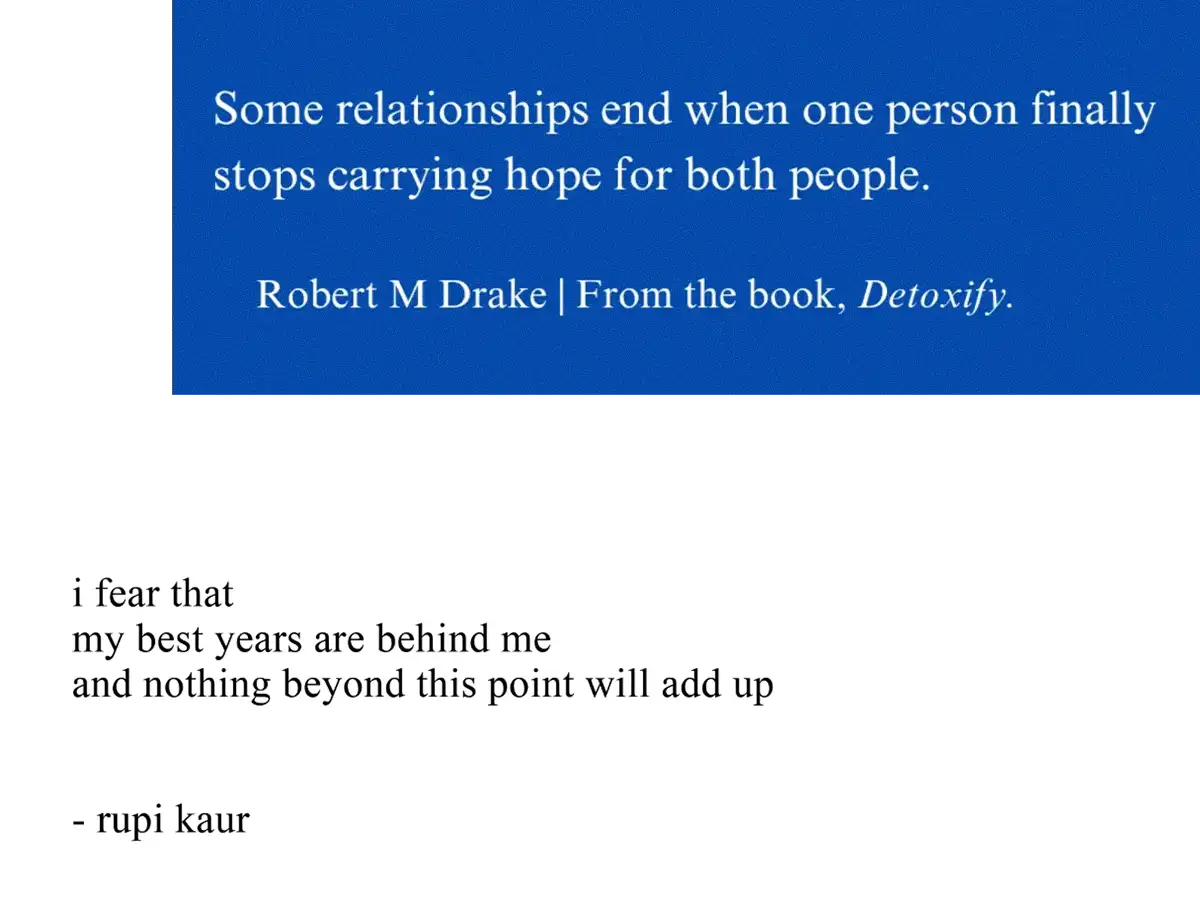
Within the last decade, poets like Rupi Kaur and RM Drake have cultivated a following online. Followers translate to readership, which makes literary agents more confident in signing new writers and publishing houses more comfortable knowing book sales are more likely to be up than down. Built-in fans can lead to built-in fame, which leads to what all creatives want most: freedom.
But these things don’t happen overnight. Part of what puts one writer’s work in front of all the other writers’ work is luck and the algorithm. Whether it’s good is subjective. But it’s about what’s in front of a person who reads—does it move them, and do they want others to be moved by it? This is often what helps make a piece go viral.
I didn’t plan to go viral. I created my Substack, Heroines, two years ago, to write long-form pieces about the experiences of women, mostly for me to build out first-person essays for a potential book. I had 42 subscribers until last month, when the skies opened up and my work, to my knowledge, was not only widely read; it was engaged with.
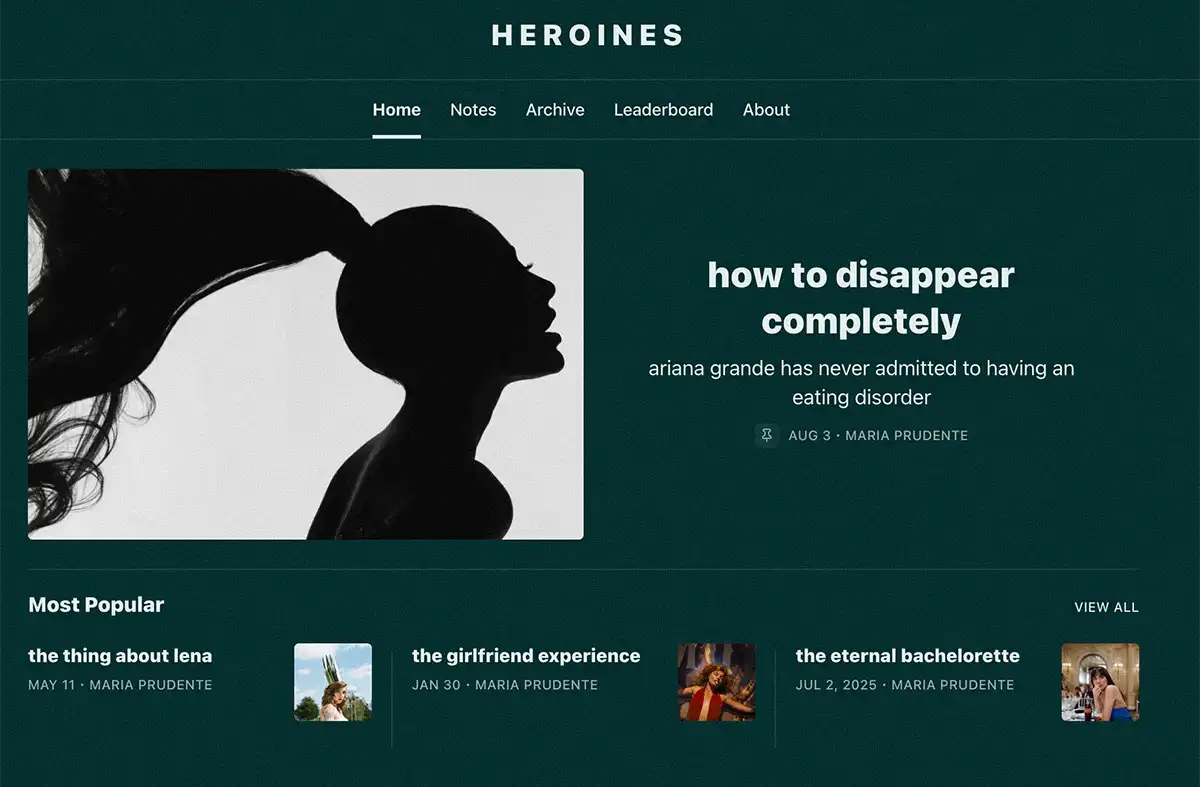
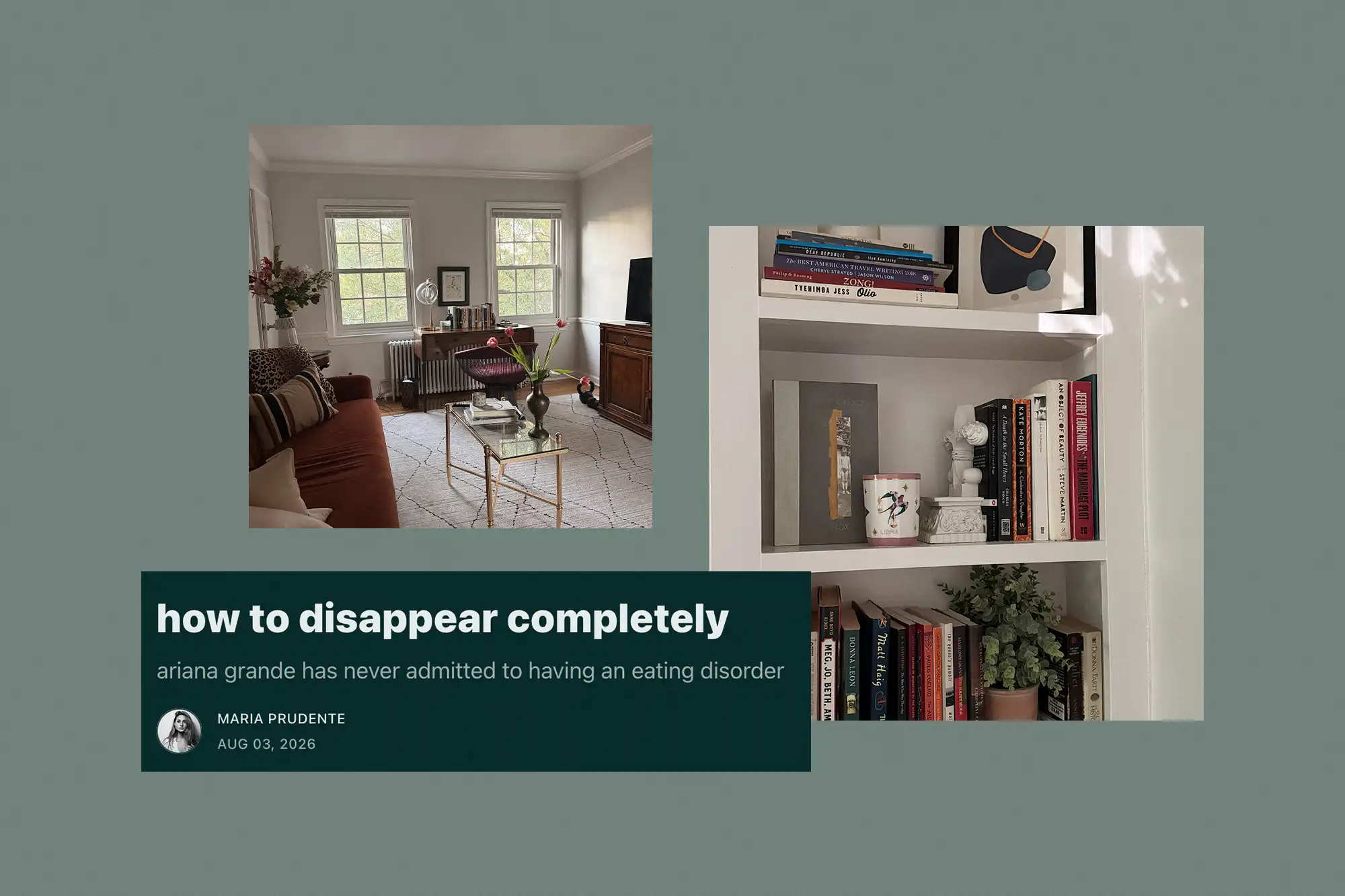
I wrote a piece of criticism called “How to Disappear Completely” that examined popstar Ariana Grande’s new music video “Petal,” her shifting public persona over the years, and the complexity of anorexia. I wrote not just as a writer who considers herself a fan, but as someone who recognizes a cry for help when others might not see the full picture. I aimed to be sensitive but honest, and felt that, at a time when shrinking bodies have become normal, we should be unafraid to speak about our concerns.
Hours after posting, I was surprised by the numbers already outpacing previous posts. My last piece on the potential for a death penalty in abortion ban states got one like. Before that, a piece on Lena Dunham and the bordering-on-trauma of creative writing workshop curriculum got the most engagement, with 41 likes and 1,437 views. I phoned a friend to ask if she thought it was acceptable to remove it from my page and pitch it to a legacy media outlet instead. As I’d fail to cut through to various editors all year with insider scoop or cultural essays, maybe this one would be the one to do it. She advised me to keep it on my page, and I knew deep in my gut that it was the right thing to do, too. Without the constraints of editors, I could keep all the threads, the form of it, precisely the way I wanted it. This reason, after all, was why Substack had become a home to so many writers who wanted to have complete ownership and maybe even make some extra dollars.
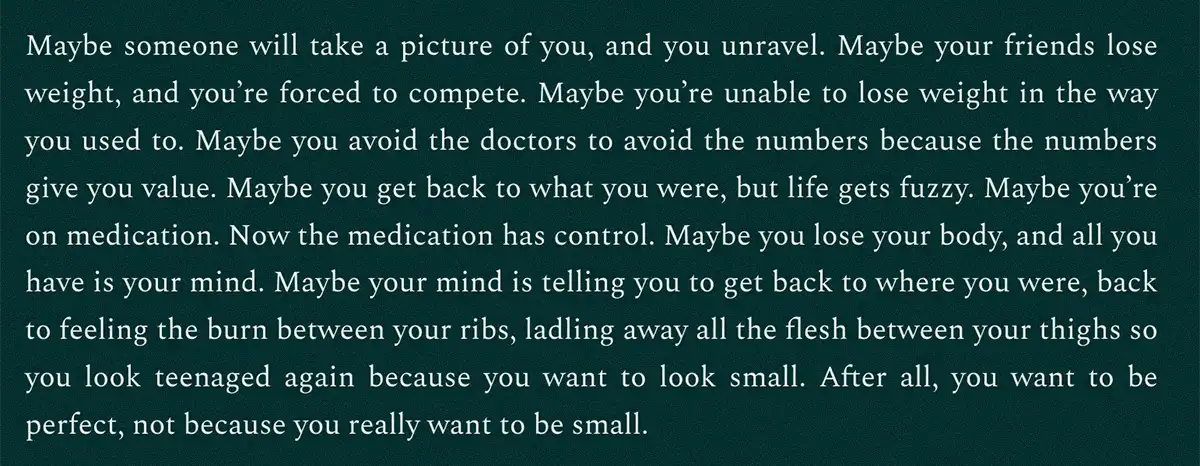
By the afternoon, responses to the essay were overflowing. As of today, 49,000 people have read the essay, most of whom come directly from the app. I’d spent years wondering who read my work, but the comment sections allowed for other writers and readers to state their feedback and opinions, even if they didn’t agree. A producer of a radio show in Los Angeles read my work and asked me to do an interview about it.
For a brief moment that week, I heard that C.S. Lewis quote again. It’s true that to avoid heartbreak, “you must give it to no one, not even an animal.” But on the off chance you do share your writing—which, to me, is my heart—you may experience the intensity of love shown back to you, back to your words, even if it’s fleeting, even if there’s no safe investment.