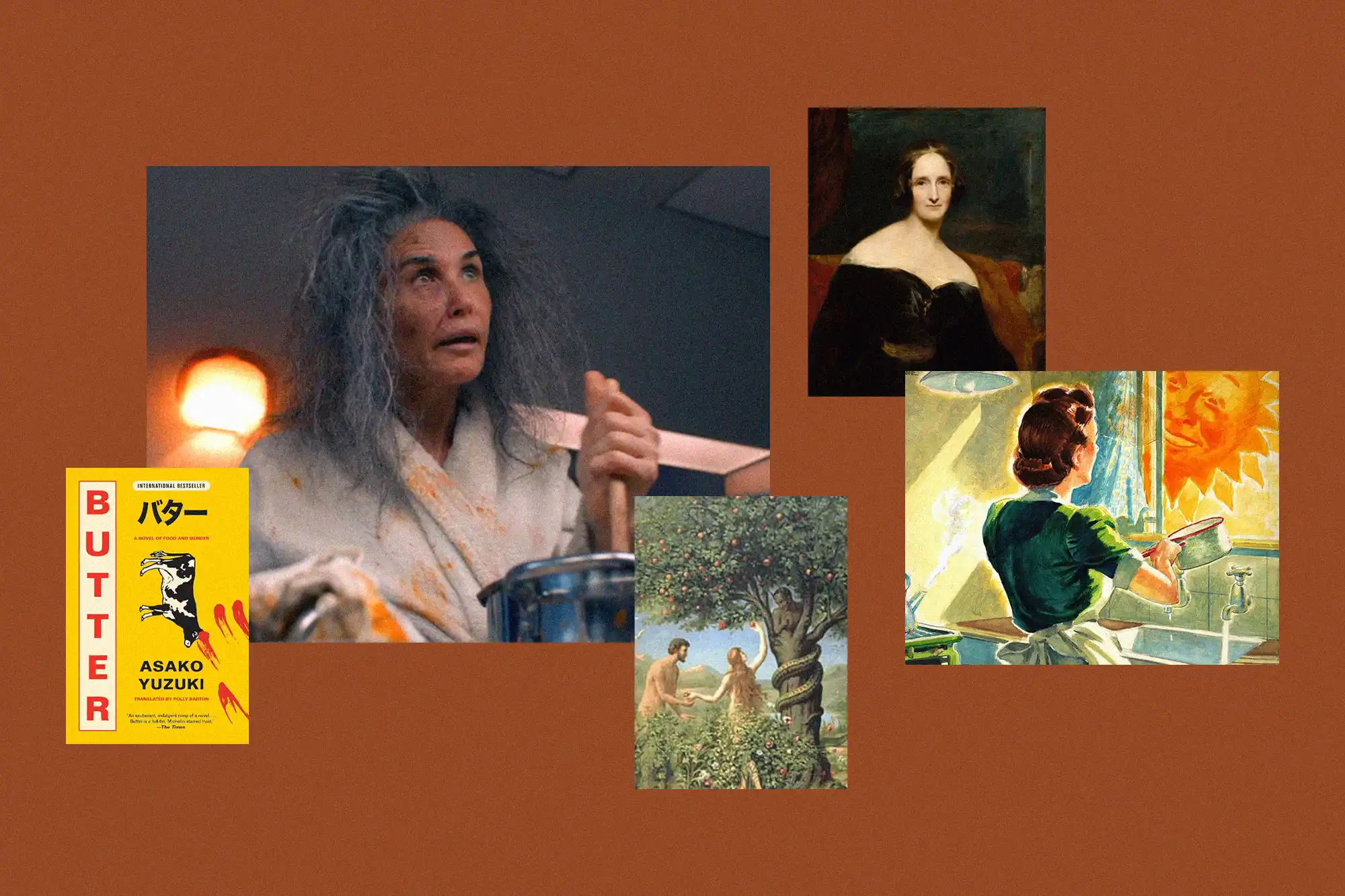
Anything having to do with women, food, and the kitchen is a loaded subject. Be it women who eat too much, too little, or worse yet, refuse to confine themselves to the kitchen, history shows us just how tricky the relationship between women, consumption, and consumerism can be. From the temptress Eve and the forbidden fruit, to the matriarchal Betty Crocker figure created by male food industry executives, food has always been an easy target onto which the patriarchy can latch its sharp teeth. With the racist character behind Aunt Jemima Syrup being only one example, sexualized and stereotypical imagery of the female body has long been used in the media as a means of associating food with sexual pleasure for financial gain. And yet, women have always fought against these stereotypes and forged ahead in a society that still today tries to control the imagery, messaging, and fundamental rights of the female body.
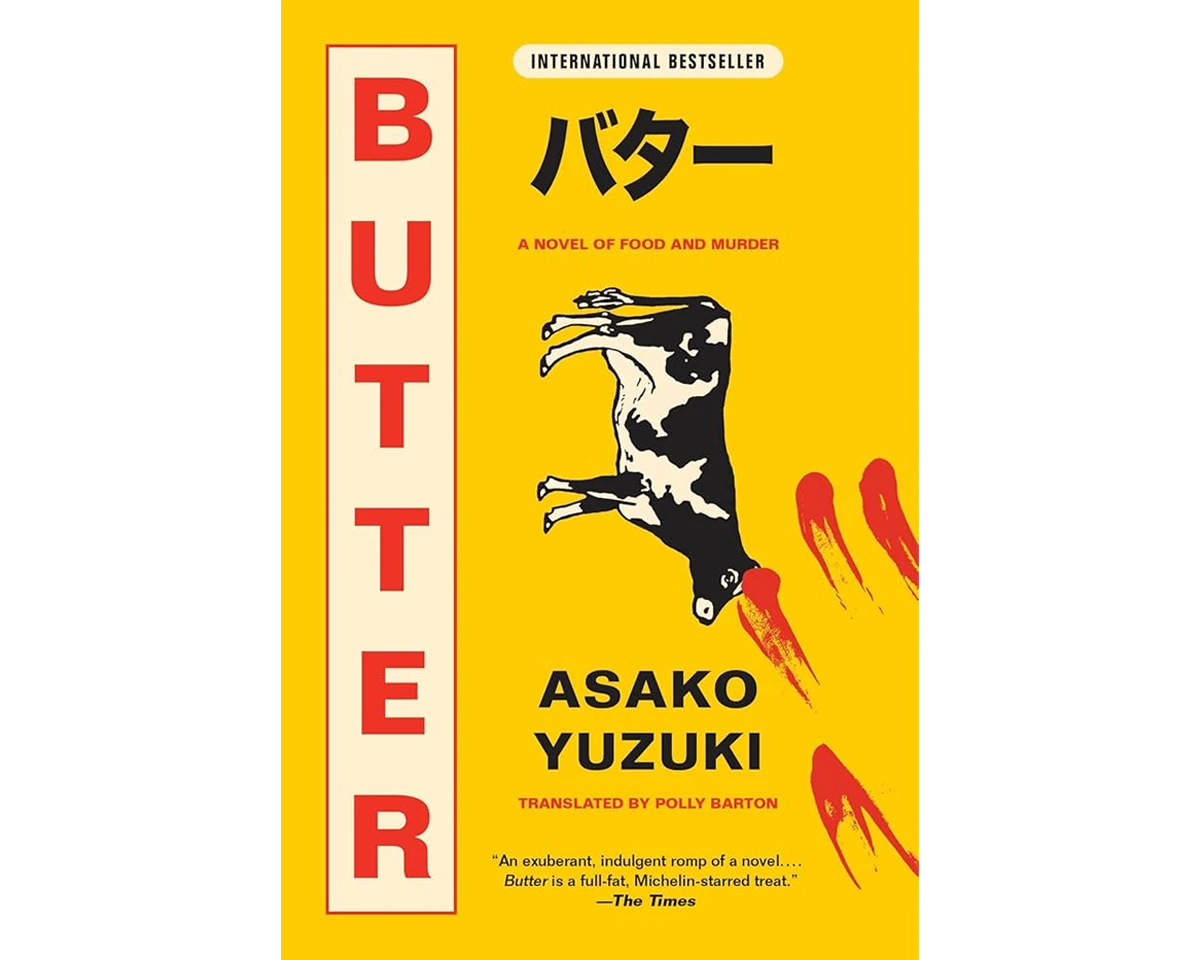
Women have often been conditioned to feel shame towards food and, in a world where body image and the female form are now being manipulated and moulded by AI, female writers and filmmakers are flipping the script, exploring how food can be symbolically used to counter patriarchy. This idea is explored in Asako Yuzuki’s novel Butter (2017), in which the meetings between convicted killer and gourmet cook Manako Kajii and journalist Rika Machida—both women—become unexpectedly empowering, as Kajii encourages Rika to rediscover pleasure through food and cooking. The author writes, “This was all it took, she thought, to experience a sense of satisfaction of a kind she’d not had before. To make something yourself that you wanted to eat and eat it the way you wanted—was that the very essence of gratification?”
Butter serves as a commentary on how women are viewed in society, exploring misogyny, body image, and how Japanese society demands women to be thin, perfect, keepers of the home. Women are expected to be subservient to men, with society and culture conditioning them to put the needs and desires of men above their own. Such attitudes are being reinforced in Western society again with the rise of tradwife culture.

These ideas can also be seen in Coralie Fargeat’s film The Substance (2024). Demi Moore’s character Elisabeth Sparkle is left devastated when the producers of her fitness show decide to replace her as the host. She grabs the opportunity of an offer to take The Substance, a drug that will produce a younger and better version of herself called Sue. The film highlights Hollywood’s obsession with youth and beauty, shining a spotlight on the male objectification of women’s bodies and the distorted perception of beauty, with women being seen as monsters if they are anything less than perfect. While food imagery is used to evoke pleasure and independence in Butter, here it emphasises the misogynistic notion of the decay of women’s bodies by ageing, as well as how women really are treated like a piece of meat in Hollywood.

Yet The Substance also uses food as a way of rejecting society. Sue plays into the misogyny of the Hollywood system by smiling and giggling for her male boss, while filling the fridge with healthy food choices. Although she appears to be taking care of herself, she is ultimately fuelling the stereotypes associated with being young and beautiful and she conforms to the social construct of beauty. Meanwhile, Elisabeth begins to reject the patriarchal system around her and refuses to conform to her employers’ perception of older women. Her leaving gift of a cookbook highlights how men see a woman’s place as being in the kitchen. Unlike Rika who discovers cooking as a new way of finding pleasure and calm, Elisabeth uses it as a way to lean into her female rage and she causes chaos in the kitchen when she cooks rather than domestic bliss.

Female rage and society’s fear of dangerous women are examined in Butter and The Substance, with both stories highlighting the misogynistic treatment of women in fame, especially regarding their bodies. The image of the chicken thigh being removed from Sue’s bellybutton echoes Mary Shelley’s Frankenstein; female characters are often created or written by men, a concept Shelley countered in her narrative over two hundred years ago. Playing into this trope of a female character who is shaped by a male’s vision, producer Harvey tells the show shareholders, “You will not be disappointed. She’s my most beautiful creation. I have shaped her for success.” He also tells Sue, “So SMILE! That’s what we want tonight! Pretty girls should always SMILE!”
Like Shelley’s Frankenstein, Fargeat explores the fear of the Other concept and the rejection of non-conforming beauty in The Substance. The chicken that Elisabeth cooks resembles a body and the carcass imagery contrasts with Sue’s youthful body, which is highlighted by provocative poses during her workout routines for the fitness show. Yet when Sue abuses The Substance and has a body malfunction, it is immediately noticed by a male colleague during filming, which leads to an excruciating moment for her character when he demands playback. Fargeat highlights the concept of the male gaze here as the men gather round looking for an imperfection with their female star. Similarly, Butter’s Kajii is viewed by men and the media as repulsive for not being thin and young. Her refusal to conform to the traditional standards of beauty highlight her strength, particularly given how society shuns women like her.

Women have often been alienated by society for their perceived differences. Red imagery is used in The Substance as a symbol of danger and the idea of the dangerous woman and her periods, which is the ultimate symbol of femininity, yet historically viewed as repulsive and shameful by the patriarchy. The film’s final scenes descend into bloody carnage when the new Elisabeth/Sue hybrid is revealed. Even though the audience is horrified to witness this new creation and view her as a monster, the message of the film is to learn to love oneself and one’s imperfections.
The Substance and Butter feature female characters risking vulnerability by showing their real selves and owning their voice. Both stories examine the theme of loneliness, which is often associated with older women. The stereotype of the crazy old lady and her cats is often used in the media, with the horror genre using the trope to portray single women as something to be feared. The Substance appears to play into this fear with Elisabeth, who lives alone and has no children. Butter’s Rika has a boyfriend, although she has no desire to marry or have children. Both stories aim to highlight that being alone is something to be enjoyed and the two protagonists in Butter and The Substance find their identity through food and solitude. Food is used as an empowering symbol as Elisabeth rejects the idea of the domestic goddess and Rika learns to appreciate her own company.
“Ramen that she’d waltzed out to eat after having sex—the experience wasn’t, as she’d been imagining, an extension of the sensuality of the physical contact. No, the taste was one of freedom—the kind of freedom that could only be savoured alone.”—Asako Yuzuki, Butter
Butter and The Substance also highlight how dining alone or cooking for one can be pleasurable and even cathartic, especially when there are no expectations of how to behave or how to look aesthetically. Even though Elisabeth is horrified by her appearance, she embraces the power and freedom it gives her as she unleashes her rage when cooking. Rika enjoys the change in her body shape as she savours more food and flavours. She realizes that being thin is not everything and becomes a more confident woman.

Women’s bodies are being scrutinised now more than ever and the successful body positivity movement is seemingly being eradicated with the rise of Ozempic, social media filters and AI. The discourse around body shape has become a heated debate, causing much contention online. Stories like Butter and The Substance matter because they highlight the importance of women embracing their identity and uniqueness. Real female characters created by women enable other women to feel seen and represented. Women can enjoy food for their own pleasure without any guilt. Butter and The Substance show that women no longer have to be shackled to the confines of the kitchen for a man. Instead, they have reclaimed the kitchen for their own sense of empowerment. The apron strings have well and truly been severed.