Every few years, international sports remind us that games are never just games. National identities, political grievances, and historical rivalries suddenly become visible on a global stage. Watching countries project themselves through sport has had me thinking about another truth: sports have always reflected the conflicts of their moment, sometimes even in quite obvious ways. Whatever the conflicts may be, it’s easy and natural for fans to latch onto seemingly clean narratives; the entertainment is often most effective when we feel we (and our team) are on the ‘right’ side of an existential fight.
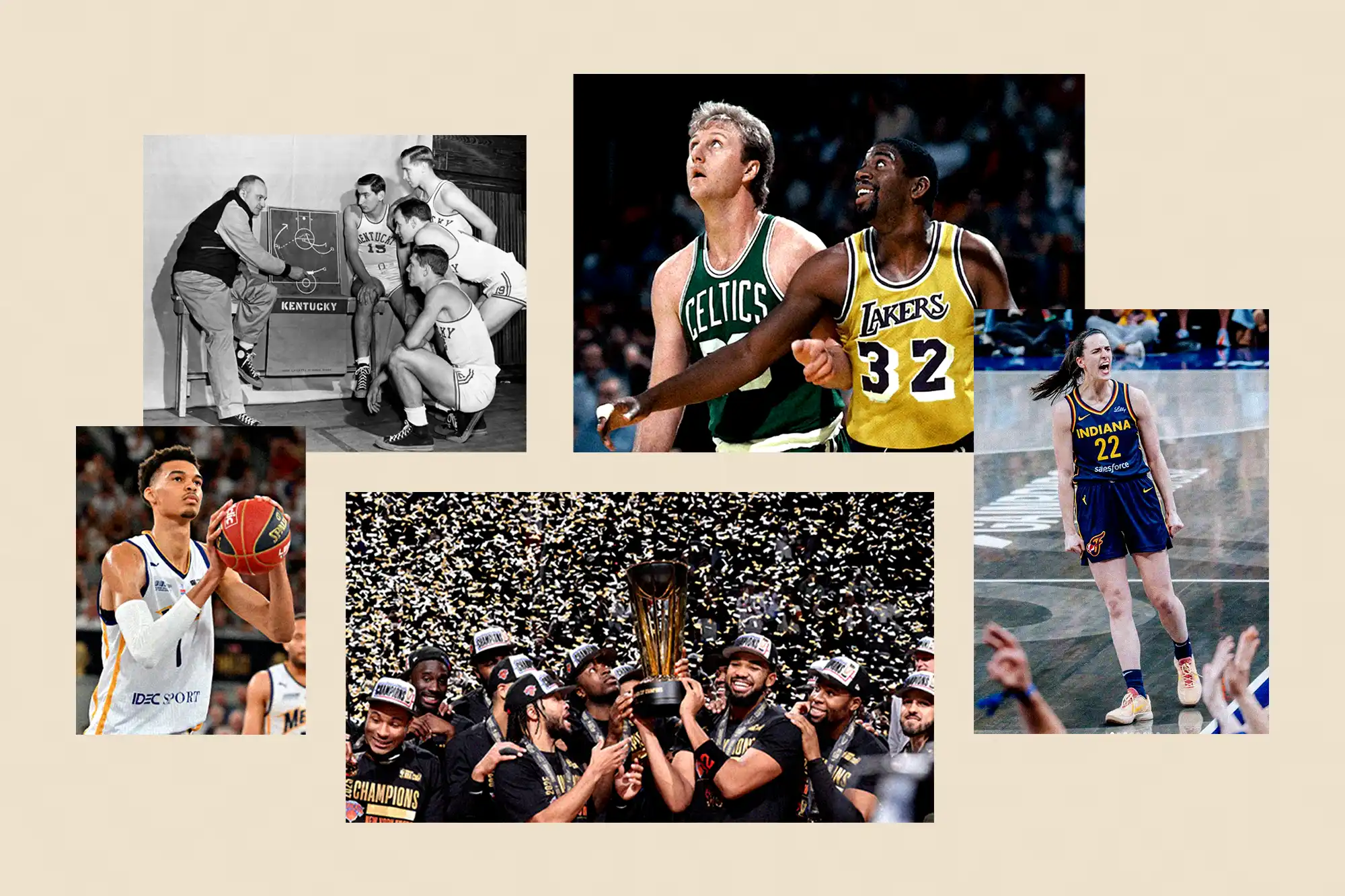
While international tournaments put geopolitics on display, professional sports at home—and the rivalries that keep us watching—are often more steeped in politics than we admit. Just weeks ago, all eyes were on the NBA playoffs, and it's no surprise that basketball fans have always loved a villain. However deserved it may be, hating on the sport’s biggest stars is a key aspect of how fans have engaged with basketball for longer than I can remember. This year’s NBA playoffs may have seen Victor Wembanyama overtake the OKC Thunder as the league’s lead antagonist going forward, while Caitlin Clark and her many online detractors have recently ushered in a new, more contentious era for the WNBA.
Throughout my childhood, different NBA stars took turns as the main target of fan frustration and hatred. Usually, the most hated stars and teams were the most successful ones, the superteams that felt unfairly constructed or just unbeatable. Kevin Durant on the Warriors. LeBron James in Miami. Kobe and Shaq. These players and teams were frustratingly good, to be sure. But evil? An affront to the sport? An impediment to progress? Maybe not so much. They give us someone to root against, but not always someone whose presence reveals anything deeper about the culture around the game. If we want a basketball villain whose legacy really does expose the politics of his era, we should look no further than one of the sport’s original villains: Kentucky’s Adolph Rupp.
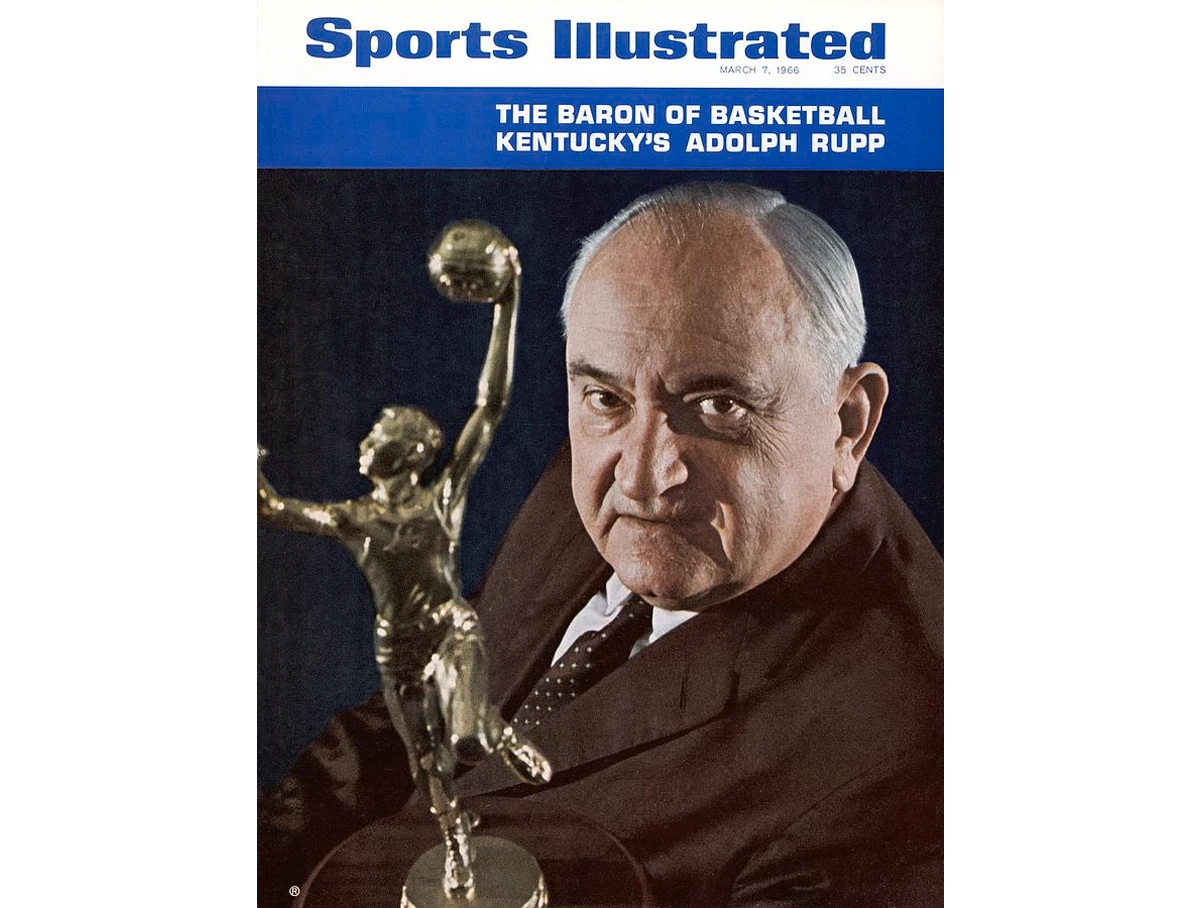
Despite being one of the winningest coaches in college basketball history, Rupp’s legacy has just as much to do with the South’s slow, reluctant crawl toward racial progress as it does with his 4 NCAA championships. For me, and perhaps many other sports-obsessed children of the 2000s, Rupp was immortalized in Disney’s Glory Road (2006) as the dog-whistling representative of basketball’s racist old guard, ungraciously losing to upstart Texas Western and their all-Black starting lineup in 1966’s NCAA championship game. Played by (real-life right-winger) Jon Voight, Rupp looks shellshocked as he coaches his all-White Kentucky team to a stunning loss that, to many, had a significance far beyond that season’s college trophy. While Texas Western’s 1966 team was far from the first non-HBCU school to roster, start, or win with Black players, that championship game carries a heavy symbolic weight to this day. The game is widely considered a turning point in basketball history. Pat Riley, the NBA coaching legend and a starter on that Kentucky team, even went so far as to call it “The Emancipation Proclamation of 1966”.
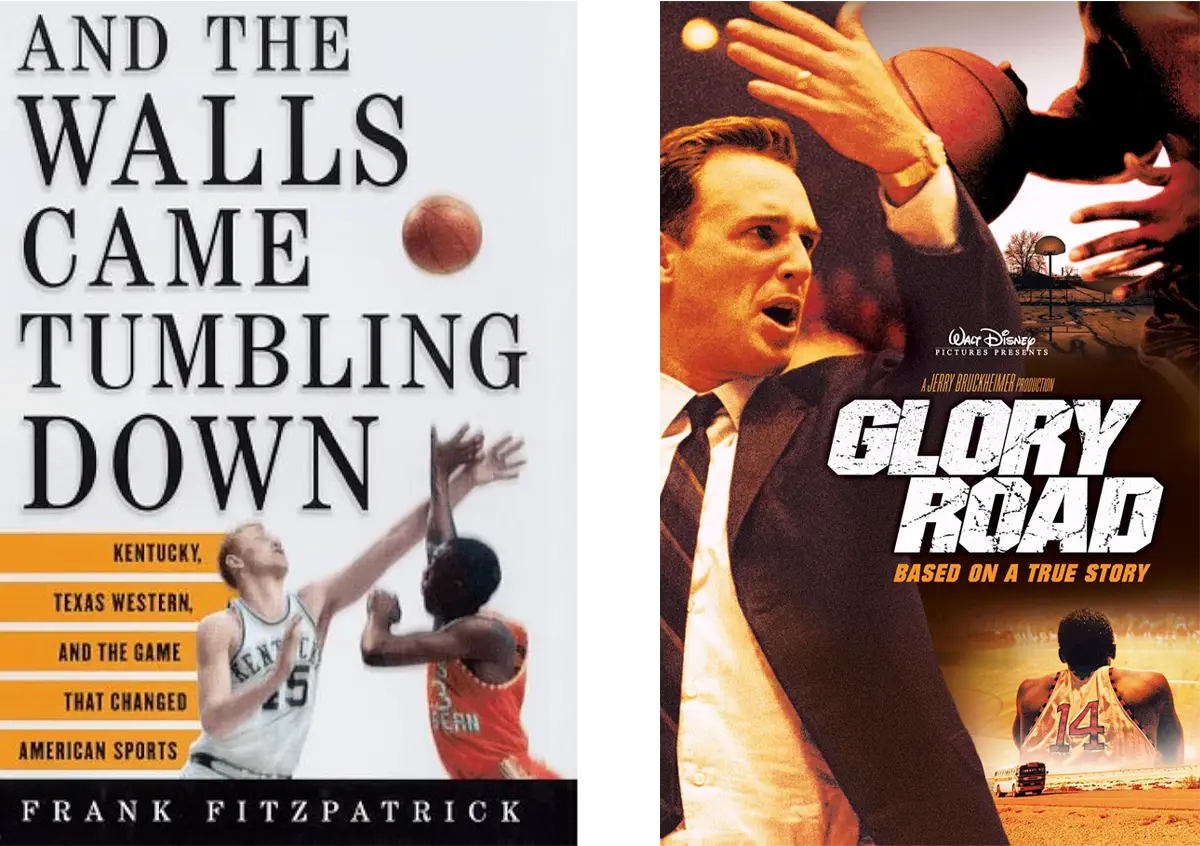
While Texas Western’s victory would have been incredibly significant and historic no matter who their championship opponent was, the contrast between their team and Rupp’s Kentucky program could not have been more stark. These differences are on full display in both Glory Road and in Frank Fitzpatrick’s thoroughly reported book on the ‘66 season, And the Walls Came Tumbling Down (1999). Often known as “The Baron,” Rupp was a gruff, egotistical figure and a famous sore loser. Despite ongoing pressure from Kentucky’s school President, Rupp managed to avoid recruiting even a single Black player to his team until 1970, two years before he retired. His all-white teams ran a tight system and were expected to stick to Rupp’s style and approach at all times. Texas Western and coach Don Haskins, on the other hand, recruited players from all over the country, trying to find talent and an edge wherever they could. The ‘66 team featured players from Detroit, Gary, Indiana, and New York City, all of whom were convinced by Haskins to make the move to El Paso. While Haskins still had attributes of the typical hard-ass, dictatorial basketball coach, his players speak to this day of his ability to connect with them as people. His teams played a disciplined, defense-first brand of basketball, but the ‘66 team was also known for Center David ‘Big Daddy D’ Lattin’s powerful dunks and Point Guard Bobby Joe Hill's flashy dribble moves. In some ways, this team was bridging the gap between the past and future of the sport.
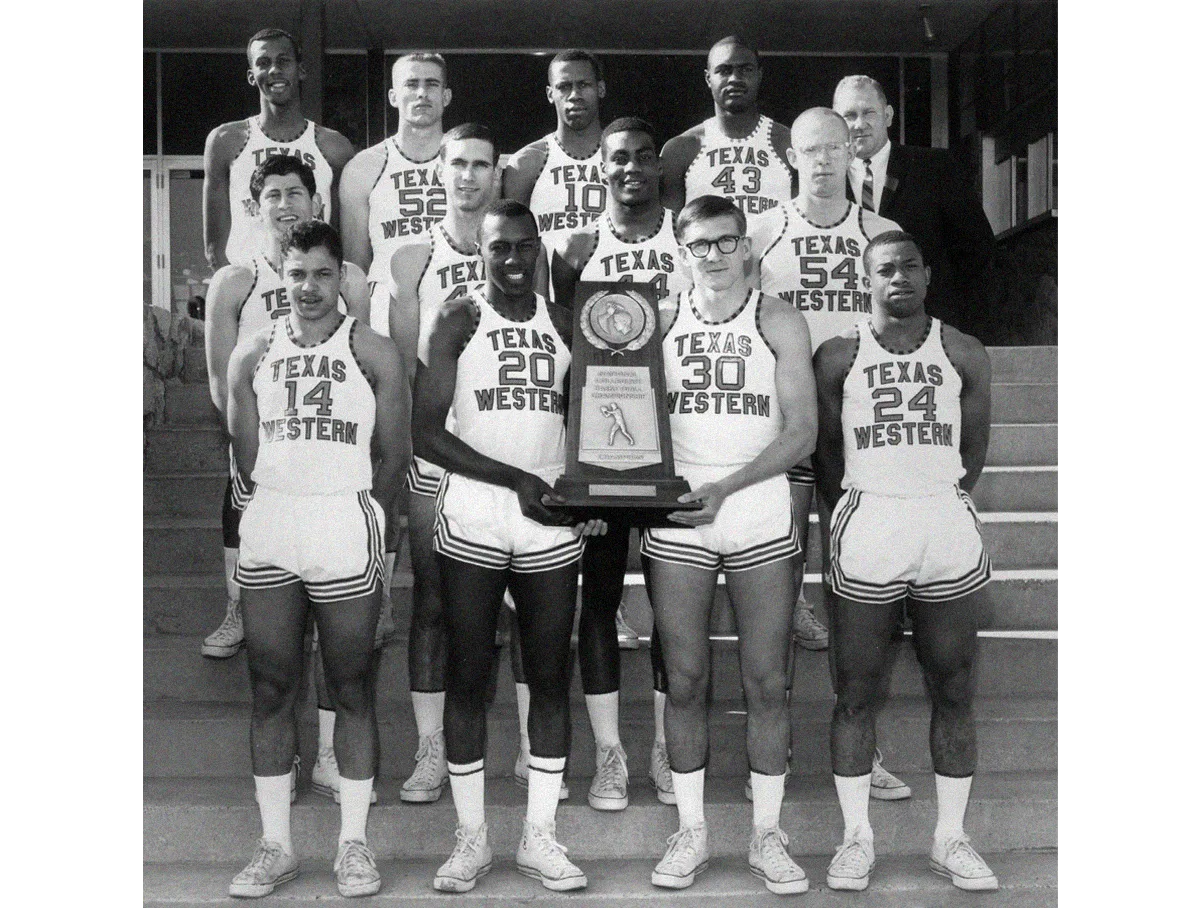
Far from a traditional sports rivalry, the ‘66 game remains the only time in history the two schools’ men’s basketball teams have faced each other. While the book and movie about this game create tension by building up to the championship matchup, the matchup was considered anything but inevitable at the time. Despite their 27-1 record, the Texas Western team was underestimated by the media at practically every turn, sometimes explicitly because of the team’s racial makeup. Even though the two teams lacked any sort of history with each other, the atmosphere for the championship game reflected a fierce rivalry nonetheless. With fans waving Confederate flags in the background, Kentucky’s band played the southern racist anthem ‘Dixie’ as the players warmed up. It’s no wonder that Texas Western’s 72-65 victory is now considered a triumph over racism itself. Ever the sore loser, Rupp would go on to refer to the opposing players in that day’s game as “crooks,” as he allowed rumors to swirl that they were improperly recruited and did not complete their college courses. These days, the game has come to define his legacy so much that his reputation as a segregationist is often brought up even before his place as one of the winningest coaches of all time. During 2020’s racial reckoning, there was real discussion about if it was appropriate for Kentucky to keep his name on its basketball arena.
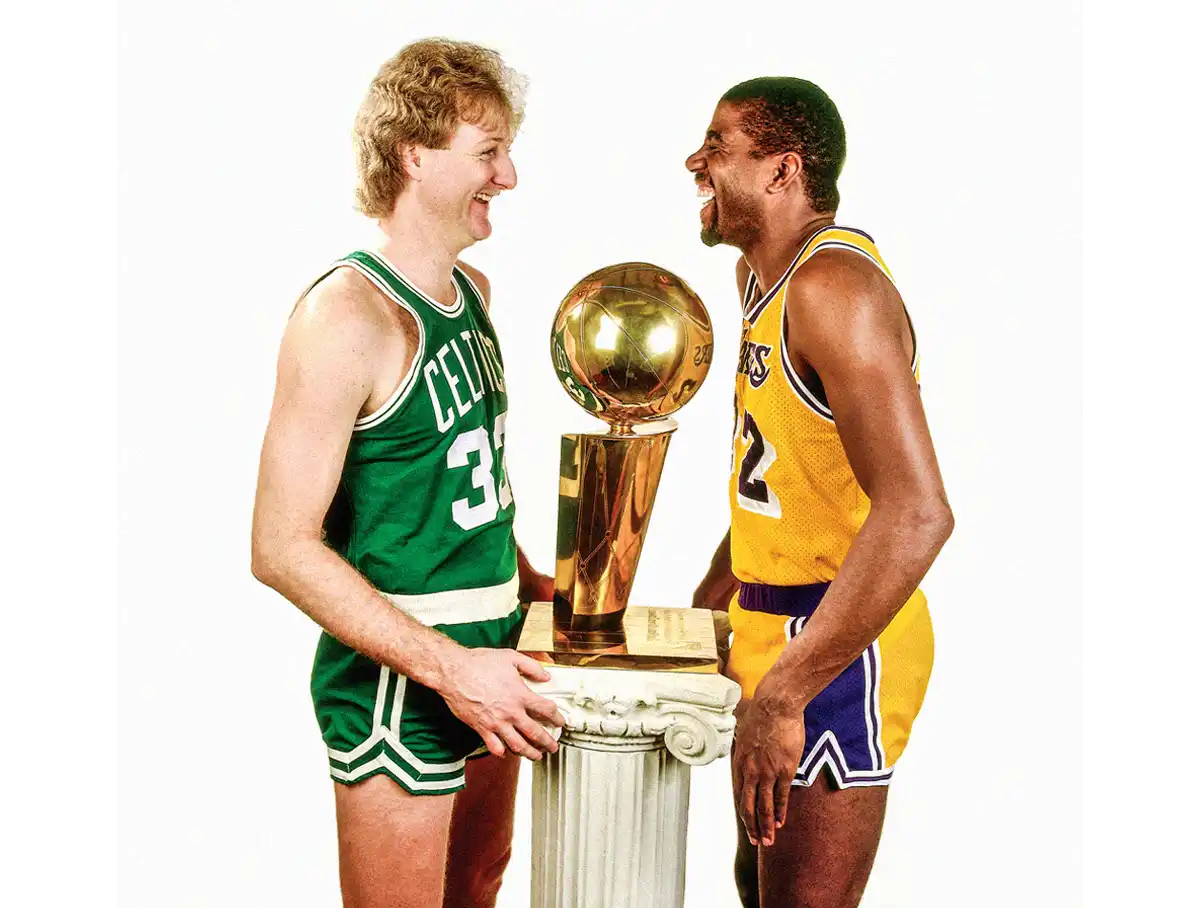
Like I said at the top, Rupp is a convenient, straightforward villain in basketball history. The version of the sport that he represented for decades gave way to something less racist, more player-centric, and more entertaining. He lost. As fans of basketball and of social change, we won. But we still find ourselves needing a villain. Sometimes, it’s pretty straightforward. The rivalry between Magic Johnson’s Showtime Lakers and Larry Bird’s Celtics brought basketball’s ‘race war’ narrative into the 80s and helped the NBA explode in popularity. But Larry Bird, by all accounts, was no Adolph Rupp. We want to feel on the right side of a moral struggle, whether or not there’s actually one playing out on a basketball court. So we search for narratives. We find reasons to hate the best teams, the best players, and their fans. We paint ourselves and our chosen teams and star players as the underdogs, the ones who deserve to win, who do things the right way. Sometimes, as with the 2026 Knicks, it can even feel pretty valid to do so. But here’s my humble opinion about the basketball villains of today: the OKC Thunder, Caitlin Clark, and Victor Wembanyama are pretty fun to watch too. As far as I can tell, they’re not malevolent and they’re not representative of something insidious about our society.
You know who was? Adolph Rupp.