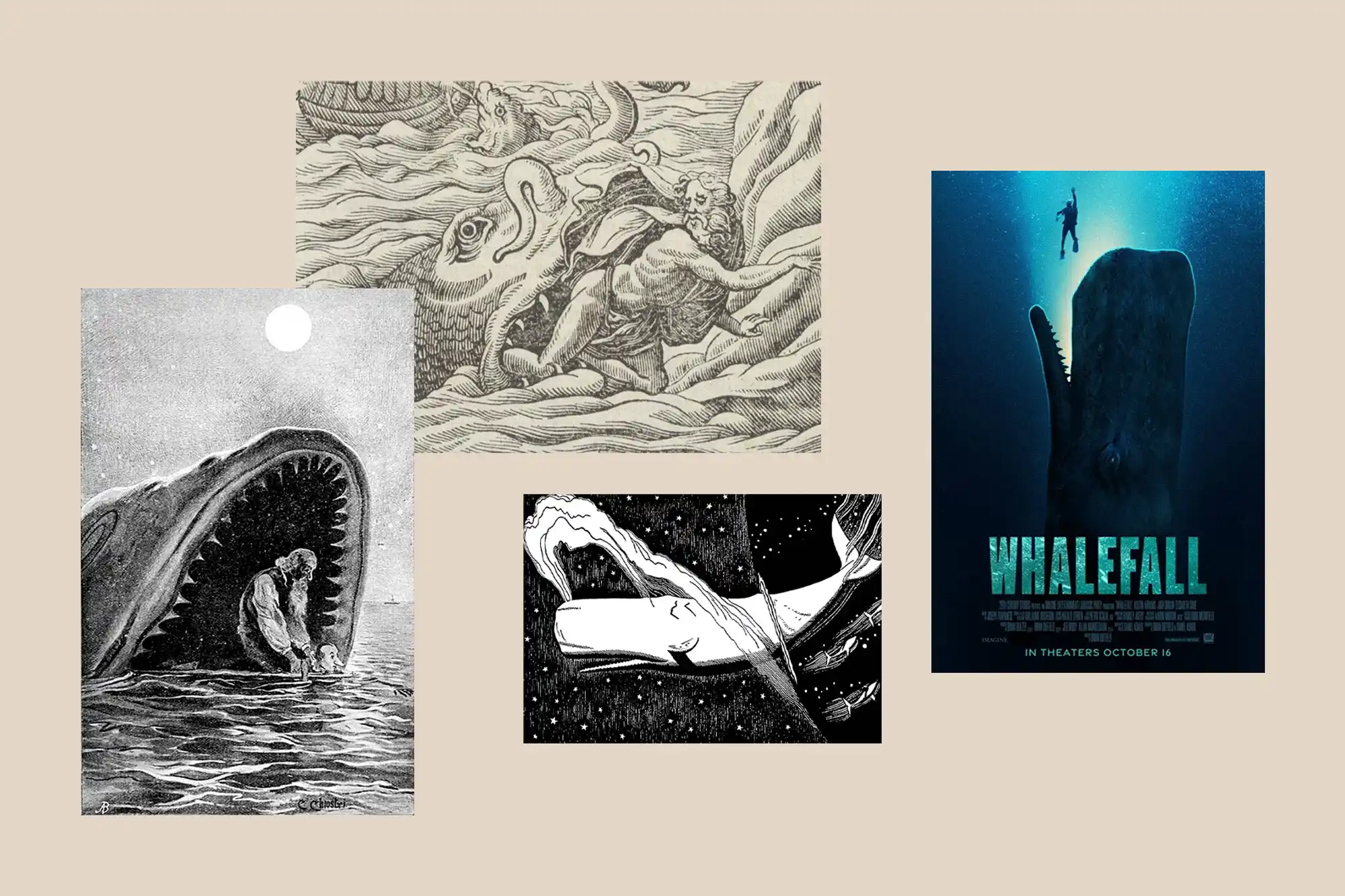
There are few things more tempting to a reader of Herman Melville’s Moby-Dick (1851) than skipping a chapter about whale anatomy. Somewhere between Captain Ahab’s obsessive pursuit of the white whale and Ishmael’s philosophical reflections, Melville launches into extensive discussions of cetology, blubber, skeletal structures, and the commercial uses of sperm oil. For generations, readers have debated the necessity of these digressions, treating them as “boring” obstacles standing between themselves and the actual plot. But what if those chapters were the story all along?
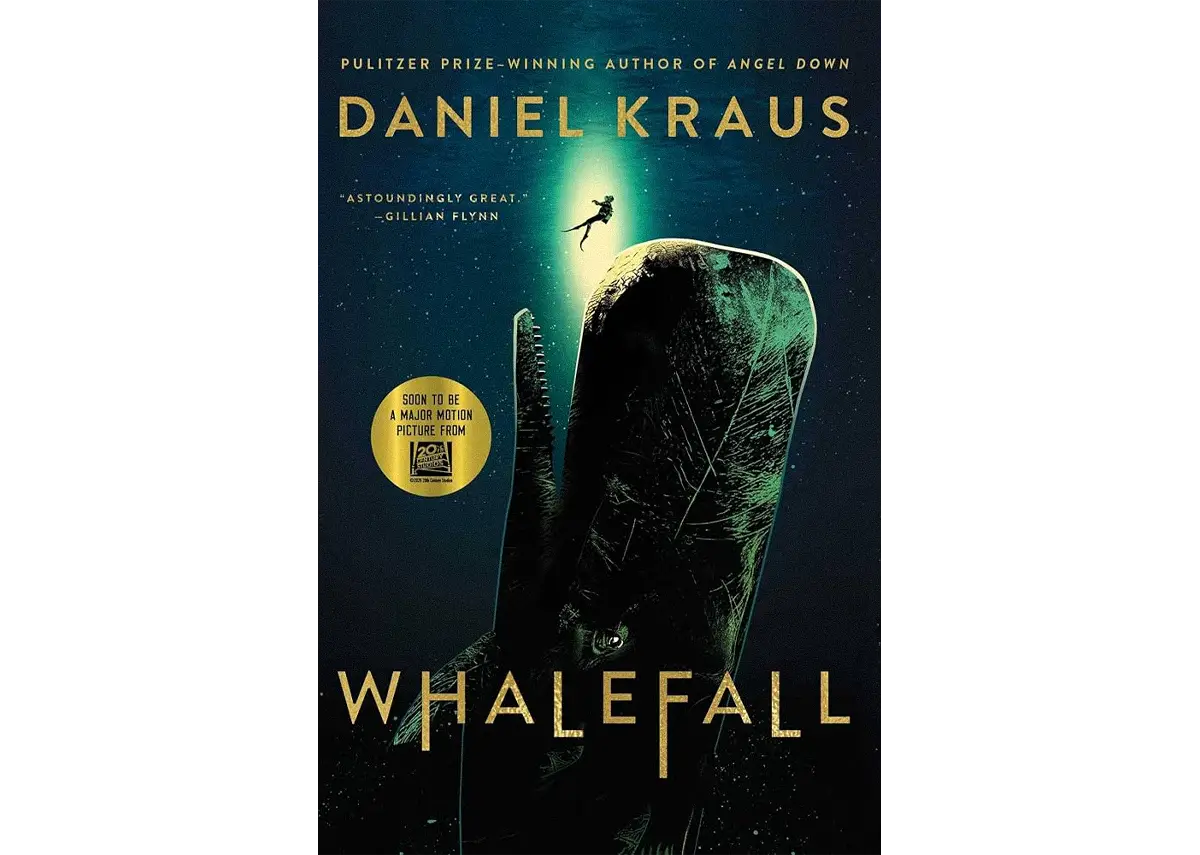
Daniel Kraus’s 2023 novel Whalefall and Brian Duffield’s newly released film adaptation—starring Austin Abrams and Josh Brolin—offer a horrifying argument for reconsidering Melville’s anatomical digressions. In both versions, protagonist Jay Gardiner enters the Pacific Ocean searching for his deceased father’s remains, only to be swallowed by a sperm whale with only one hour of oxygen remaining. What follows is a desperate journey through the creature’s digestive system, where muscular contractions, stomach acids, and the biological processes sustaining one life threaten to extinguish another. Where Melville invites readers to contemplate the whale’s anatomy from the relative safety of the page, Kraus and Duffield force us inside it.
As Kraus puts it irreverently in his novel, “We’re going to sit on this deck and drink till we soften into something whales can suck down easy. We owe them that much, don’t you think?” But why are we so obsessed with the idea of being swallowed whole? Long before Whalefall trapped its protagonist inside a sperm whale, storytellers were imagining what happens when a human disappears into the belly of a beast.
A Brief History of Being Swallowed
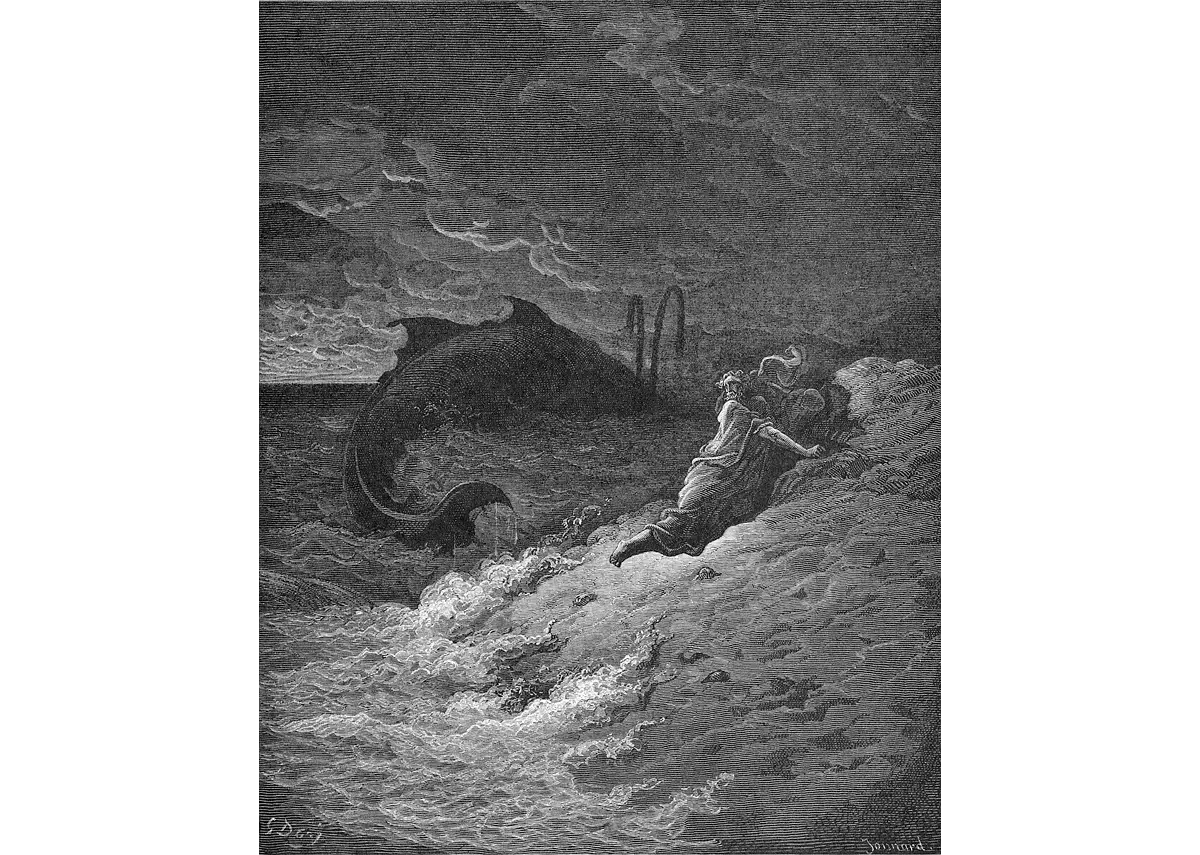
In the biblical Book of Jonah, a prophet fleeing God’s command is swallowed by a “great fish” for three days and nights, his confinement becoming a period of spiritual reckoning and deliverance. A related account appears in the Quran, where the prophet Yunus experiences divine mercy and transformation. In both traditions, the creature’s body serves as both prison and instrument of salvation.
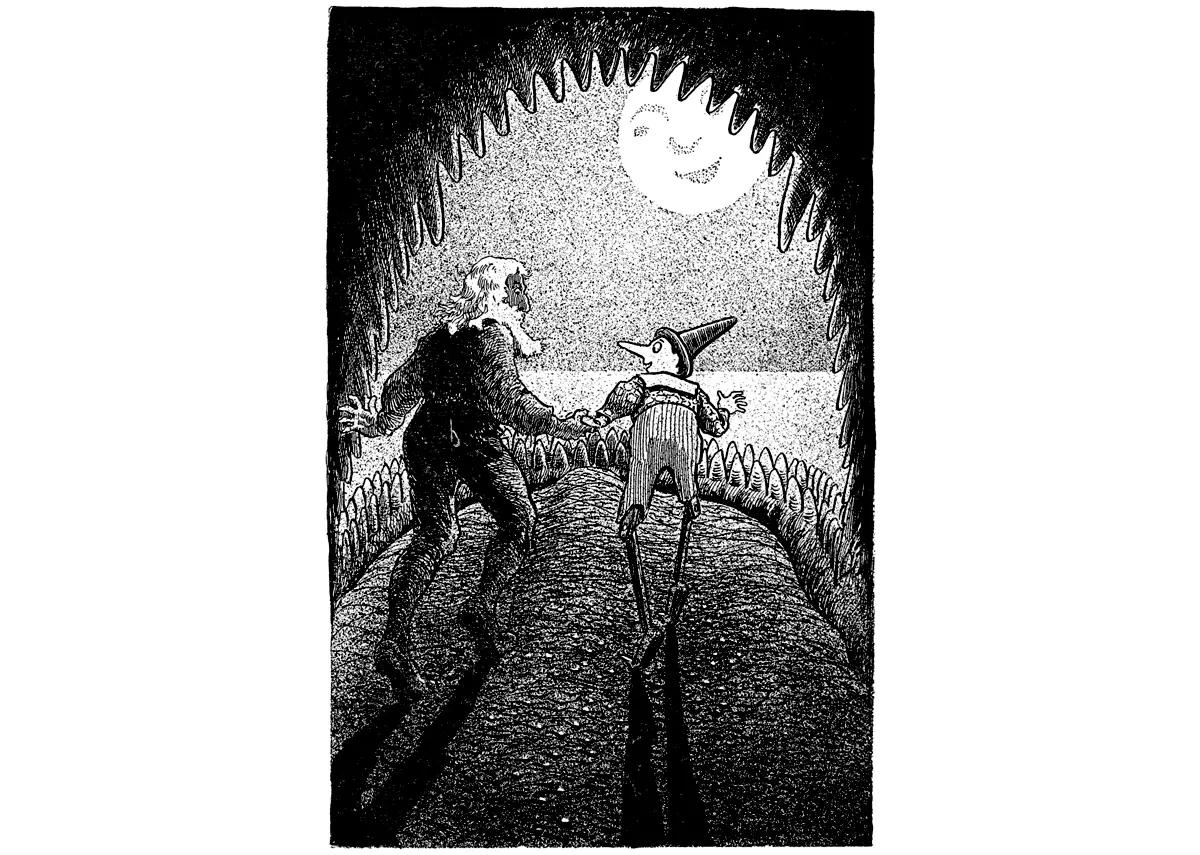
Centuries later, Carlo Collodi’s The Adventures of Pinocchio (1883) revisited the narrative, although the original featured a monstrous Dogfish—rather than the whale popularized by Disney’s 1940 adaptation. Disney’s Monstro offers an almost comically spacious interior, complete with shipwreck debris and enough room for Geppetto to establish something resembling domestic life. Apparently, whale stomachs were once considerably more . . . accommodating.
Across these stories, being swallowed reverses humanity’s familiar position as observer, hunter, and consumer. Melville understood this reversal, although Moby-Dick never literally deposits its protagonist inside the whale. Instead, Ahab becomes psychologically “consumed” by the creature he wishes to conquer, convinced that nature conceals a malicious intelligence he can confront and defeat. In a rather hilarious literary irony, Kraus’s novel repeatedly references Steinbeck’s 1945 novel Cannery Row rather than Melville’s whale. Apparently, even a story about being swallowed by a sperm whale doesn’t have to be entirely Melvillean.
When the Body Becomes the Horror
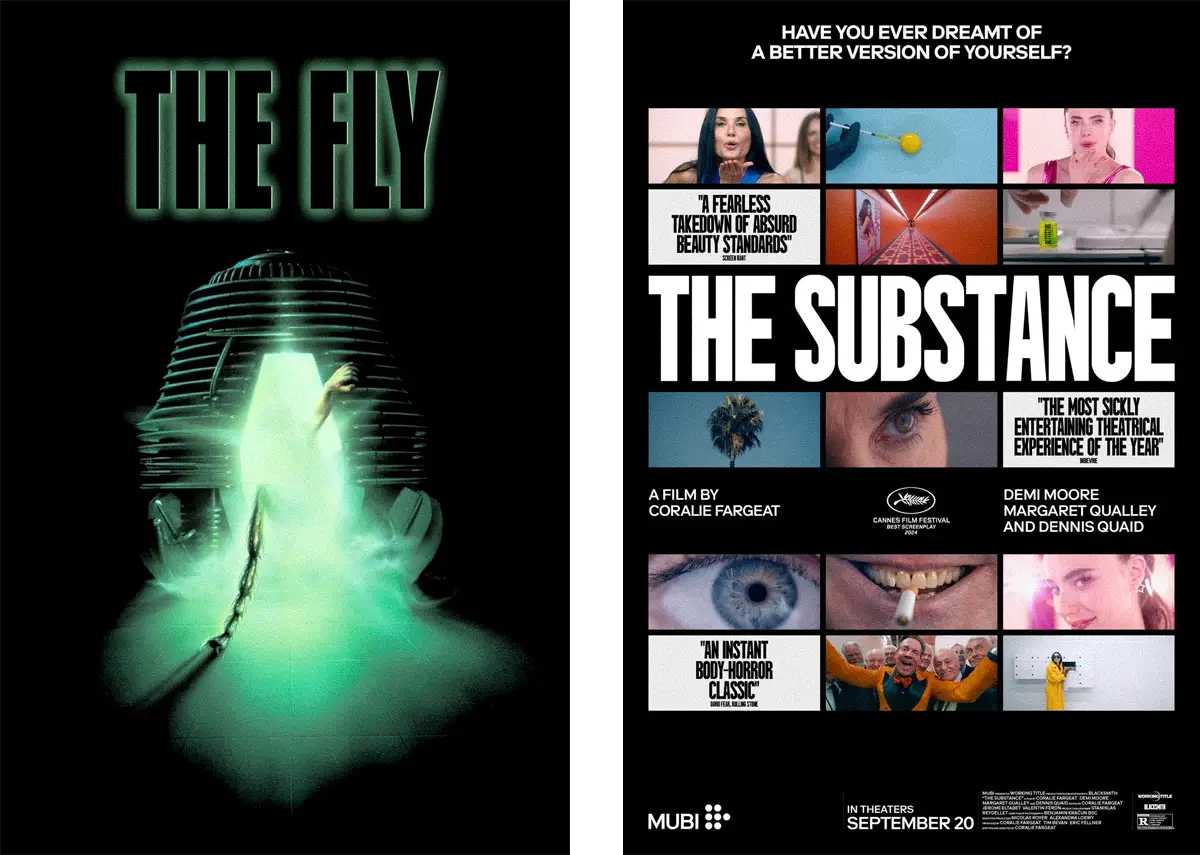
Whalefall confronts not just the fear of being eaten, but the unsettling reality of what happens when the human body meets a body that is vastly bigger, stranger, and entirely indifferent to our survival. Body horror has traditionally explored the instability of the human body, particularly its susceptibility to transformation, invasion, disease, and decay. Films like David Cronenberg’s The Fly (1986) and more recently, Coralie Fargeat’s The Substance (2024) exploit the disturbing realization that our physical forms are far less stable, predictable, or controllable than we would like to believe.
These anxieties feel particularly relevant in an era increasingly preoccupied with the ways our internal bodily processes shape our external appearance. Medications such as Ozempic and Wegovy and craving-suppressing peptides have brought discussions of metabolism, appetite, and digestion into everyday conversation, while social media and wellness culture continually encourage audiences to monitor, optimize, and reinterpret their physical selves. We have become extraordinarily interested in what our bodies are doing, particularly when those processes might be altered to produce a more desirable exterior.
Whalefall offers a grotesque reversal of that fascination. Bodily fluids, decay, and the processes of digestion provoke revulsion because they expose the fragile distinctions between inside and outside, self and other, life and death. For Jay, those distinctions become almost impossible to maintain. The whale’s body surrounds him, presses against him, and threatens to incorporate him into its own biological processes. His survival depends upon resisting a transformation that the creature itself has no reason to recognize as extraordinary. The horror emerges from the realization that the whale’s body is doing precisely what it is supposed to do.
One Breath at a Time
The most effective element of Whalefall may be the way both novel and film manipulate the audience’s relationship to breathing. Kraus reinforces the novel’s terror through increasingly brief chapters that mirror the diminishing oxygen supply in Jay’s tank. In a 2023 NPR interview, Kraus explained that he wanted the chapter breaks to resemble “gasps for air,” transforming the act of reading into something approaching the physical experience being described.
Whalefall director Brian Duffield translates this literary compression into a visceral cinematic experience, using sound, editing, and performance to make Jay’s desperate attempts to breathe almost impossible to watch without becoming conscious of our own breathing. Among the first sounds are wet, labored coughs that evoke an anxiety made painfully familiar during the COVID-19 pandemic, when the simple act of breathing became a source of fear.
The connection is particularly intriguing given that Kraus developed the novel’s premise during the lockdowns of late 2020, when the pandemic introduced a new dimension to body horror, revealing how terrifying it could be when something as automatic and essential as breathing suddenly became difficult, dangerous, or impossible. Whalefall turns that collective vulnerability into a visceral experience, making the struggle for oxygen as horrifying as anything lurking inside the belly of a whale, leaving audiences uncomfortably aware of the air moving through their own lungs.
The Things We Swallow
Yet the most interesting aspect of Whalefall may be the way its biological horror gradually becomes a meditation on grief. Jay enters the ocean seeking the remains of his father, a man whose relationship with his son was defined by a complicated mix of affection, cruelty, instruction, and disappointment. Like Jonah, Jay finds himself suspended between life and death inside a creature whose body becomes an unlikely space for emotional reckoning and transformation.
The metaphor of digestion becomes particularly useful here. We routinely speak of “digesting” information, “swallowing” difficult truths, or struggling to “stomach” unpleasant realities, expressions suggesting that understanding involves incorporating something initially foreign into ourselves. Jay’s journey literalizes that metaphor with almost absurd precision. Jay’s eventual ability to “swallow” the value of certain lessons inherited from his father does not erase the cruelty or pain associated with receiving them. Instead, Whalefall suggests that emotional understanding may require separating what we have inherited from what we choose to carry forward.
What the Whale Leaves Behind
At a time when we seem increasingly obsessed with controlling and transforming our bodies, Whalefall reminds us just how complicated and unpredictable they really are. Sometimes, the most remarkable thing a body can do is simply function as nature intended, even when that means threatening the survival of another living creature.
Through its grotesque imagery and almost unbearable claustrophobia, the film makes the immense, abstract power of nature feel terrifyingly immediate, while reminding us that even the largest creatures remain vulnerable participants in the same ecological systems that sustain us. Where Melville spent hundreds of pages asking us to observe the whale’s anatomy, Kraus asks us to imagine surviving inside it, and Duffield makes us conscious of our own bodies as we watch.
So, the next time you encounter one of those seemingly interminable chapters about blubber, whale heads, or cetology, consider giving Melville the benefit of the doubt. After all, the alternative might be learning those anatomical lessons from the inside.
Further Reading
- “Driving Home Yarns: Oceanic Language and Deconstruction in Melville’s Moby-Dick,” Megan Barnes, 2019
- The View from the Masthead, Hester Blum, 2008
- The Adventures of Pinocchio, Carlo Collodi, 1883
- Whalefall, Daniel Kraus, 2023
- “Powers of Horror: An Essay on Abjection,” Julia Kristeva, 1982
- Moby-Dick; or, The Whale, Herman Melville, 1851 (Chapters 32, 74, and 83)
- Carnal Thoughts: Embodiment and Moving Image Culture, Vivian Sobchack, 2004
- Cannery Row, John Steinbeck, 1945