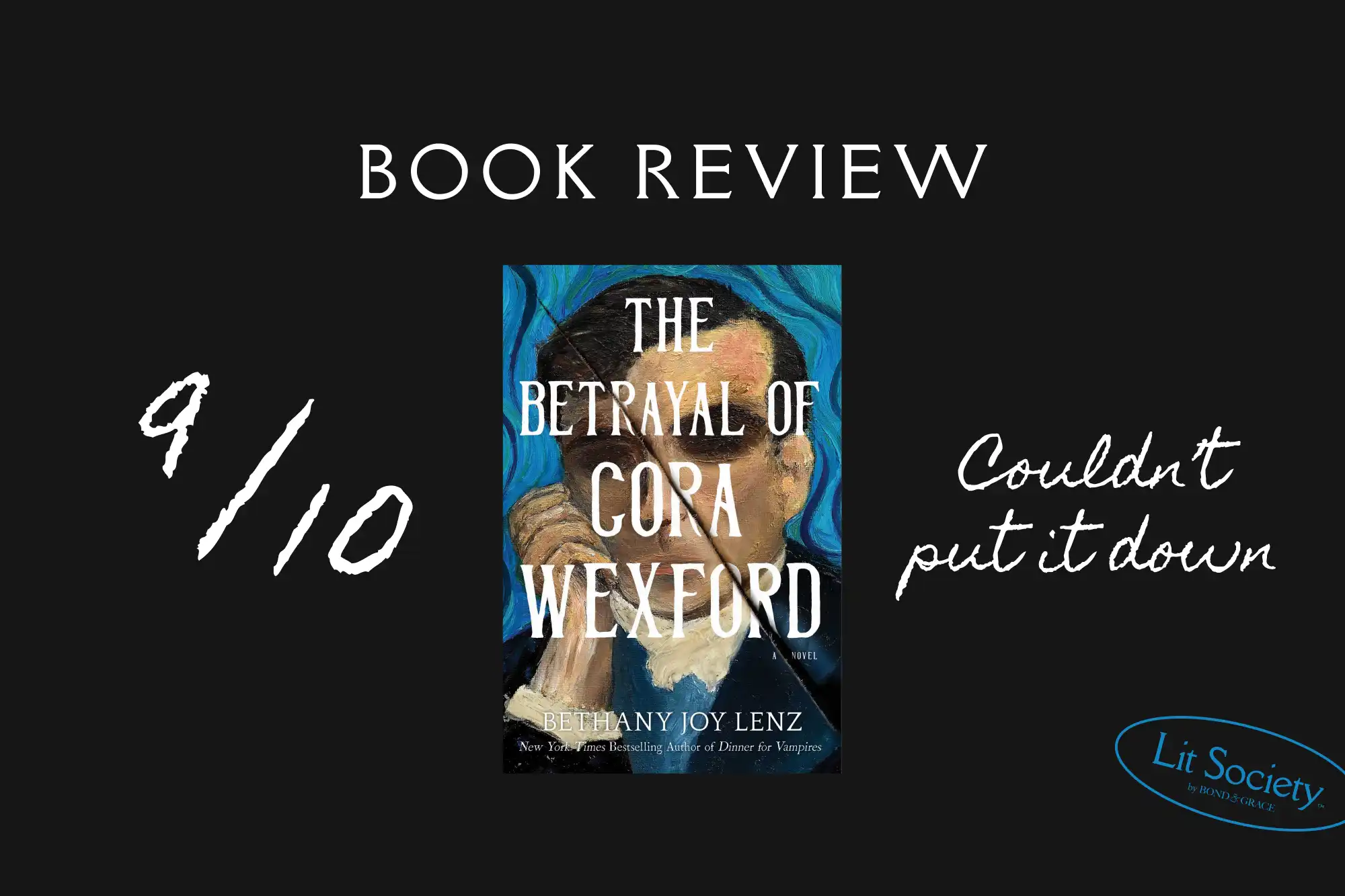
As part of Lit Society’s Book Review Program, members are reading and reviewing books by independent writers we think deserve more attention. This review reflects one reader’s honest experience and aims to spotlight exciting new voices.
Big Take? A dark psychological suspense about gender equality, class, toxic relationships, and the ways society can easily erase the marginalized and vulnerable. Perfect for readers who love strong female characters, historical elements, and stories that keep them guessing.
- Would You Recommend It? Yes
- Book Club Worthy? Yes
- Would You Read This Author Again? Yes
- Did It Change How You See Something? Yes
- Is It More Plot or Ideas? A balance of both
- Pace: Steady
- Emotional Impact: Lingering
- Best For: (e.g., vacation read, quiet weekend, deep thinking, etc.): A quiet, preferably dark and rainy, weekend in which you can immerse yourself in this haunting story.
- Skimmable or Demands Attention? Close Reading
- Would You Reread It? Yes
Set in London in the 1880s against the backdrop of the Jack the Ripper murders and the women’s suffrage movement, The Betrayal of Cora Wexford by Bethany Joy Lenz (Simon & Schuster, October 20) is a sobering reminder of the lengths, both big and small, that some take to hold power over others.
The story centers on Cora Wexford, a thirty-eight-year-old artist who recently moved to London after fleeing her tragic past in America. She finds solace in her career: painting the dead and adding small details that reveal their true selves. In the midst of creating a new life while harboring her own secrets, Cora is introduced by friends to Miles, a charming stranger who takes a deep interest in her. He’s seemingly too good to be true, but Cora ignores her instincts, craving acceptance by her new friends and convincing herself she’s “owed more than the spinsterhood I’ve been dealt.”
As their relationship develops, she’s commissioned by Armand, a gallery owner, and Ruth, a suffragist, to paint portraits of women from lower-income communities who died as a result of the systems that ignore them. At the same time, the brutal murders of women in Whitechapel become more frequent, breeding fear and more opportunity for men to reduce and exploit these women in headlines and penny shows. Cora becomes increasingly disoriented in her relationship with Miles as she tries to determine whether she’s being gaslit and manipulated—“a thousand small and bleeding wounds, the source of life targeted with surgical calculation,” in a manner similar to Jack the Ripper—or allowing her own trust issues to cloud her judgment. In her journey to discover the truth about Miles, Cora rediscovers herself.
Bethany Joy Lenz’s masterful use of metaphors magnifies the tension throughout the story and foreshadows what’s to come. In one scene, Cora and Miles see a performance of Jekyll & Hyde. Lenz shares some of the dialogue so readers feel like they’re watching the show alongside Cora, as Jekyll tells his wife he fears he’s possessed, then transforms into Hyde. Cora grips the edge of her seat as the woman next to her faints out of fear, while Miles falls asleep, unfazed. In another scene, Cora tries to paint Miles but struggles. “Why could I see so clearly the people I painted in coffins or deathbeds, but I couldn’t see this live man who slept in my bed and told me he loves me?” she wonders. Shortly after, Ruth spots the unfinished painting in her apartment and mistakes it for “an excellent imagining of the Whitechapel murderer,” drawing a chilling parallel between the two men.
Miles is a complicated character, and because the novel is written in the first-person, from Cora’s point of view, dialogue is the only way readers get a glimpse into who he is until later in the story. Thankfully, Lenz’s dialogue is brilliantly written, so much so that readers remain as uncertain about Miles’s character as Cora. For example, a simple observation by Cora over dinner quickly escalates into an argument, in which Miles accuses Cora of seeing the worst in people and concludes he’s the victim. His interruptions, terse statements, and quick subject changes give the impression of thoughts being lobbed at Cora, with little time for her (or the reader) to process. Cora apologizes and admits he’s right at some points, but leaves the conversation feeling as lost as the reader: “There was no resolution to be had and every attempt to redirect us back to a clear, productive line of thinking became another road into the labyrinth.”
The Betrayal of Cora Wexford is a story about the erasure of women—in relationships, by established systems, and even at the hands of themselves as they strive for acceptance in society—and one woman’s fight to find herself again. For those troubled by recent conversations around women’s right to vote and headlines about violence against women and girls with minimal consequence, this story will feel uncomfortably familiar. But it can also provide hope, reminding us that women do, in fact, have incredible power when they come together to reclaim what’s been taken from them.
Favorite Lines?
“I’ve known too many men who speak in bouquets but have never gardened a day in their life.”
“It’s funny how sight is a function of the eyes, but without vision inside, we miss the plot.”
“Haven’t you ever noticed all the systems we live under keep women living in reaction to the male fear of inferiority?”
“What if I was completely honest about what I think and feel and who I am? I wondered. What if I didn’t bend to fit anyone’s expectations except my own?”

Recommended Media?
🎵 “Vampire” by Olivia Rodrigo
🎞️ The Talented Mr. Ripley (1999)
📺 Tell Me Lies (Hulu)
🎬 Fear (1996)
Interested in purchasing The Betrayal of Cora Wexford? Support Bond & Grace and purchase the book via Bookshop here.