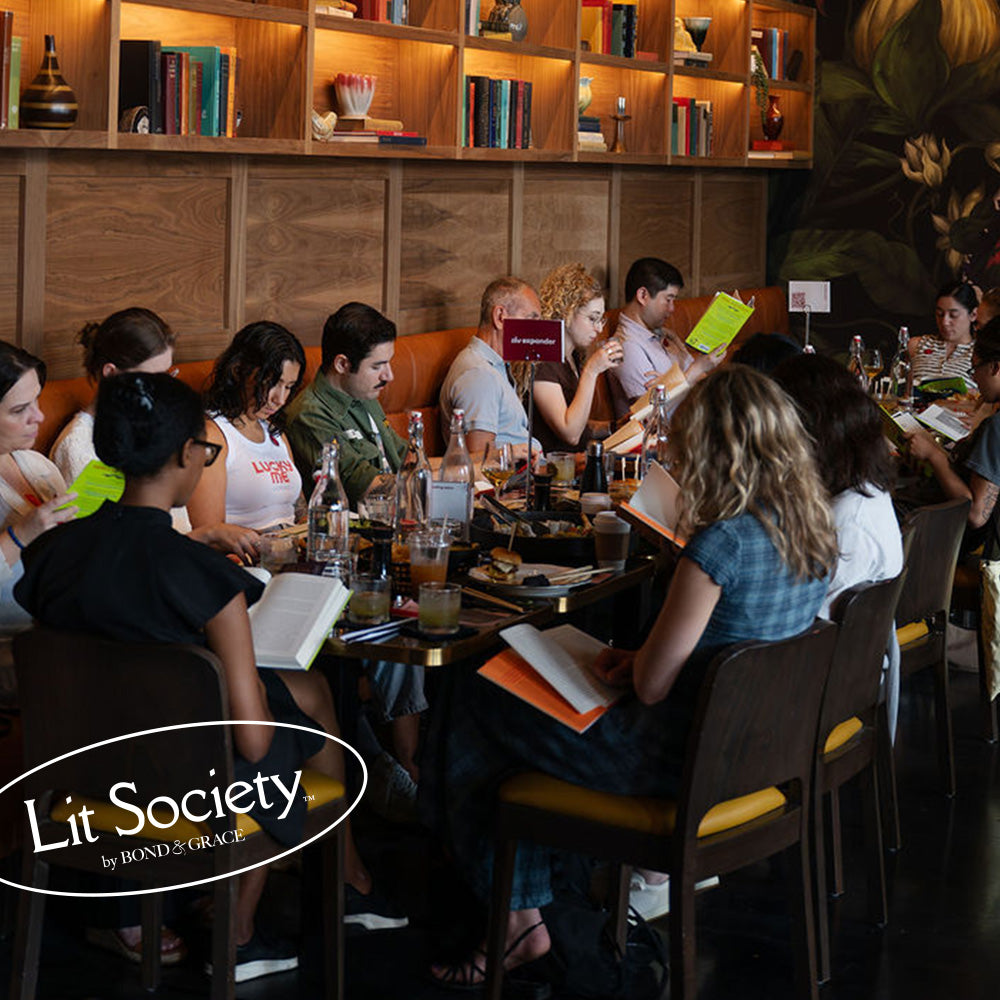
As part of Lit Society’s Book Review Program, members are reading and reviewing books by independent writers we think deserve more attention. This review reflects one reader’s honest experience and aims to spotlight exciting new voices.
Big Take? An eerie retelling of the real goings-on in Iran that stole the revolution from its people, this winding epic will help you better understand its modern landscape. If you know slim to nothing about Iran, it’s worth taking in this story about greed and corruption limited to six unique people from different segments of its most recent history.
- Would You Recommend It? Yes
- Book Club Worthy? Yes
- Would You Read This Author Again? Yes
- Did It Change How You See Something? Yes
- Is It More Plot or Ideas? Ideas (Balanced! Themes and a timeline that is easy to follow). Be prepared to hold numerous names as you read.
- Pace: Steady
- Emotional Impact: Lingering.
- Best For: Pondering, sharing, gateway drug into geopolitical interest
- Skimmable or Demands Attention? Close Reading 100%
- Would You Reread It? Yes
This is an intimate look at the people shaped by Iran’s young revolutionary regime beginning in 1979, when the Pahlavi monarchy fell and the country became an Islamic Republic. What first started as a call for liberation by impoverished, devout communities was soon used to justify renewed oppression, fueled by sweeping cultural fear backed by tradition. When the revolution playing out in your neighborhood isn’t, in fact, televised at all, but rather spread by the people, what would you do?
Published in June, Stolen Revolution presents the facts and demands active engagement from readers in the West, especially those with limited background in Iranian history or Islamic politics. Leave your assumptions at the door as you travel through the 80’s into today and feel every ethical lashing that comes with it. We meet established figures in the political system, young people maturing and getting an education as their world attempts to silence them, and a host of others challenging the dynamics that no longer suit them, spurred on by compounding political action.
This epic is written by two award-winning journalists who offer glimpses of humanity and even levity through the rise and fall of political leaders, their families, and the weight-bearing offices held firmly by Iran’s clerical establishment. Yeganeh Torbati and Bozorgmehr Sharafedin have assigned weighty humanity to some of the most graphic tales of revolution through rigorous research derived from unpublished autobiographies and papers in this breakout work of narrative nonfiction. Told through the lives of six individuals, each of whom falls in and out of love with their country, the book tells a story of exemptions and the slow disillusionment with nationalism as trust between neighbors and the institutions that bind them slowly erodes. The journalists’ ability to blend terminology with cultural context is a triumph, making Stolen Revolution’s matter-of-fact-style and anecdotes feel like immersive gossip that’s worth retelling.
You’ll get an in-depth look at a dynamic that is both controversial and all too familiar in the US, wherein both religious and secular ideals have to coexist in an all-powerful governing body. To take power, those running for office must campaign to both spheres. You’ll witness the progression of the Islamic Republic referendum and the ensuing abandonment of the religious ethos that initially put leaders in charge with the best intent, eventually giving way to an unchecked, unchallengeable system of corruption. You’ll discover what happens when a conservative, religious base elects its figures into power, and the near immediate abandonment of those constituents sets a volatile stage for reform in which radicals—or rather fundamentalists—double down with greater fervor. Shifting blame, readjusting the reasons for change, creating power imbalances in an us‑versus‑them brawl—these are industry standards for public takeover.
Stolen Revolution has greater implications beyond Iran, offering critical insight into our own feelings about imperialism in the US. Where absolute power is secured by the support of a national, devout, religious base and politicians are encouraged to walk both sides rather than protect a singular, original viewpoint, it’s a wonder we aren’t all talking about this book in a time when Tehran is again occupying the world’s thoughts as our own anxieties brew at home. Writing and reading from a country that sings “No Kings,” I encourage you to think deeper about race, religion and creed, as you turn the pages of Stolen Revolution and consider how we too might soon be divided from our own neighbors.
P.S. The audiobook is worth it!
Favorite Lines?
- “Asked by an observer why they were closing the paper, a young gourdsman replied that the newspaper was ‘shit,’ and the two million people who read it were ‘shit too.’” Ch.4
- “These gatherings, happening in rooms across the country, were the green shoots of a secular civil society that now had space to breathe. Perhaps no phenomenon of that era would be more far-reaching in its consequences, in the way it shaped an entire generation of organizers, politicians, journalists and activists… The more intellectually minded reformists considered civil society’s development essential to their project of transforming Iranians from subjects to citizens.” Ch. 10, pg. 89 - Setting the stage for Mohammad Kahtami, the fifth president of Iran and his top concern citing stronger national relations and a free press.
- “The audience was seated, and four Kurdish dancers, in matching red-and-black outfits, took the stage. For a few seconds, they stood there in awkward silence. The venue was refusing to play the music. Hila grabbed the microphone and apologized to the dancer. Then she leaned toward the control room, chewing her lip in frustration.”
- ‘If a country is not going to stand on the foundations of its own traditions,’ she said, ‘it’s fate is sealed.’” Ch.11 pg. 108
Recommended Media?
How to Read Literature Like a Professor by Thomas C. Foster (2003)
A Girl Walks Home Alone At Night (2014) - Modern Iranian Cinema with a retro-cultural lilt
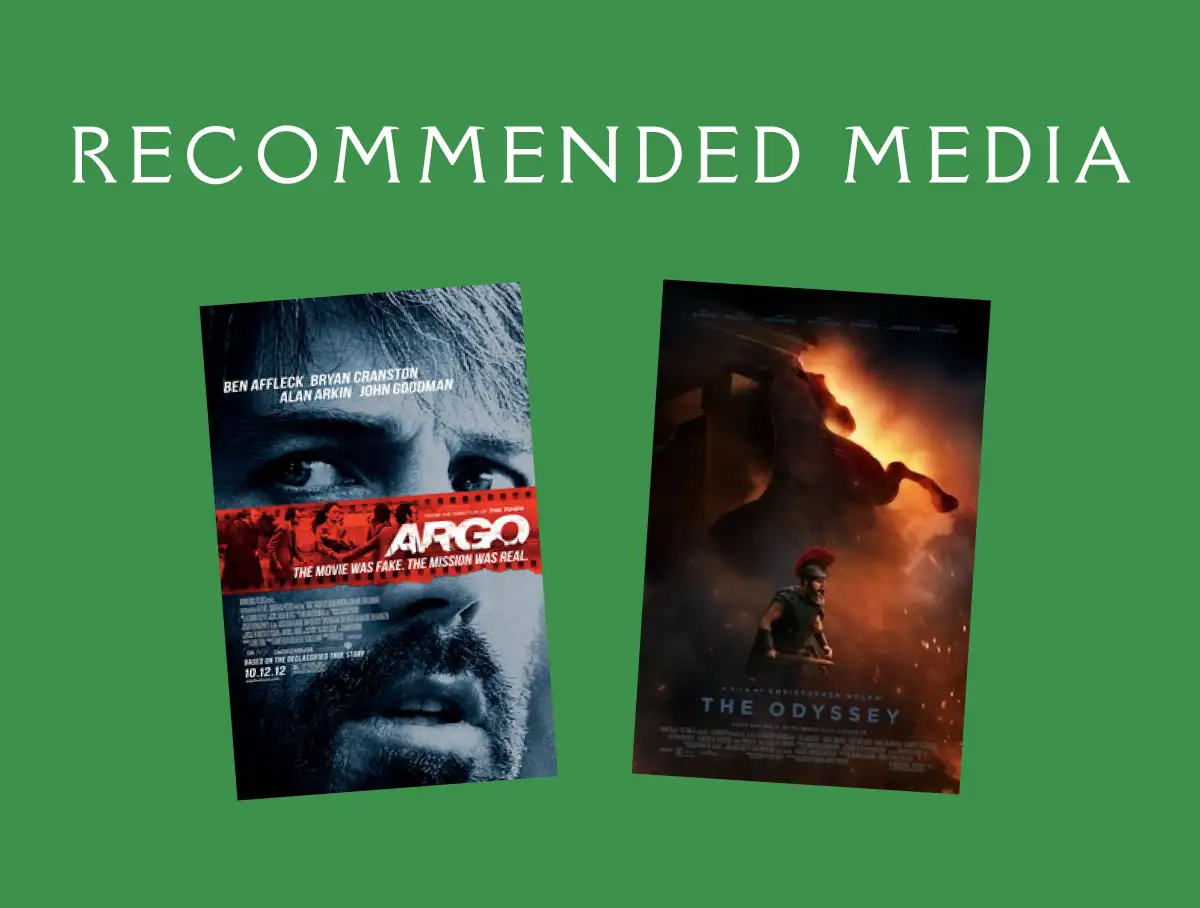
Argo (2012), Tehran in the early 1980’s - Beware of the Westerner’s lens
The Most Hated Family In America (2007), Westborough Baptist Church
Creed (2015) - Family, allegiance, religion and duty
The Odyssey (2026) - What happens when the war is over, and we’re left to rewrite our rules to make sense of what we’ve done.
Read if you liked: Killers of the Flower Moon or Devil in the White City
Interested in reviewing books for Lit Society? Join our growing team of member reviewers and help champion independent authors and unforgettable reads.