At first glance, The Picture of Dorian Gray (1890) seems like a fairly straightforward fantasy about a beautiful protagonist wreaking havoc on London. Because the characters spend so much time referring to sin and evil, casual readers often mistake the novel for having a moral. But Wilde offered a more complicated interpretation, once writing that Dorian Gray “tries to kill conscience, and in that moment kills himself.” The novel's narrative trick is that it lets the reader convict Dorian of the worst thing they can imagine without confirming their biases. In fact, at a party Wilde once pulled a woman into another room to confess to her that Dorian’s great sin was; “He ate peas—with a fork.”
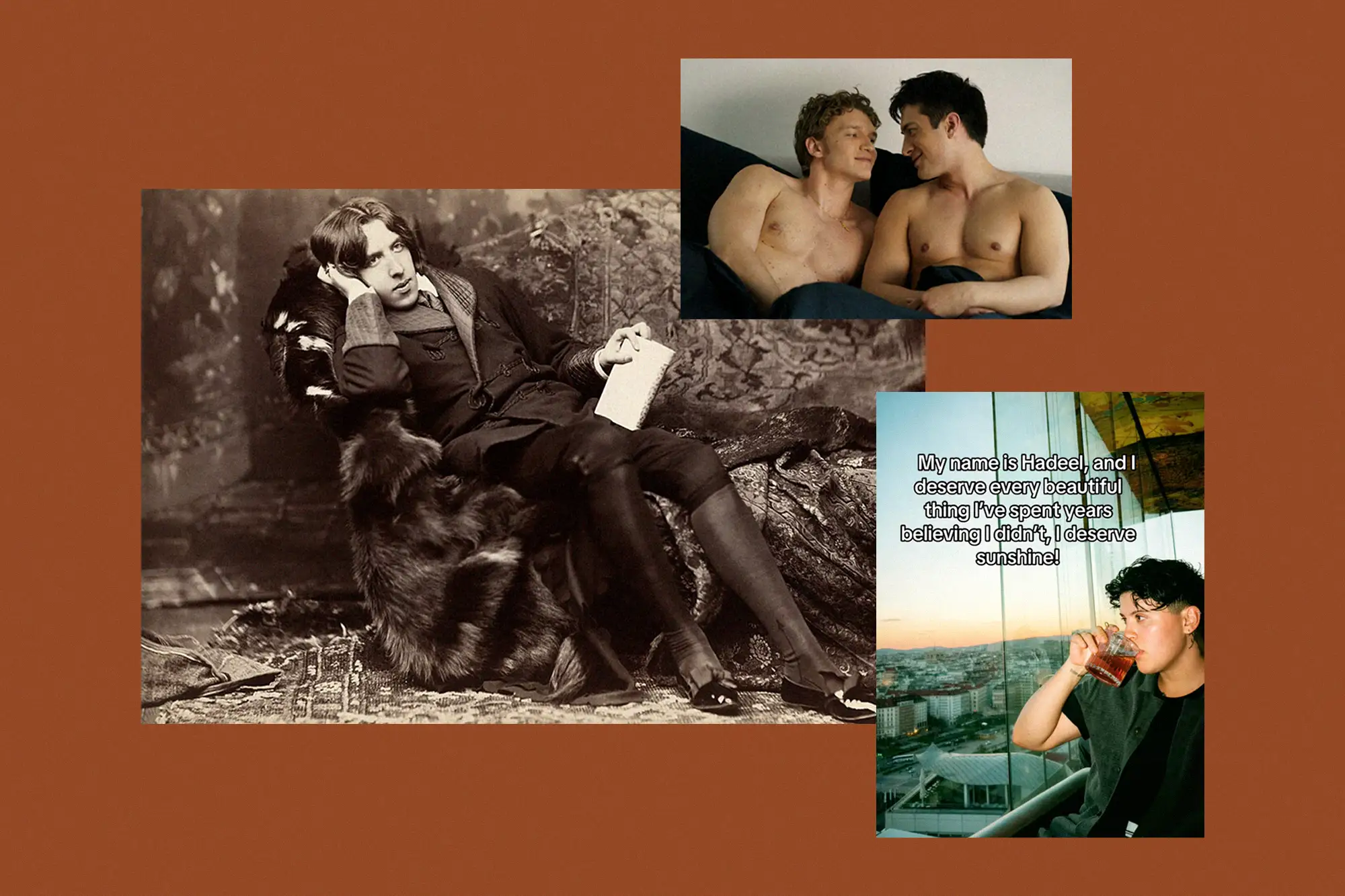
More than a century later, Wilde has become a queer icon, and his relationships with men have understandably shaped the way we read his work. But that legacy can also flatten the more complicated expressions of sexuality that run through his writing.
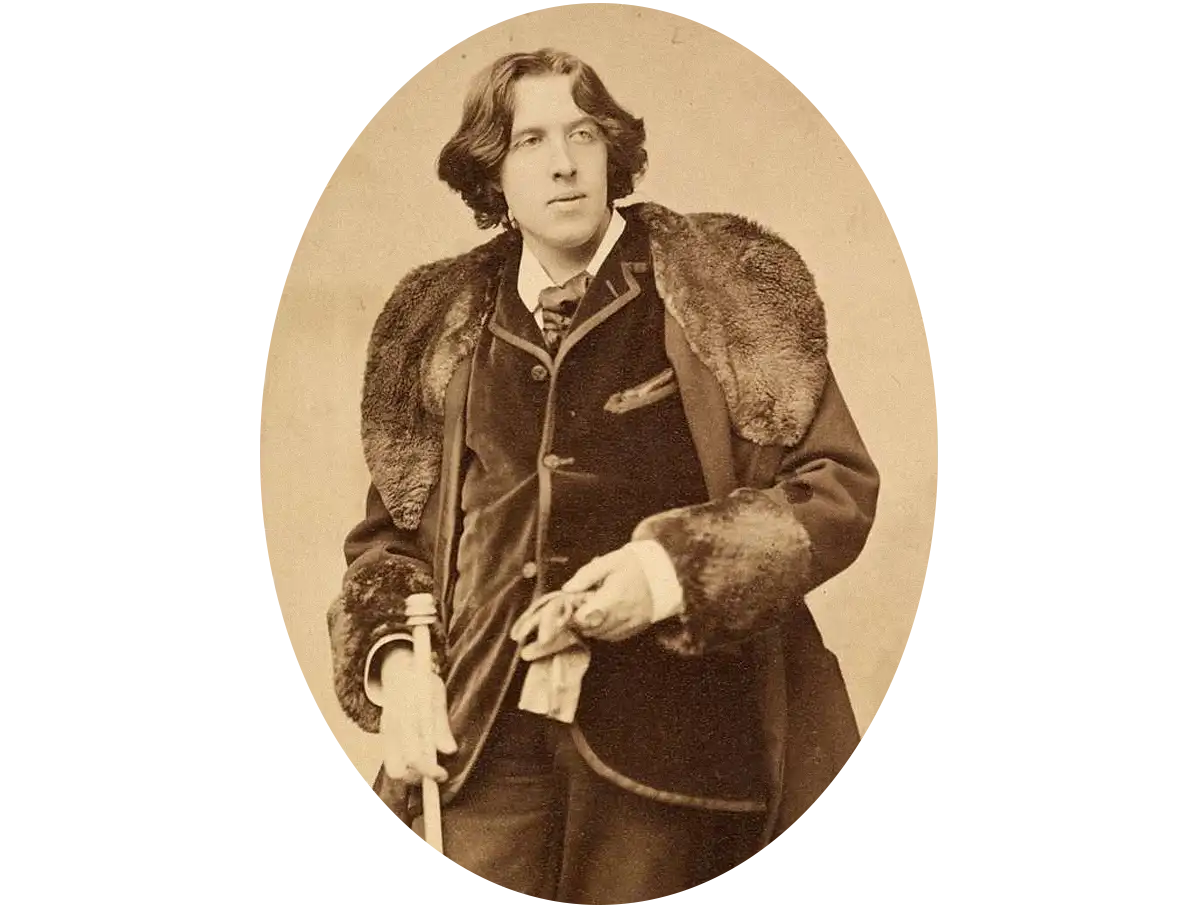
Under the surface of the simple facade is a deeper and more complex network of sexual connotations that escape the confines of Oscar Wilde's only novel and extend through his plays, short stories, and poems to create a uniquely bisexual dynamic of desire. Literary analysis of Wilde's work typically dismisses female love interests as a smokescreen to avoid Victorian censorship. While this comes from a place of allyship, it belies Wilde's lifelong project of rejecting Victorian morality. To read Wilde’s work exclusively through the lens of repression is to overlook how fluidly his writing moves between attraction, performance, and the pleasures of desire.
Let’s begin with Wilde’s only novel, The Picture of Dorian Gray. The male protagonist, Dorian, falls in love with Sibyl, a young actress whom he later cruelly rejects. Sibyl’s rejection is typically viewed as a symbolic rejection of heterosexual partnering, but she is far from Dorian's last female romance, and Dorian is just as abusive to his male suitors. The point of the book is that Dorian is irresistible and cruel. In the 1891 extended and re-edited novel-length version of the Picture (sometimes called the “censored” version because Wilde softened some of the novel’s more explicitly homoerotic passages following the controversy surrounding its original publication), Dorian starts dating a pretty young Duchess of Monmouth named Gladys. Dorian introduces Gladys to his friend and corrupter, Lord Henry Wotton, and then steps away, allowing the pair to spar flirtatiously. Their exchange is casual in a way that implies harmless fun, showboating Wilde's skill in flirting and his voyeuristic desire to watch someone else flirt.
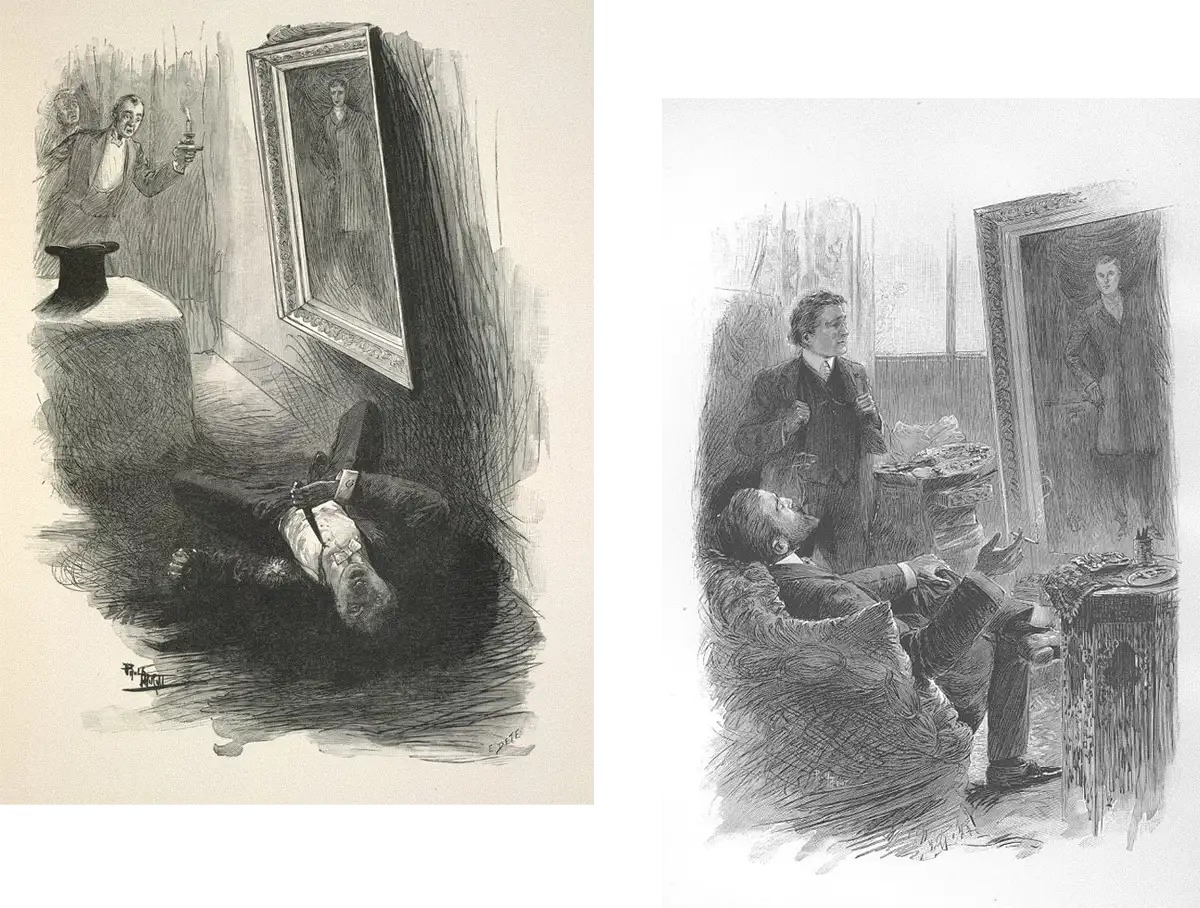
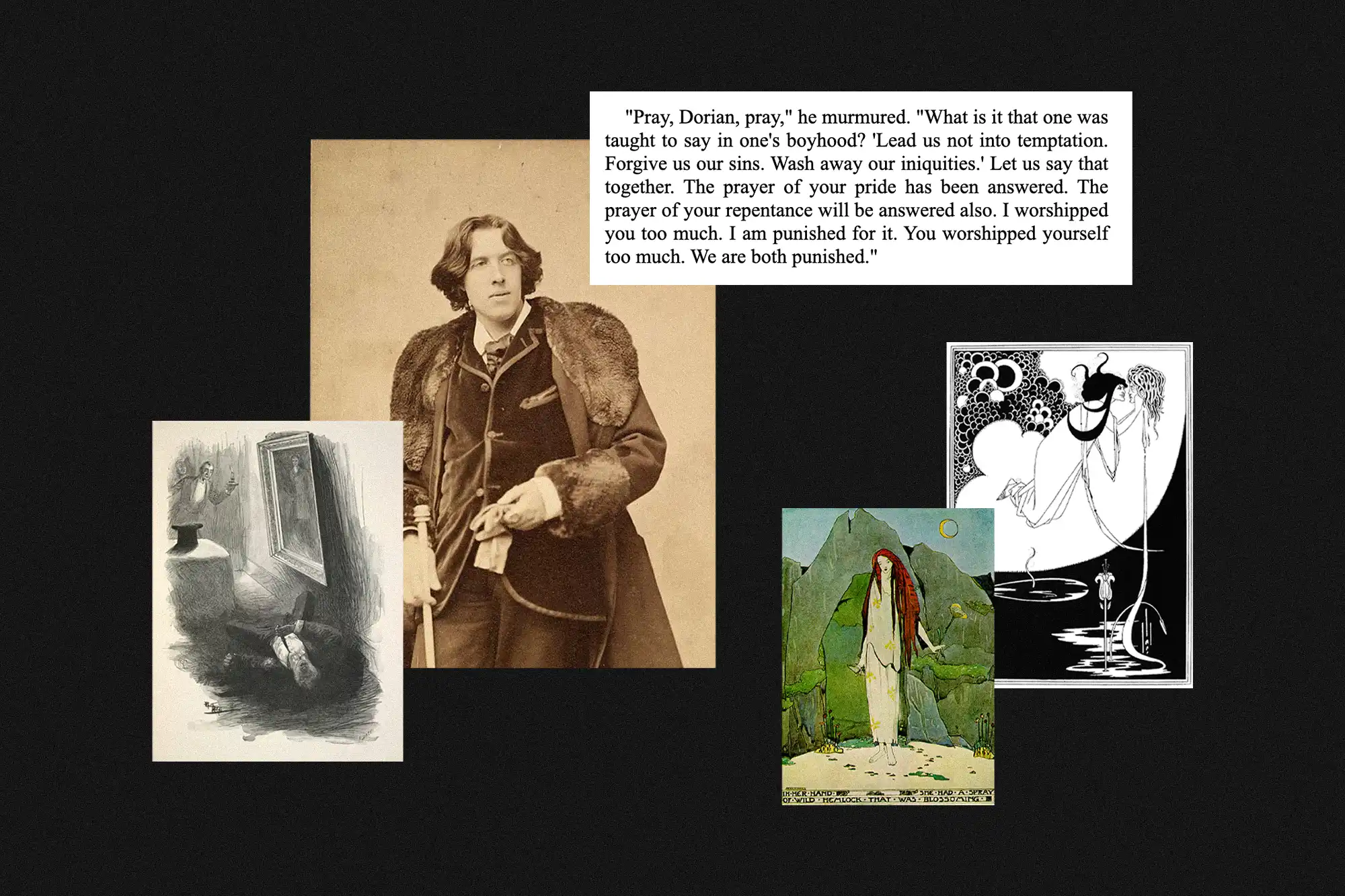
Alongside Wotton and Gladys' harmless flirting is Basil Hallward’s arc within the novel. The painter of Dorian’s cursed portrait, Hallward is very explicitly in love with his subject, saying that even when Dorian isn't visible on his canvas, Hallward paints with him in mind. Hallward acts as a counterweight to Lord Henry Wotton, whose hedonistic worldview profoundly influences Dorian. Both men are attracted to Dorian, but their desire takes different forms. Wotton's encouragement costs Dorian his soul, while Basil offers Dorian a final chance at redemption, insisting that they can solve Dorian’s problem together, through prayer. Their contrast suggests that Wilde is less interested in condemning desire itself than in exploring the different forms desire can take, from Gladys’ selfish but non-possessive desire for Dorian, Wotton’s desire to make Dorian worse, and Hallward’s desire to worship Dorian aesthetically.
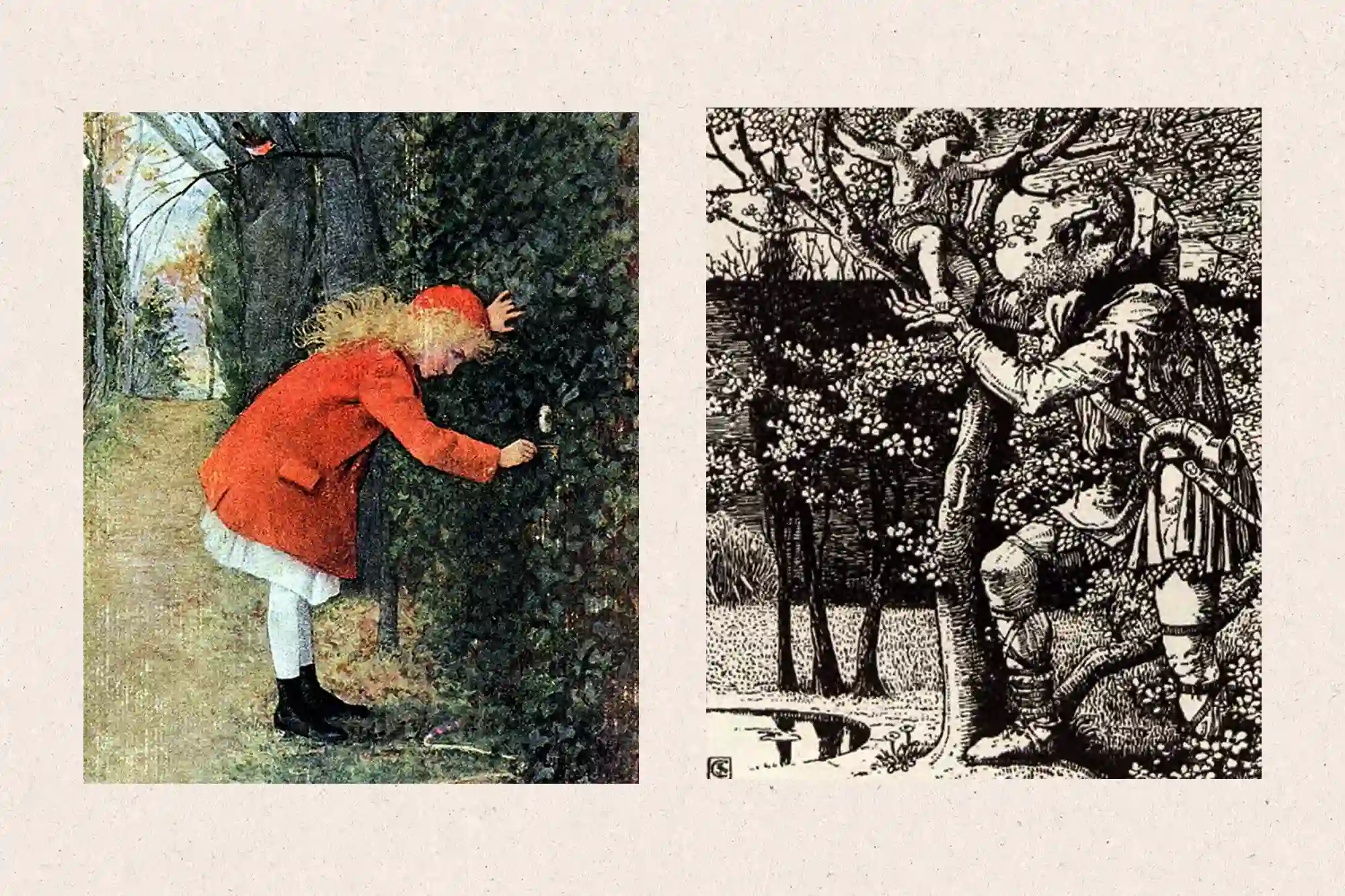
Across Wilde’s work, the role of men and women in these redemptive arcs shifts, where love is cruel but redemptive. This tension also appears in The Fisherman and His Soul (1891), a dreamy little story where a fisherman captures a mermaid in his nets, but frees her when she offers to help him fish. He proposes to her, but she tells him that he must first send away his soul.
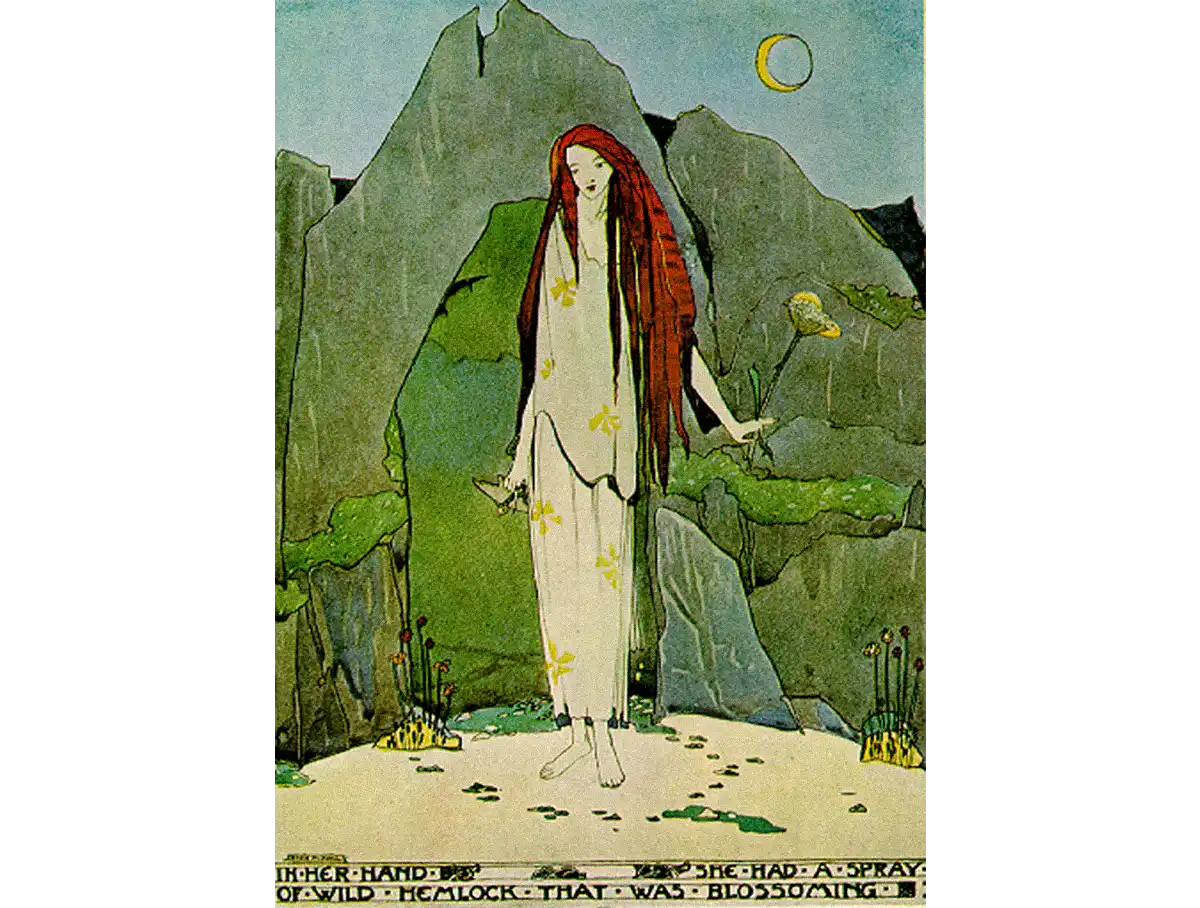
There is a potent sequence in The Fisherman where he visits a witches' sabbath with a young redheaded witch. He spends all night dancing with her, and as she's pressed against him, panting on his neck, he notices that they are being watched by a stunningly attractive young man in black velvet. To pledge their fealty and rid the fisherman of his soul for good, he must kiss the hand of the man in velvet, as the witches do. The only thing that stops him is that he accidentally crosses himself, dispersing the witches’ gathering before he can complete the ritual. That, however, is not the most homoerotic sequence in the story. When the Shadow is severed from the fisherman, it returns periodically for years, trying to win him back with money, fame, and power. Finally, it offers to introduce him to a pretty girl and the fisherman springs right out of the ocean. But the girl is a trap, and by the time the fisherman returns to the ocean, he finds his wife dead among the shoals. When he cradles her to his chest, the Shadow joins them. When the fisherman’s heart breaks over the mermaid’s death, his Soul reenters him. He drowns holding her body, and the two are buried together.
Each member of the throuple is missing something that would make them a complete spiritual being. Within the context of this story, the only difference between the “children of nature” (fairies, mermaids, fauns, etc) and humans is that they are born without souls, which humans store in their shadows. When the fisherman finally removes his, the Shadow is forced to travel the world without a heart. All he longs for is to have a heart again. The fisherman has a heart, but he gave it to the mermaid. The only way all three characters can achieve grace, with all their theological organs in place, is in a kind of ménage à trois. Wilde is imagining redemption through a union that resists conventional boundaries between love, desire, and spiritual fulfillment.
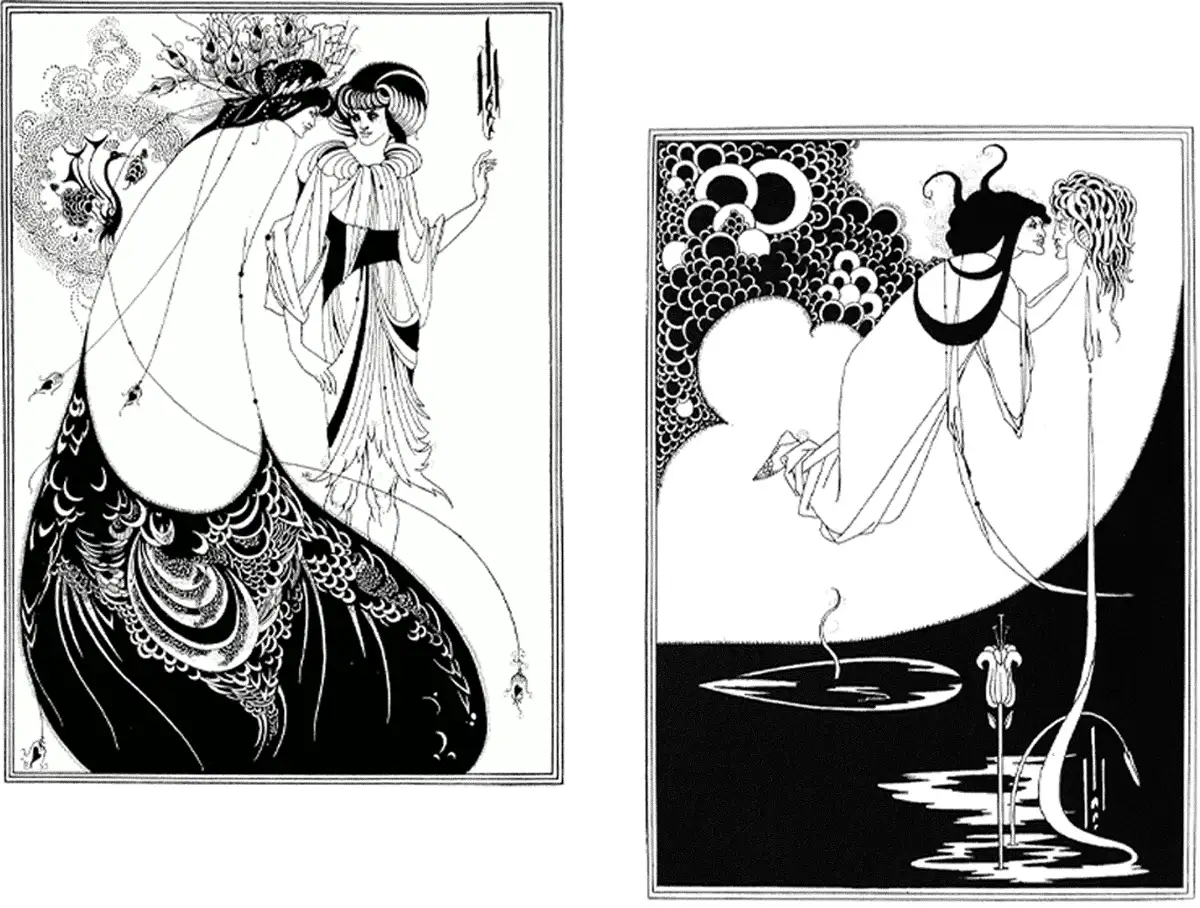
Wilde returns to this strange entanglement of the body’s organs, desire, and salvation in Salome (1893), but this time with tragic consequences. The play follows Princess Salome, a beautiful young woman wreaking havoc on ancient Judea. She is unable to escape the cycles of abuse around her but is intrigued by Jokanaan the Baptist for maintaining his strength while imprisoned and physically powerless. When he refuses to bend to her will, she orders his execution. She doesn't pay much attention to his preaching, though she laughs when he insults her mother and stepfather. Because Salome is not a fairy tale, she can't extract salvation from Jokanaan’s severed head. But there is a secret, redemptive homosexual pairing hidden inside Salome.
When discussing the homoeroticism of Salome, most interpretations begin and end with the Syrian captain of the guard who takes his own life in the first half and the Page of Herodias. The homoerotic tableau of Jokanaan naked and chained up in the well has been obvious to critics almost since publication. Since Wilde's trial, however, critics have been troubled with Salome's juxtaposition with Jokanaan’s naked and bound body.
Personally, I doubt there was any true conflict in Wilde's mind when he described Salome as naked except for ropes of precious and semiprecious gems, taunting a man bound in chains. The more subtle and often overlooked relationship lies between Herod and Jokanaan. Herod’s openly expressed desire for Salome may lead readers to dismiss the possibility that he is also attracted to Jokanaan. But this reading clashes with the known fact that Wilde had a wife and children at home while philandering with hustlers; attraction to a woman does not rule out attraction to men. If we remove the autobiographical element and focus on Wilde’s classical training, we might read the relationship as a reference to the ancient practice of younger men sleeping with older men for political favors.
Herod's court is a morass of death, incest, and rape, but Jokanaan remains alive and untouched in the old well until Salome hears his voice. Herod chooses to keep Jokanaan alive despite his wife Herodias's wishes because, as he states in the play, Herod fears Jokanaan. However, Herod dismisses Herodias' concerns about Jokanaan mocking her, showing himself not to be motivated by political fears. His stated concern comes from Jokanaan's role as a prophet. Something greater than a threat to his rule concerns Herod.
Herod was originally meant to be the focus for Wilde's play and traces of that earlier conception linger in the richness of his characterization. There's a scrap of suggestion that Herod's sexual appetite has only one transformative outlet, the last thread of a future hanging on the wall of Jokanaan's cell, where Herod can be saved if he's willing to abandon everything. The Christian message of universal salvation is delivered by recognizing the homoerotic element of delivering that message through the flesh and blood of a man who can be beaten and touched.
Across Wilde's work, desire refuses to remain neatly divided between men and women, or even between lover and beloved. It shifts between participants and observers, bodies and souls, salvation and destruction. Reading his female characters simply as cover for homosexual desire misses something stranger and more expansive in Wilde's work—a world in which attraction itself resists fixed categories.