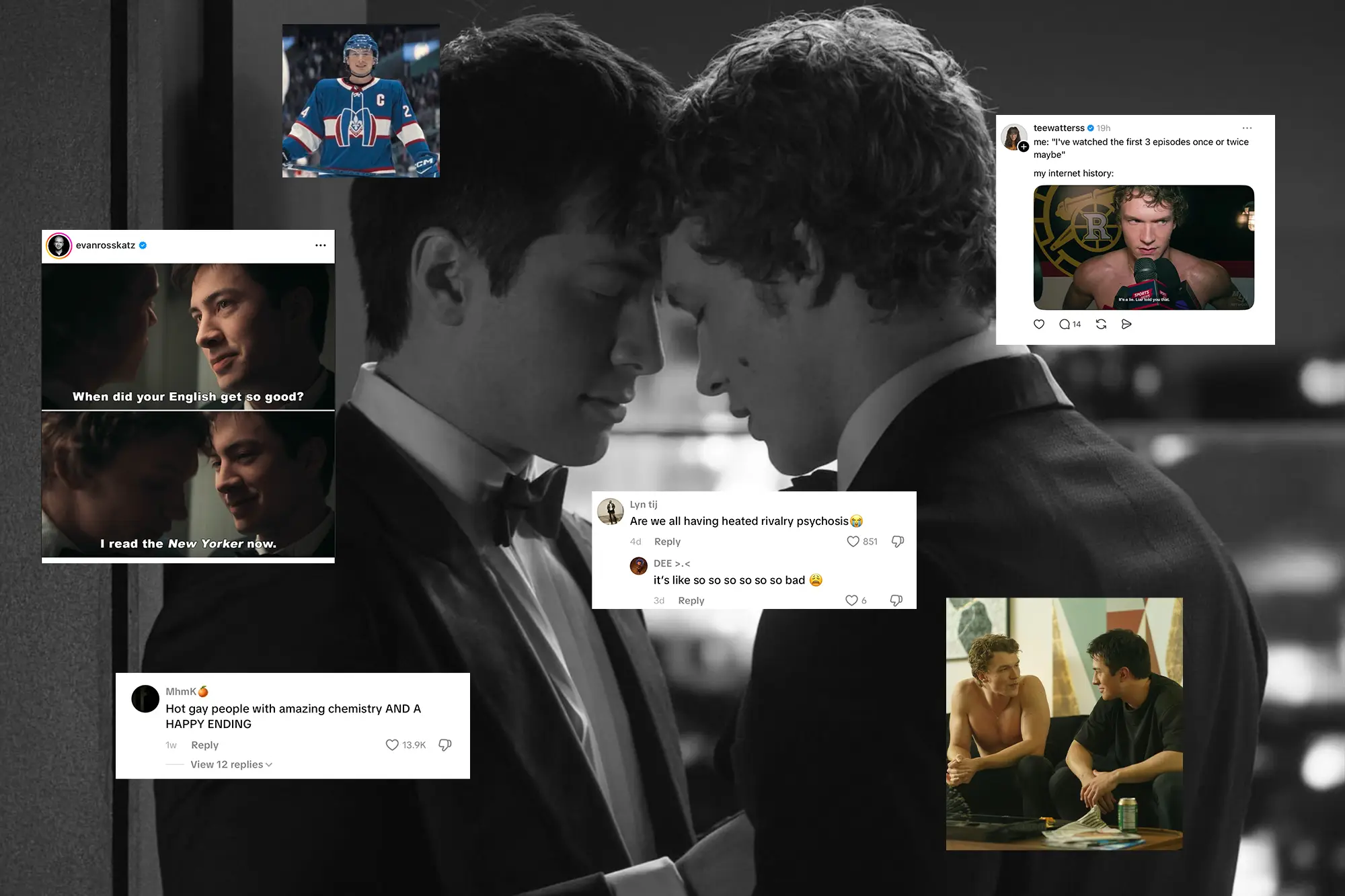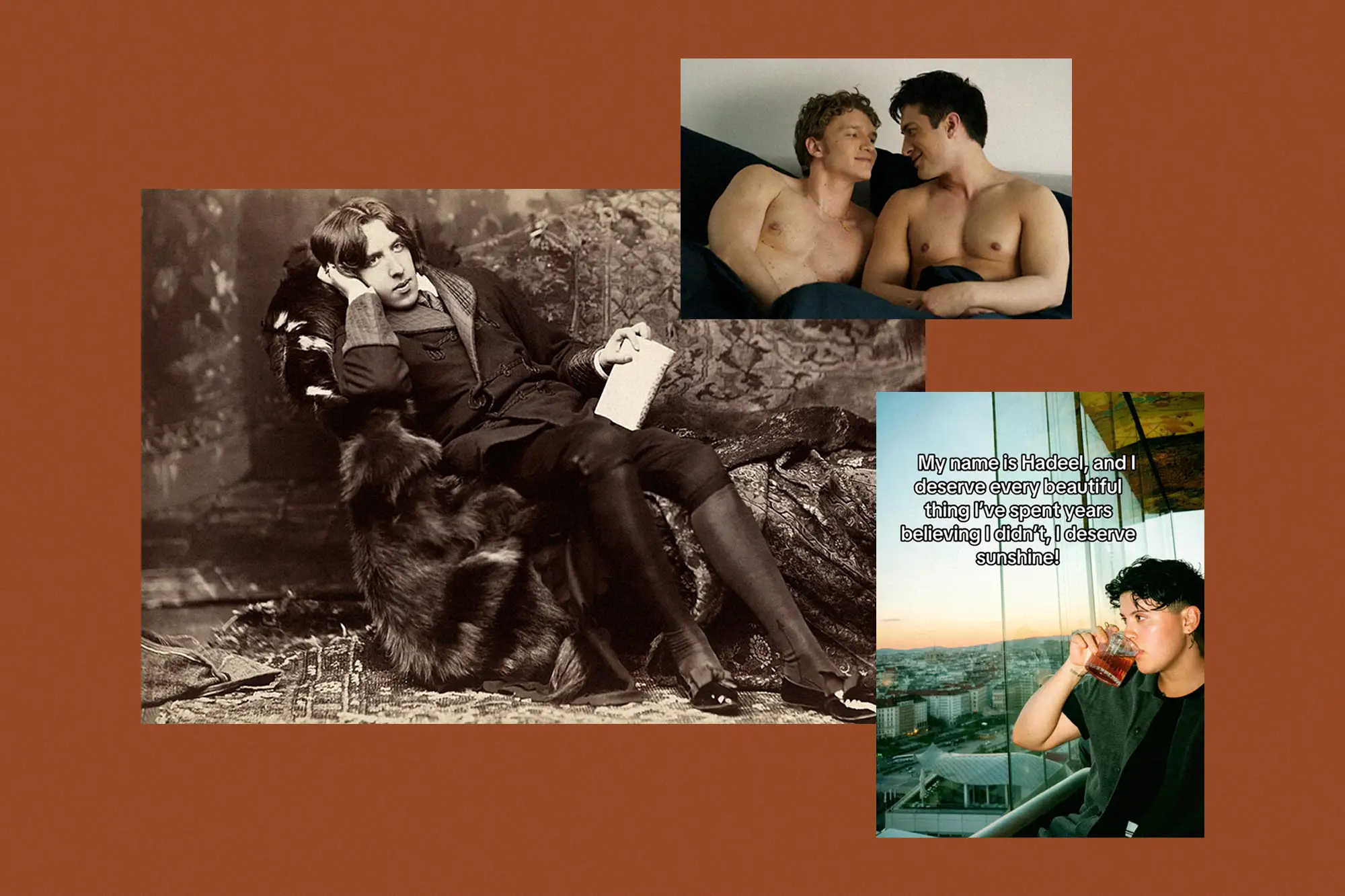
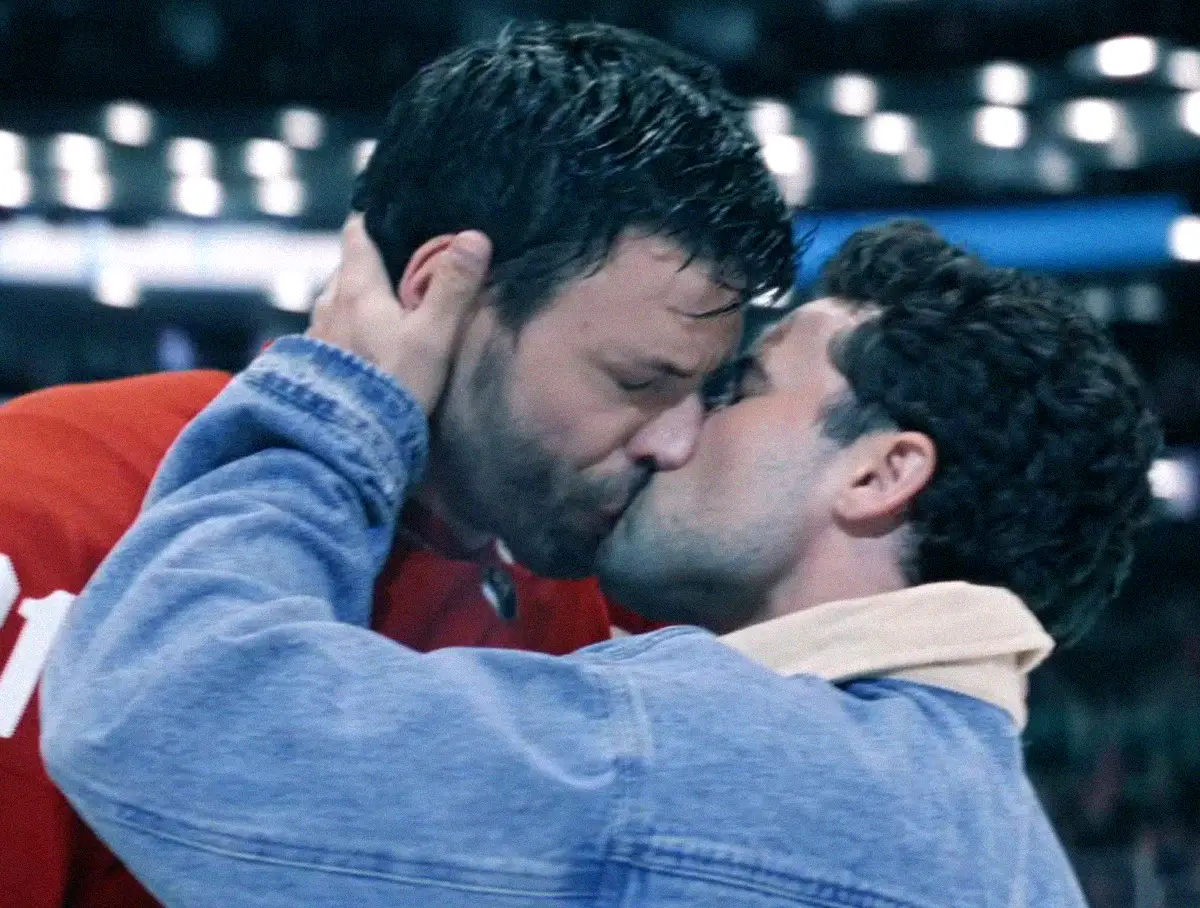
There's a new trend going around social media right now that brings a little pang to my heart every time I stumble upon it. The videos, which are always set to Wolf Parade's "I'll Believe In Anything," start with a question: "I'm sorry, did I get too political?" They then typically transition into photos or videos of the poster as a closeted child or teen before ending with the phrase, "I deserved sunshine." If you somehow missed the single biggest TV phenomenon of 2025—or, arguably, the 2020s as a whole—the concept of "deserving sunshine" (as well as the Wolf Parade song) is a reference to Heated Rivalry, aka "the gay hockey show." (You can read a little more about the uber-popular series here.) In the show itself, the song plays while closeted hockey player Scott Hunter (François Arnaud) comes out in bold and brave fashion by kissing his boyfriend on center ice in front of millions of fans. In the world of the show, his actions shatter a decades-old, unspoken stigma against queer athletes in the sport, opening doors for others like him to step out of the shadows and into the sunlight. The powerful scene also seems to have had a similar effect in the real world; recently, Heated Rivalry star Hudson Williams told Andy Cohen that multiple closeted pro athletes have reached out to him to tell him just how much the show impacted their own lives. Judging by the recent surge of social media posts, it's not just pro athletes who feel that way.
So what does any of this have to do with Oscar Wilde? While a fictional show about queer hockey players may seem rather trite compared to the immortal work—and horrid, not at all fictional suffering—of one of the greatest writers of all time, these two cultural touchstones actually mirror each other in remarkable, heartbreaking ways. In fact, I'm willing to go out on a limb and say that if Wilde had been born a century or so later, he may have posted an "I deserved sunshine" TikTok of his own.
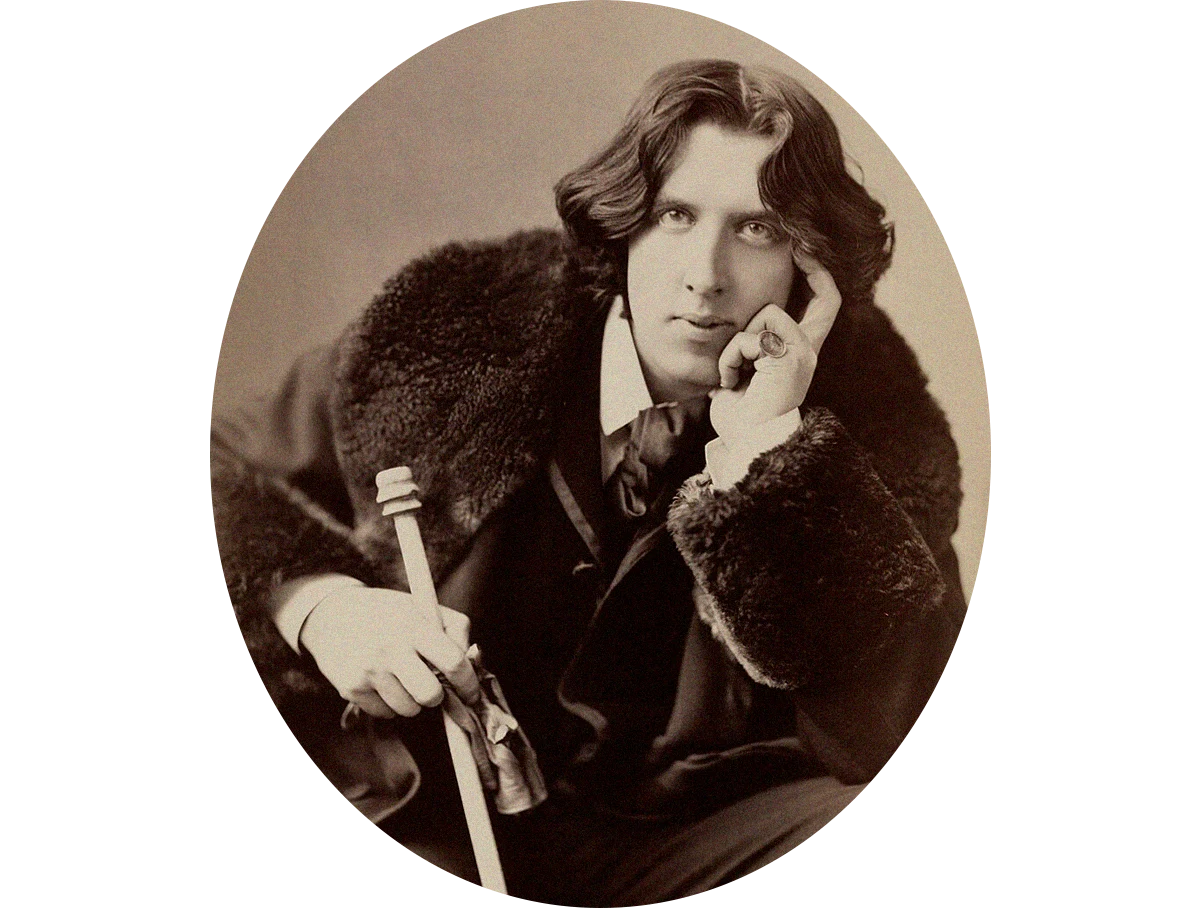
By now, Wilde is perhaps as well known for his tragic, immoral imprisonment as he is for the work he published before his life was altered forever. There's one piece of the luminary's writing that's just as profound, if far less discussed, than the likes of The Picture Of Dorian Gray (1890) or The Importance Of Being Earnest (1895), however. In 1895, Wilde was officially convicted of "gross indecency," a thinly veiled euphemism for criminalized sexual acts between two men. For his "crimes," the playwright was ordered to undergo two years of hard labor, a sentence he primarily served from England's Reading Gaol (a location he later immortalized in the post-release poem The Ballad of Reading Gaol). While in prison, Wilde captured his despair in a lengthy, bleak, but incredibly profound letter to his lover Lord Alfred Douglas. Published under the title "De Profundis" in 1905, five years after Wilde's death, the letter opens as follows:
Suffering is one very long moment. We cannot divide it by seasons. We can only record its moods, and chronicle their return. With us time itself does not progress. It revolves. It seems to circle round one centre of pain…
For us there is only one season, the season of sorrow. The very sun and moon seem taken from us. Outside, the day may be blue and gold, but the light that creeps down through the thickly-muffled glass of the small iron-barred window beneath which one sits is grey and niggard. It is always twilight in one’s cell, as it is always twilight in one’s heart. And in the sphere of thought, no less than in the sphere of time, motion is no more. The thing that you personally have long ago forgotten, or can easily forget, is happening to me now, and will happen to me again to-morrow. Remember this, and you will be able to understand a little of why I am writing, and in this manner writing…
Over the past several decades, the concept of "queer temporality" has become a popular talking point in the larger field of queer theory. Put simply, the term suggests that queer individuals and communities experience time differently than straight individuals and communities due to their centuries of othering, persecution, and exclusion from the dominant social order. It's a phenomenon that can cause past, present, and future to collapse into a "continuing moment," as foundational queer theorist Eve Kosofsky Sedgwick wrote in her 1993 book Tendencies. Wilde even seems to gesture toward a similar concept in "De Profundis." "Time itself does not progress" in prison, or when you're closed away for something that isn't actually a crime.
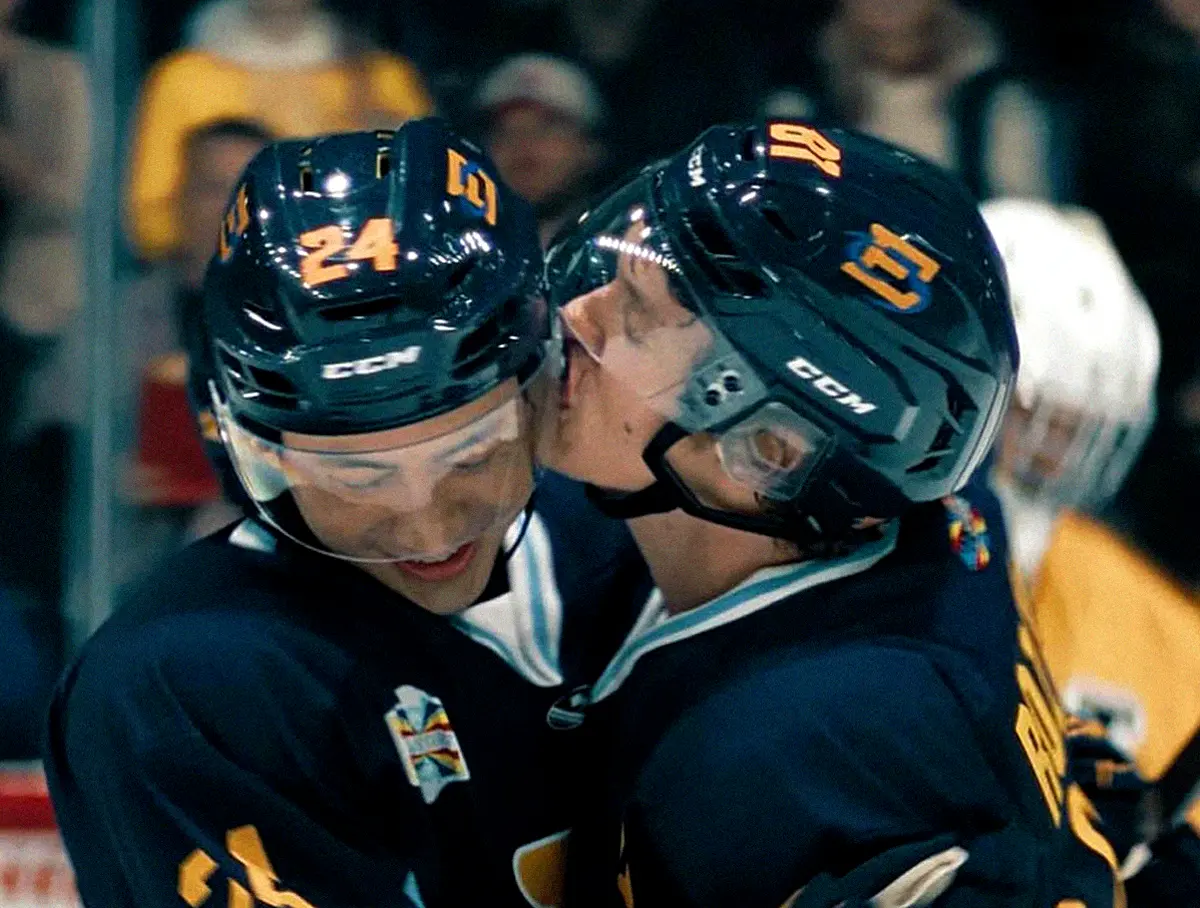
We can see the truth of this notion even in a comparison as silly as Oscar Wilde and Heated Rivalry. In the nineteenth century, Wilde—shamed and excommunicated for his sexuality—wrote of his experience that "the very sun and moon seem taken from us." 130-odd years later, a show on HBO uses an almost identical allegory to discuss breaking free from the shackles of prejudice and social stigma—the same insidious bigotry that has lingered all these years.
In some ways, not a lot has changed. Gay, queer, and trans people are still persecuted, jailed, and murdered for their gender identities and sexual orientations. It's still incredibly challenging to be a visible queer person in the world, much less one attempting to share their inner universe as art, which Wilde did again and again. There are still so many people living in that perpetual twilight.
But there's a lot of light too. It would have been inconceivable in Wilde's time for a piece of art like Heated Rivalry to exist, much less for so many others to openly share their own love, joy, and pride with the world in response. Imagine telling Wilde's jury that one day, there would be an entire month dedicated to the very crime they were persecuting.
Of course, Wilde himself wouldn't live to see any of this. The playwright died in 1900 after suffering a severe decline in his health while in prison. He'd only been released three years prior. How could he have known that a century later, he'd be officially pardoned by the state—along with around 50,000 other men previously accused of criminalized homosexuality—under a new set of laws? How could he have known that one day, he'd be celebrated as a hero? In both life and in death, Oscar Wilde deserved sunshine. We all do.