How does one begin an essay on Virginia Woolf, one of the greatest writers of the last century?
Surely, this is a task fit for the Woolfian scholars among us, those who can plumb her greatest writings, excavate her untold thoughts, and decipher how the modernist writer shaped the canon. Or perhaps for the literati, those who ripen alongside the splintering spines of their parents’ toppling bookshelves, coming of age among worn pages passed down through generations, shaping a family’s spirit and intellect.
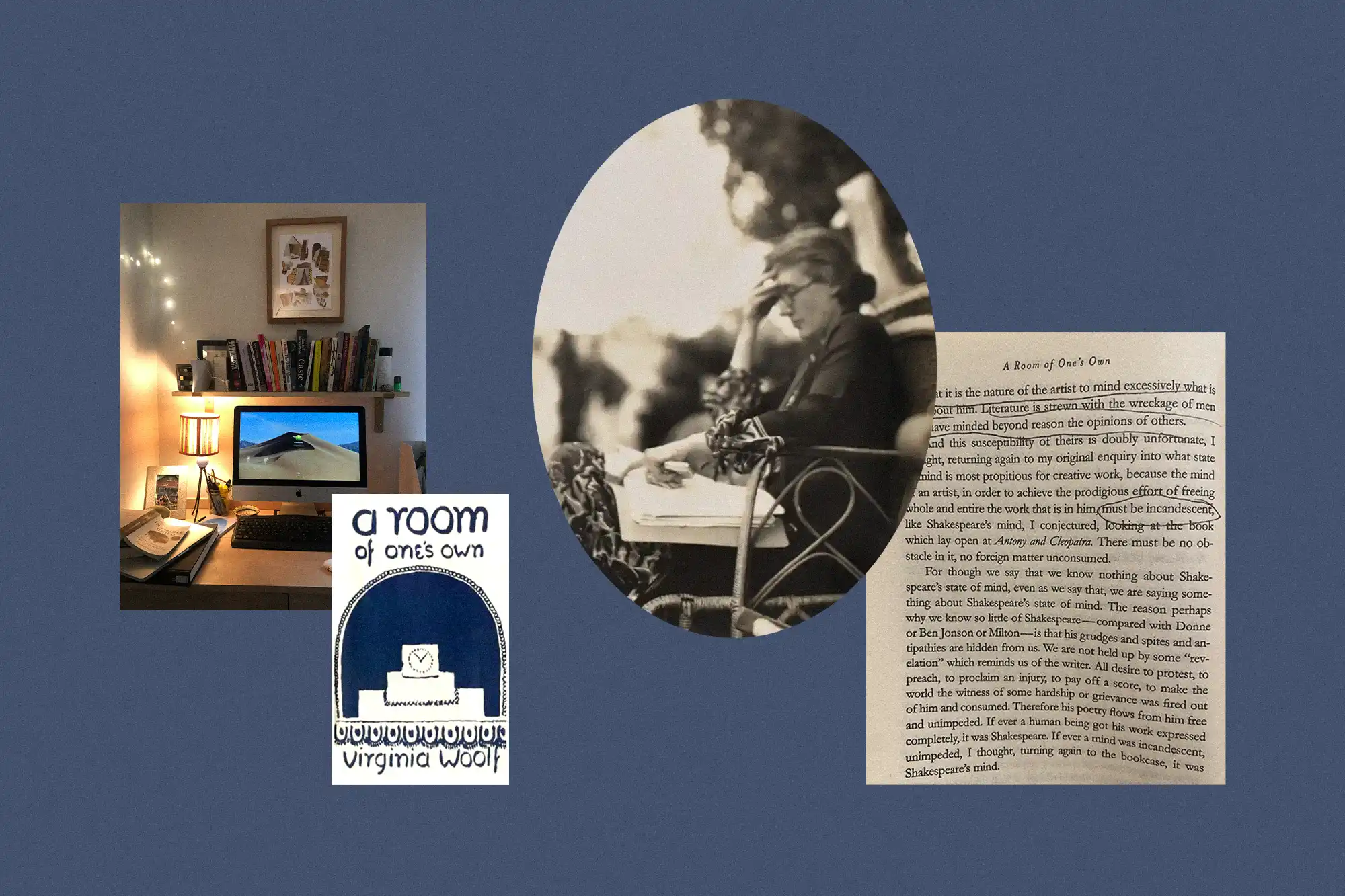
But alas, I am neither an expert nor a scholar. I am only a thinker and an occasional writer who has read but a tiny fragment of Woolf’s expansive oeuvre. Still, I begin. Just me, the computer, and my tireless mouse.
I do not intend for this to be a work of genius, nor do I know exactly what it is that I want to say. What I do know is that “to write a work of genius is almost always a feat of prodigious difficulty,” one that is unlikely to spill from my clacking hands on this late and unassuming Tuesday night. For one, my lids are already heavy and it is merely 8:13pm. For two, “general material circumstances are against it.” They were when Woolf first drafted those words in 1928, and they are now. “Dogs will bark; people will interrupt; money must be made; health will break down.” The world, it seems, has once again conspired against the writer.
Yet Woolf bore the world’s “notorious indifference,” as she called it, conquered its apathy (and sexism), and proceeded to publish books and essays until her death. It is tempting to imagine her achievement as effortless: not a deafening automobile honk could rattle her, not a feather floating down upon her sill.
Of course, it was never that easy. And perhaps the ease with which I have just imagined it is precisely the problem. Woolf belonged to the upper-middle class, born into an affluent literary family and raised with access to her father’s expansive library—as was the case, in different forms, for Mary Shelley, Jane Austen, Elizabeth Barrett Browning, and the Brontë sisters. Woolf was born into a racially privileged, intellectually elite, well-resourced social circle that gave her the upper hand from the moment she first strung a sentence together. But even with that silver platter in hand, to successfully argue for the financial and intellectual freedom women deserve, she had to make a radical case, one that was neither literal nor direct, easily interpreted nor readily accepted as truth from beginning to end.
She had to quasi-dismantle herself: to detach from the “I,” though not entirely. Associating the “I” with solipsism and masculinity—for the literary record had been saturated by the ceaseless tide of male thought—she sought to situate her essay outside of the “shadow of the letter ‘I’ where “all is shapeless as mist.”
No self? Easy enough, one might think: the solution is clearly fiction, or publishing anonymously, as Frances Burney and Maria Edgeworth and Ann Radcliffe and George Eliot, and so many other women had done before her to protect their reputation and legitimacy. But Woolf chose neither the shelter of anonymity nor the steadiness of continuous first person.
Instead, she slips—almost imperceptibly—between essay, fiction, history, and invention, establishing herself not as one fictional narrator but as a shifting composite of women: “Here then was I (call me Mary Beton, Mary Seton, Mary Carmichael or by any name you please—it is not a matter of any importance).”
But are we to trust the wry confidence of this elusive guide? The preceding sentence cautions us against it: “Lies will flow from my lips, but there may perhaps be some truth mixed up with them; it is for you to seek out this truth and to decide whether any part of it is worth keeping.” If it is not, she says, we should throw the whole thing into the wastepaper basket and forget it.
Woolf is not intending to deceive. She is insisting that a “highly controversial” subject demands a complicated form. To dismantle the fortress of male dominance, to challenge literary convention and the inherited structures keeping women outside of the gate, the argument itself must look different. It must make us question the authority of the narrator; question what is deemed truth; question why generations of male writers were so readily granted the authority of an unbiased “I.” Rather than replacing one form of certainty with another, she invites us to participate in the process of deciding, and thus exposes the close-minded confidence in which male writers had too often written “in the red light of emotion and not in the white light of truth.”
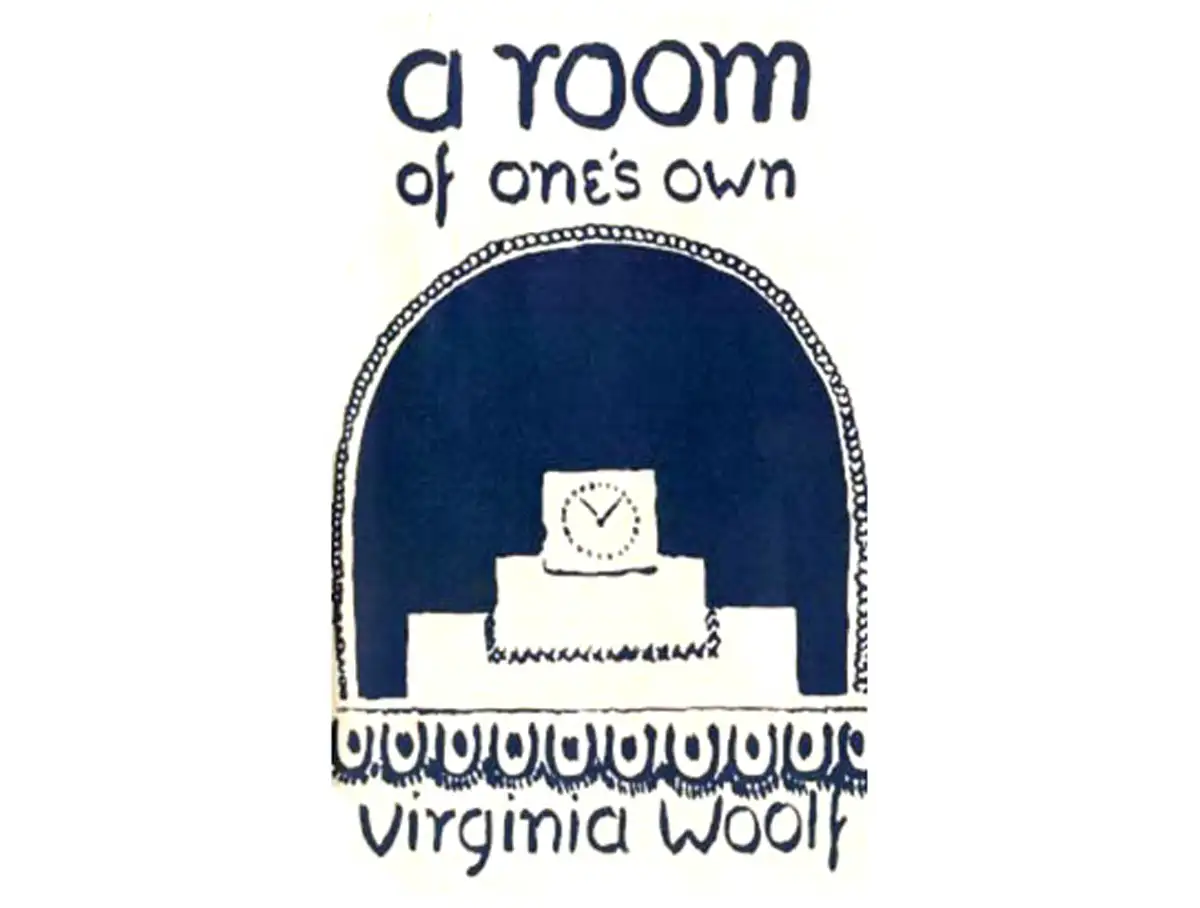
And thus begins A Room of One’s Own, Woolf’s quest to understand women’s lack of representation in fiction and literature. We are whisked away on a tour de force through Woolf’s brilliant interior monologue—and that of Mary Seton, or whichever fictional name you prefer to imagine—floating along like a giddy passenger in a boat: buoyant, blissfully alert, and ready for whatever current comes next. Moving between witty observation and sharp juxtaposition, Woolf contrasts the partridges and sweet confections offered to men at the Oxbridge with the women’s gravy and prunes, “exuding a fluid such as might run in misers' veins who have denied themselves wine and warmth for eighty years and yet not given to the poor.” She scours the shelves of the British Museum expecting answers and finds only an absurd excess of books about women, mostly written by men. Not one honest, candid account of women’s lives can she find that is not written, or at least warped, by that maelstrom of male voices.
Yet Woolf’s task is not simply to expose how badly women have been represented. Through this fleeting, shifting narration, she gives herself—and us—the space to imagine the possibilities that might unfold were women offered £500 a year and a room of their own: the ability to follow that floating feather, if they so wished, and to think for themselves in the privacy long granted to men. Now, her argument is a great deal more complicated than this, and perhaps impossible to fully untangle. Which is perhaps her point.
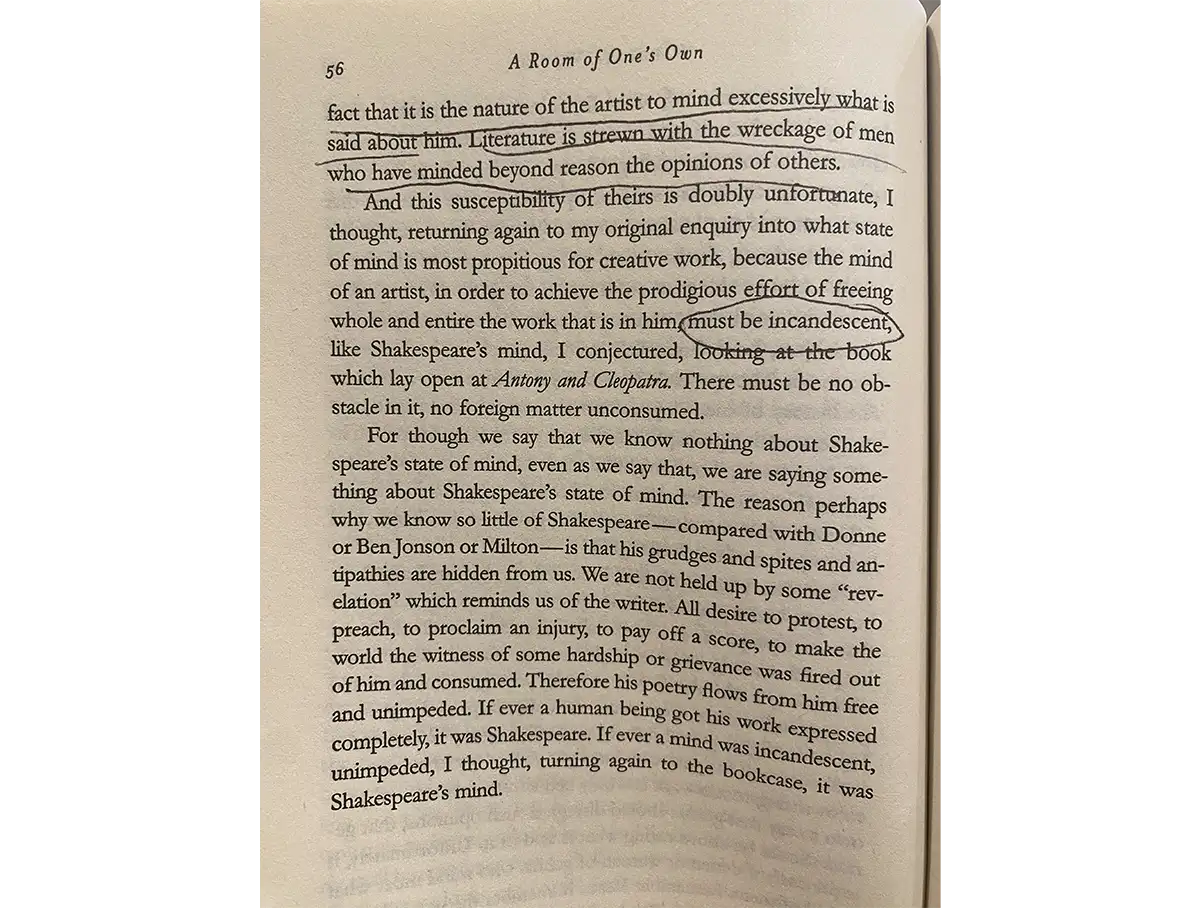
Originating as two lectures Woolf delivered in October 1928 at Newnham and Girton—the University of Cambridge’s women’s colleges, where women could study but not obtain full degrees until 1948—the extended essay has since become a foundational cornerstone of modern feminist thought. Teeming with literary references pulled from an endless slew of sources (yes, physical media!), a randomly selected two-page sample touches on Oscar Browning, “Mr. Greg,” Germaine Tailleferre, Lady Bessborough, Lord Granville Leveson-Gower, Florence Nightingale, and the words on Keats tombstone. No essay for the faint of heart, it demands the kind of sustained attention and imaginative expansion that deep reading requires—and that all of us are prone to losing.
***
Two days have passed since this reflection began. Natural light drifts in now, donning my writing desk in its rays as my husband cycles through the cacophony of chaos that is Manhattan at midday outside. In here, all is still at this passing moment.
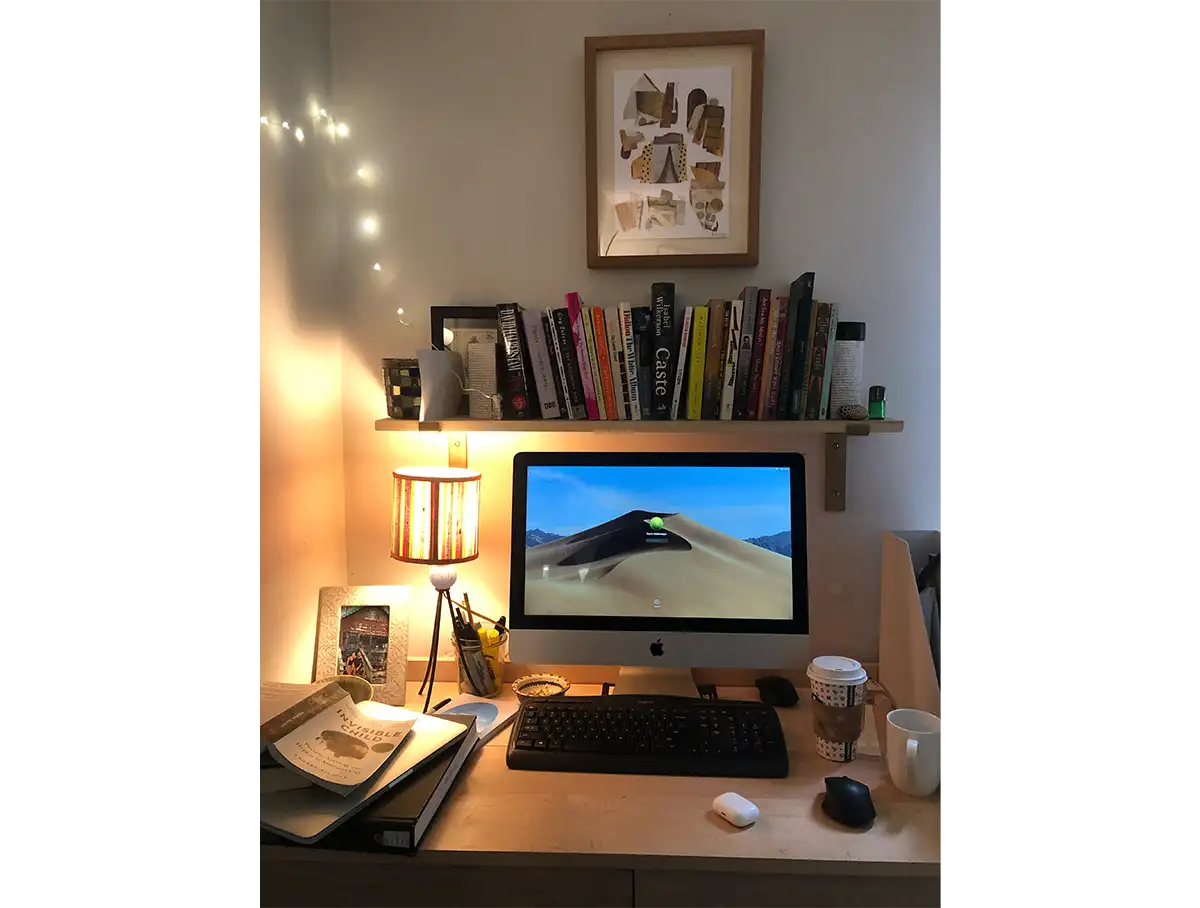
I was not, when I began writing, an authorial voice on Woolf, nor am I now, after dissecting the mere surface of her 28,000 word essay. But I am able, I realize, to follow a thought of my choosing through—even when it is interrupted by emails, the incessant pings of colleagues, the never-abating buzz of my devices, or thoughts of a sick friend.
All of those interferences aside, I remain here at my computer, at the disposal of my thoughts and the shrugging indifference of the world, grateful for Woolf’s work, for the room above my head, and for this literal and metaphorical space in which to write.