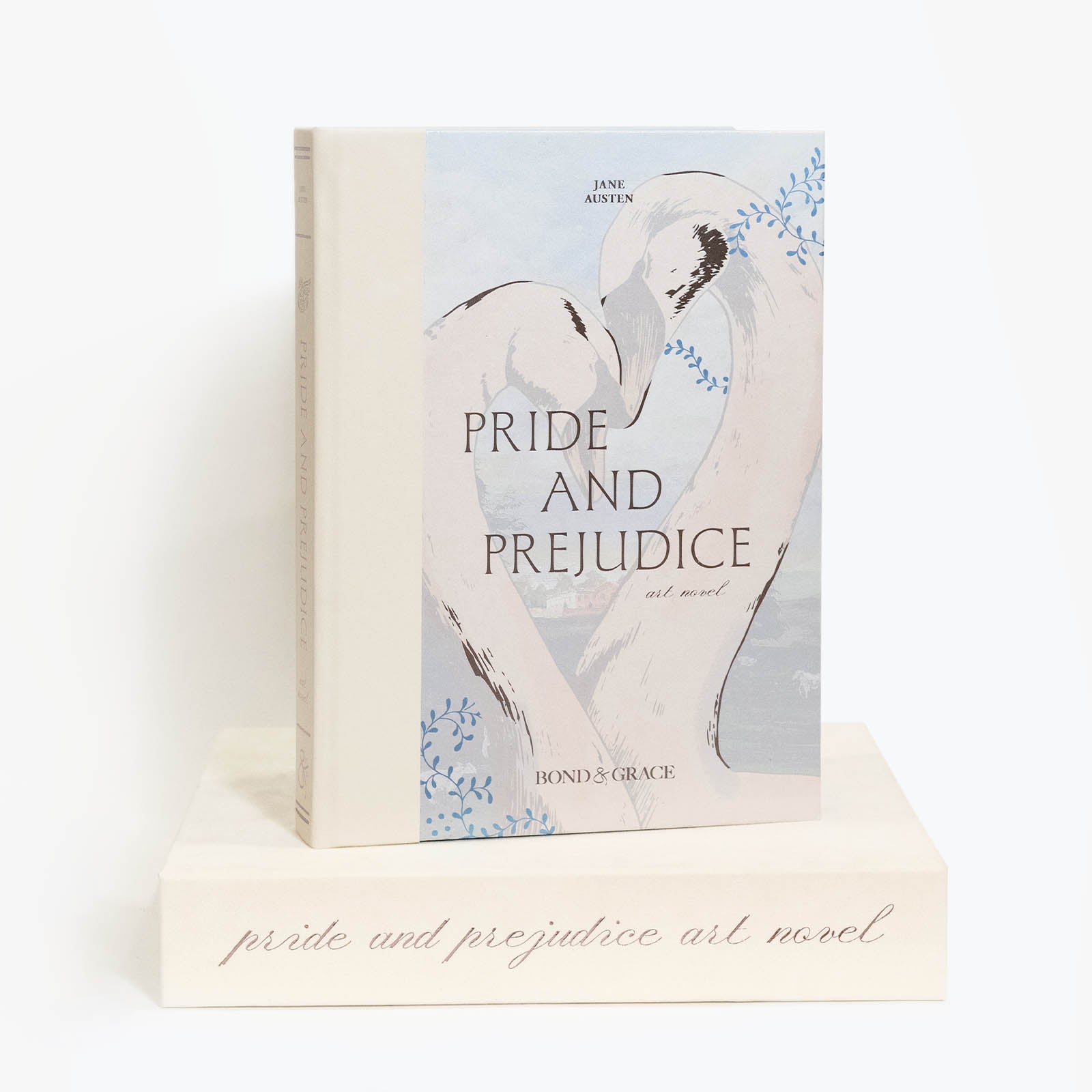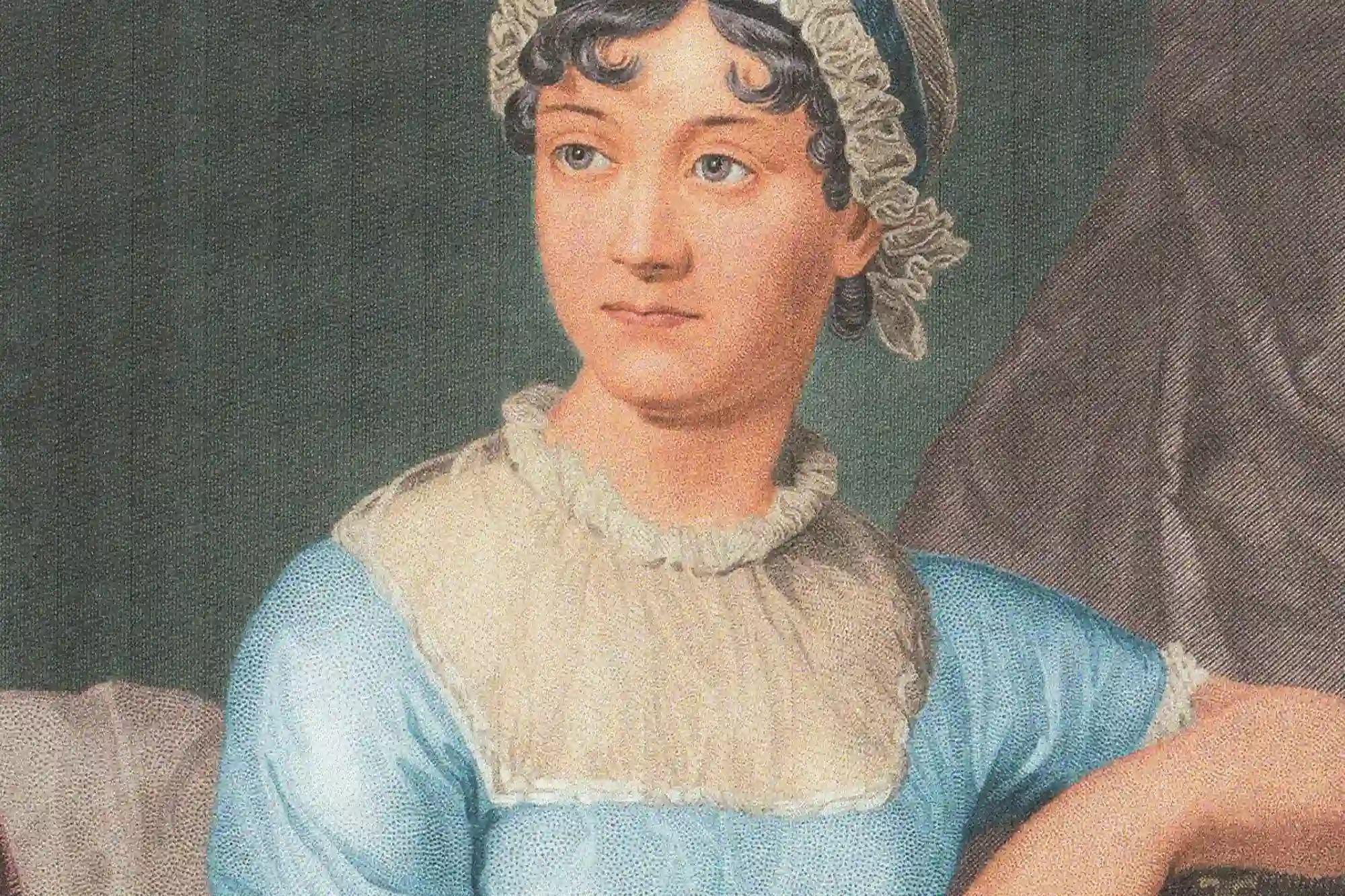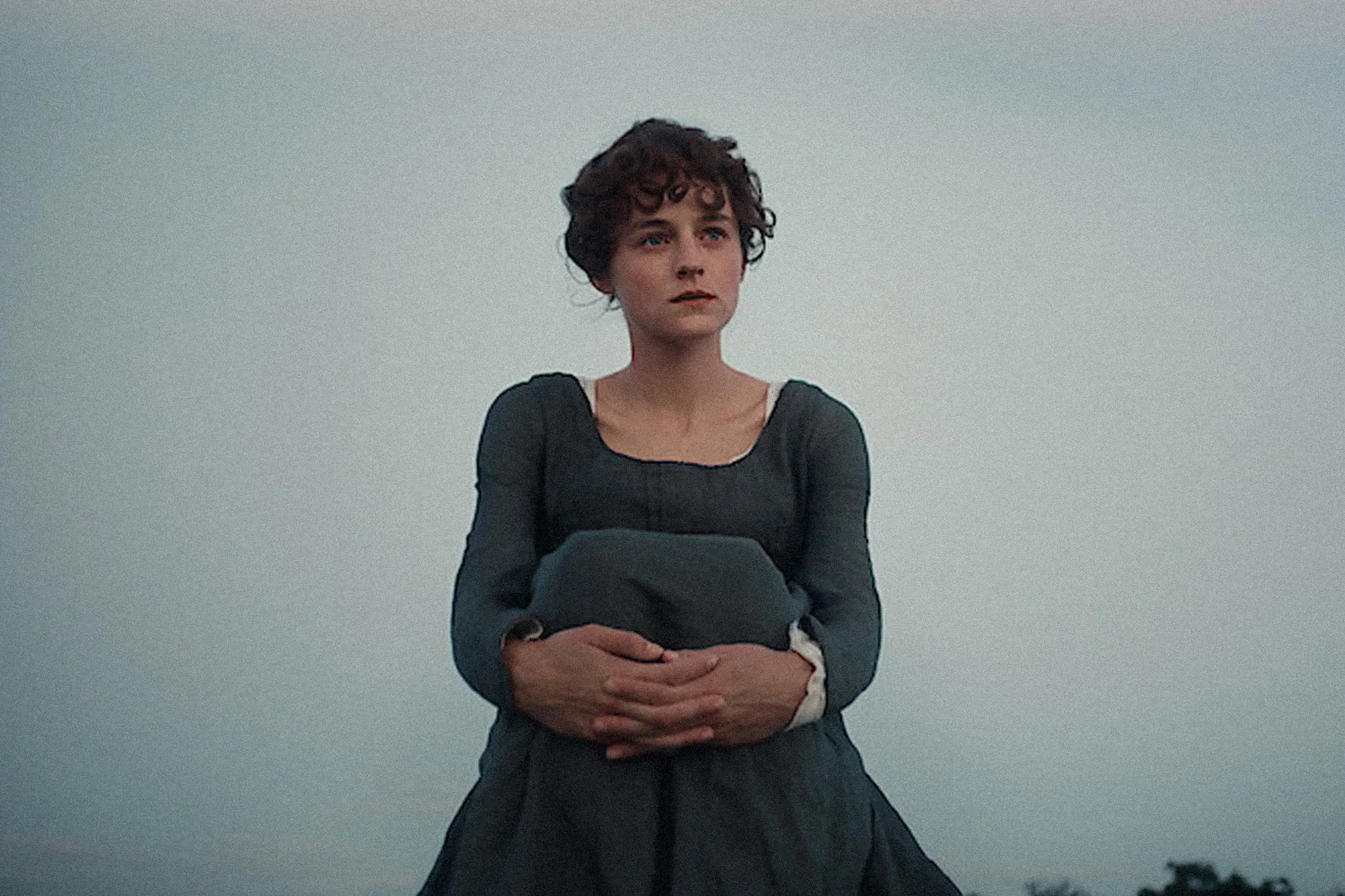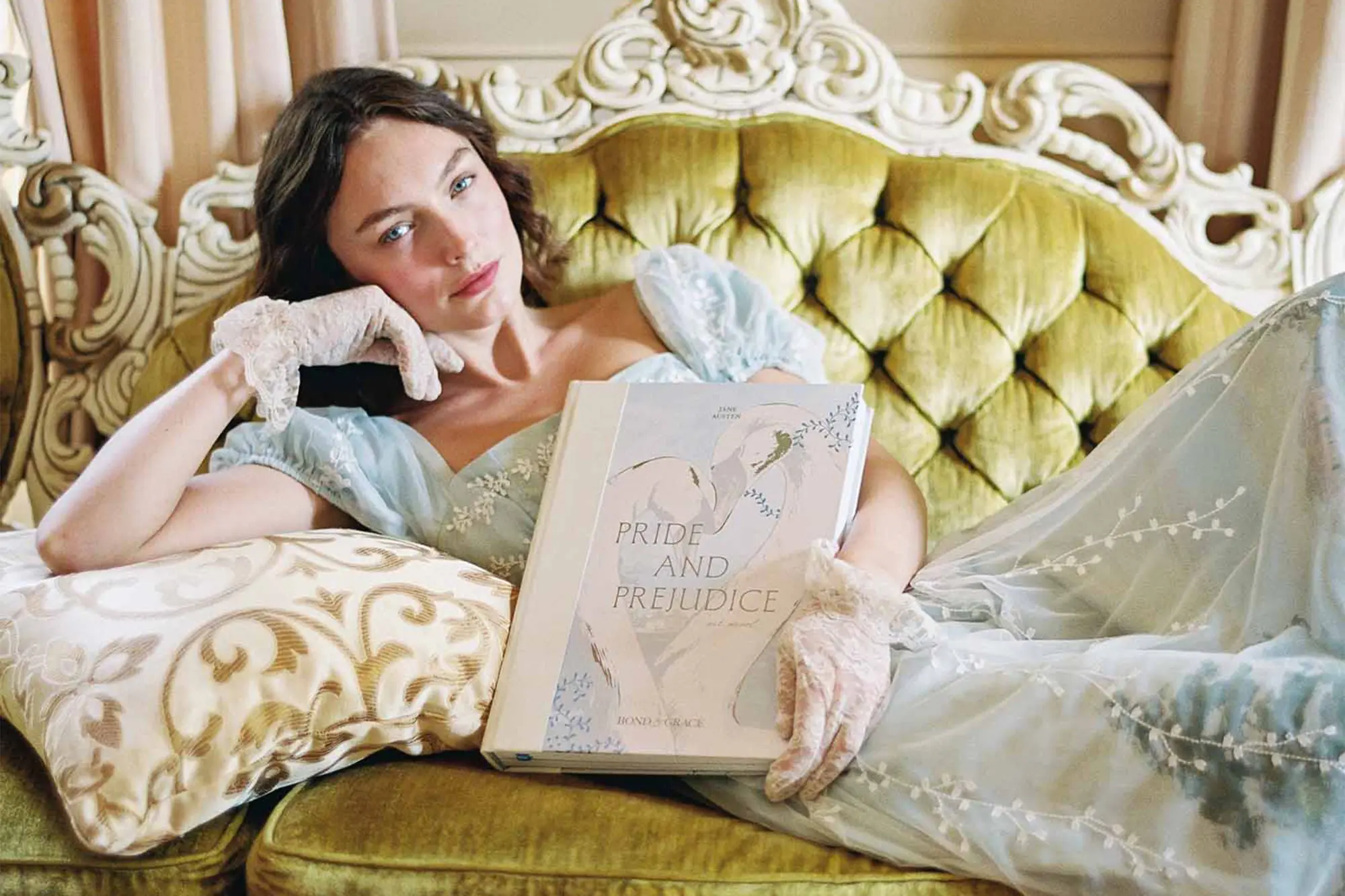
First published in the Pride and Prejudice Art Novel, this essay examines one of Austen’s most enduring questions: what does it mean to choose love, comfort, or security? Originally titled “Between Love and Comfort,” the essay, written by Jennie Batchelor and edited by Bond & Grace, revisits Charlotte Lucas and Elizabeth Bennet’s competing ideas of marriage, happiness, and self-preservation, showing just how current Austen’s novel still feels in a world still obsessed with being “settled.” We’re excited to share this excerpt with Lit Talk readers as a preview of the larger conversation the Art Novel invites.
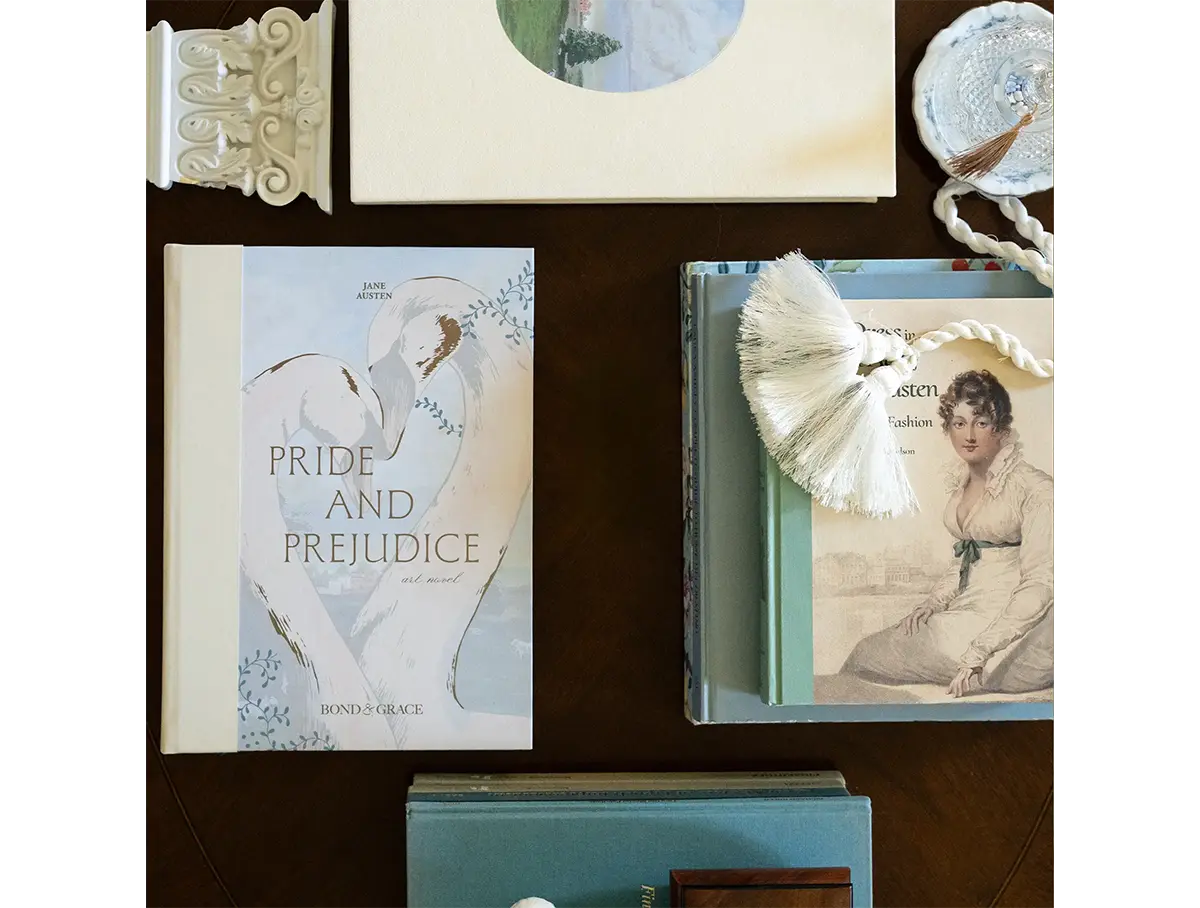
What would you sacrifice to feel secure? Pride and Prejudice presents a stark dilemma: accept a loveless but comfortable marriage like Charlotte Lucas, or pursue love and risk economic precarity if that love proves elusive, like Elizabeth Bennet. At its core, this novel asks whether you would trade affection for financial and social stability—or stability for the chance at love.
Charlotte and Elizabeth’s dilemma might seem bound to the nineteenth century. In the twenty-first, many women earn their own money, live flourishing and independent lives, and gain public recognition for their talents. They can remain single or live outside heteronormative structures. Yet the pressure and desire to be “happily settled” persists, visible in everything from the wedding industry’s sprawling reach to the boom in relationship podcasts and the current obsession with defining what a “good enough” partnership looks like. But if modern readers want a straightforward answer to the question of which approach to love and marriage is right—Charlotte’s or Elizabeth’s—they will surely not find one in this novel.
Elizabeth finds Charlotte’s betrothal to Mr. Collins “unsuitable” and “humiliating.” How could she possibly “sacrifice every better feeling to worldly advantage”? Readers tend to identify so strongly with Austen’s heroine that we often assume the novel’s views align with Elizabeth’s—but that is not always the case. Austen lets us see that Elizabeth’s shock is at least partly prompted by her wounded pride that Mr. Collins turned to her less charismatic friend after she rejected him.
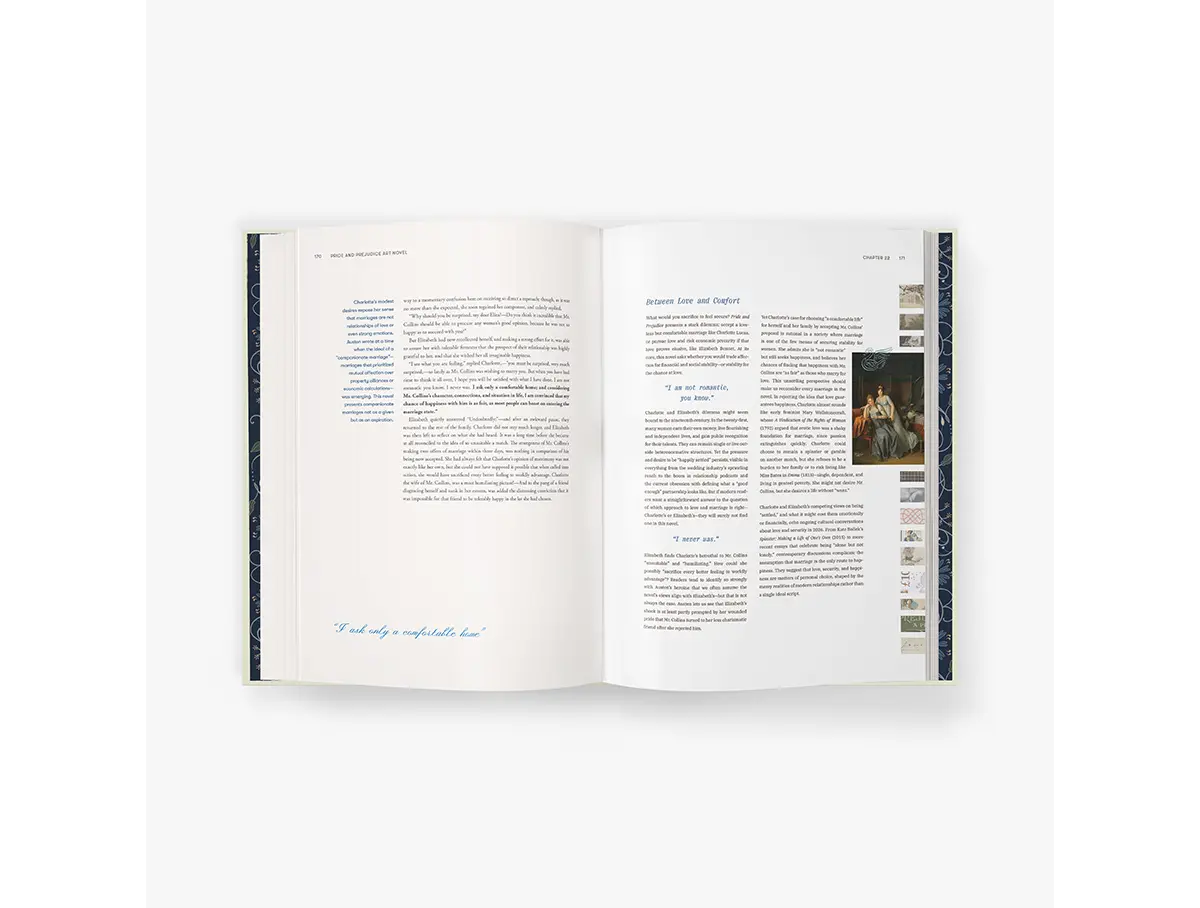
Yet Charlotte’s case for choosing “a comfortable life” for herself and her family by accepting Mr. Collins’ proposal is rational in a society where marriage is one of the few means of securing stability for women. She admits she is “not romantic” but still seeks happiness, and believes her chances of finding that happiness with Mr. Collins are “as fair” as those who marry for love. This unsettling perspective should make us reconsider every marriage in the novel. In rejecting the idea that love guarantees happiness, Charlotte almost sounds like early feminist Mary Wollstonecraft, whose A Vindication of the Rights of Woman (1792) argued that erotic love was a shaky foundation for marriage, since passion extinguishes quickly. Charlotte could choose to remain a spinster or gamble on another match, but she refuses to be a burden to her family or to risk living like Miss Bates in Emma (1816)—single, dependent, and living in genteel poverty. She might not desire Mr. Collins, but she desires a life without “want.”
Charlotte and Elizabeth’s competing views on being “settled,” and what it might cost them emotionally or financially, echo ongoing cultural conversations about love and security in 2026. From Kate Bolick’s Spinster: Making a Life of One’s Own (2015) to more recent essays that celebrate being “alone but not lonely,” contemporary discussions complicate the assumption that marriage is the only route to happiness. They suggest that love, security, and happiness are matters of personal choice, shaped by the messy realities of modern relationships rather than a single ideal script.
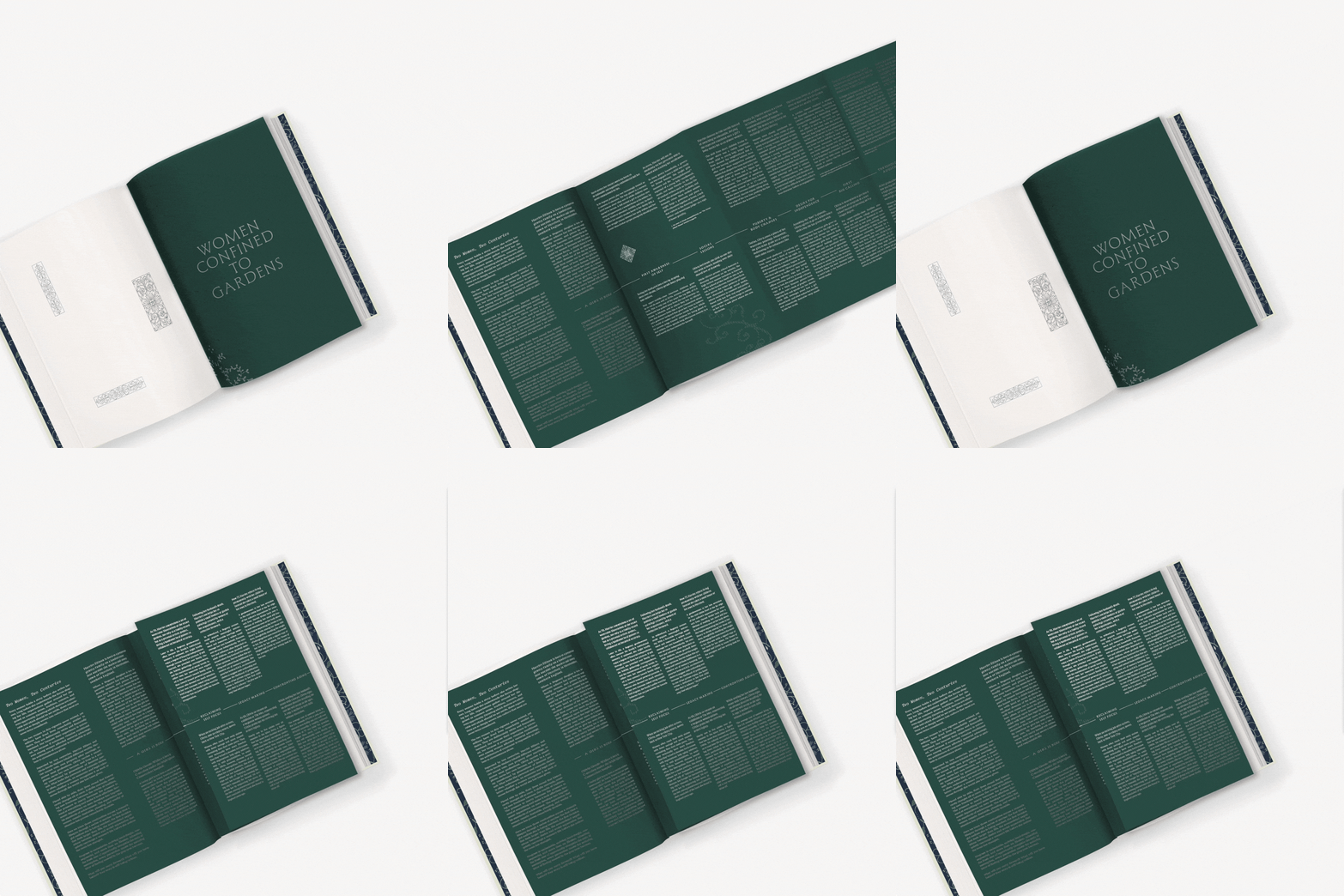
The Collector’s Edition of the Pride and Prejudice Art Novel extends this conversation through a Special Feature Essay, “Women Confined to Gardens: Two Women, Two Centuries”—a creative foldout timeline that maps the decisions binding women’s lives across generations and invites readers to situate Austen’s characters alongside the lives of women today.
For deeper analysis essays, a new introduction, a biographical essay, and nearly 200 annotations offering literary insight, historical context, and contemporary analysis, preorder the Pride and Prejudice Art Novel today. Written by a global team of Austen experts, the scholarship draws on expertise spanning Austen’s legacy, gender, class, race, empire, feminism, and the social pressures of love and marriage.