What keeps us coming back to an idea? Sometimes it starts with something small: a color, a quote, a few chords of music. You can’t quite put your finger on why it stays with you, but you return to it again and again. Eventually, through repetition, you begin to make it your own, pouring it onto paper, canvas, or a screen.
For me, a painting is often the thing that won’t let me go.
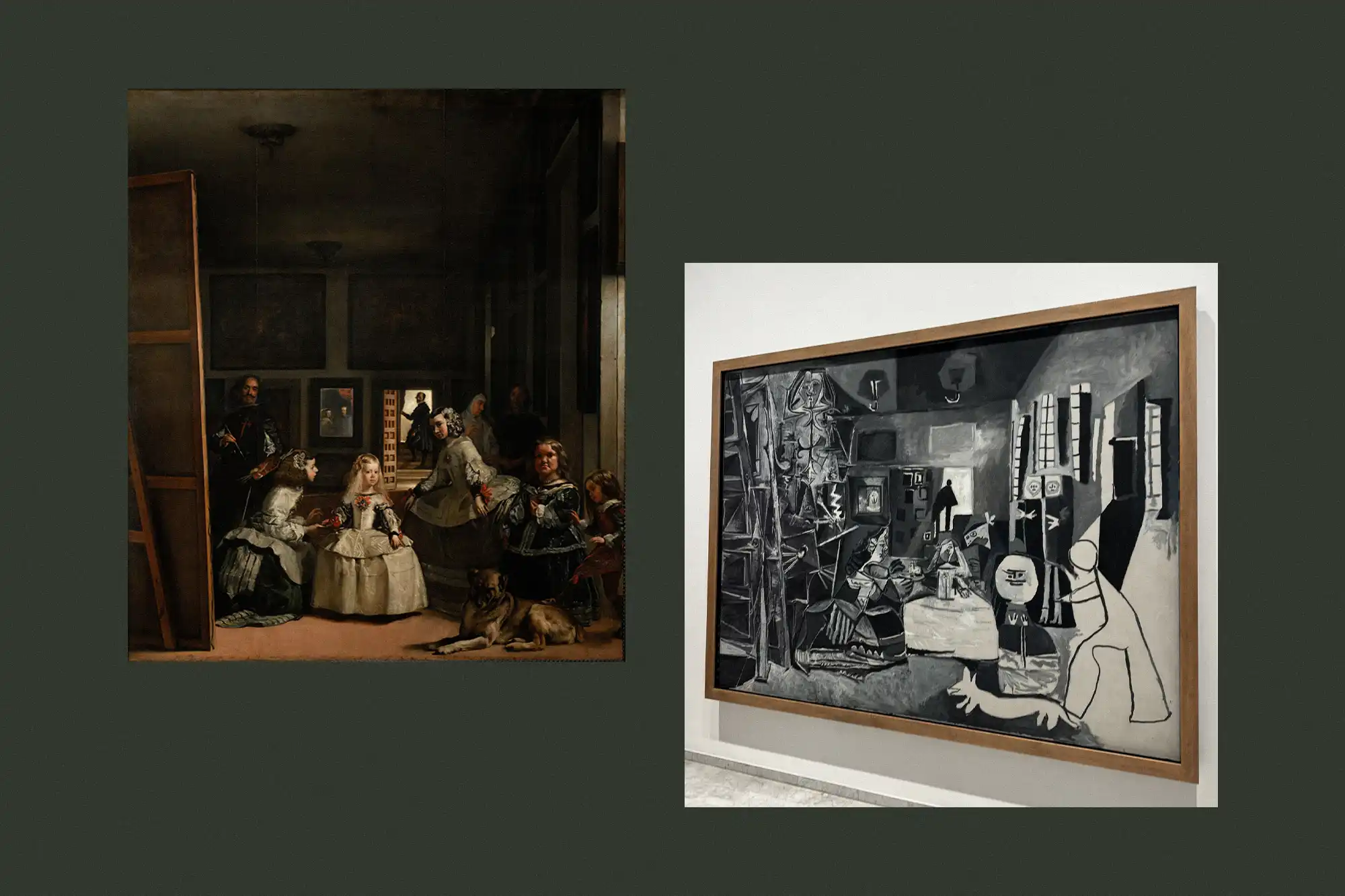
Since encountering Diego Velázquez’s Las Meninas (1656)—and the series of paintings Picasso created in response to it—on a family trip to Spain this past September, I haven’t been able to stop thinking about how creative obsession can change the way we see and what we create. Picasso returned to this painting again and again. Now, in my own way, I’ve found myself doing the same.
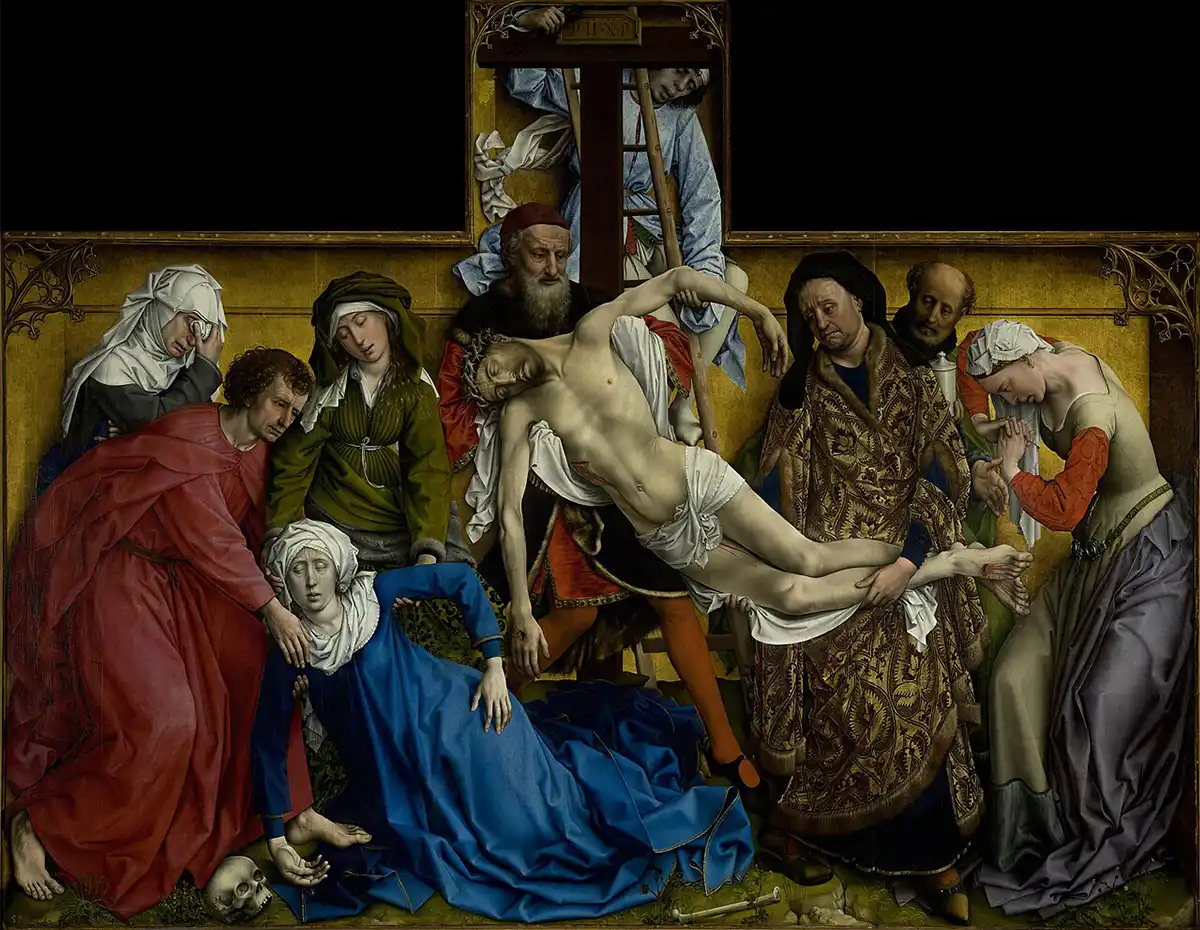
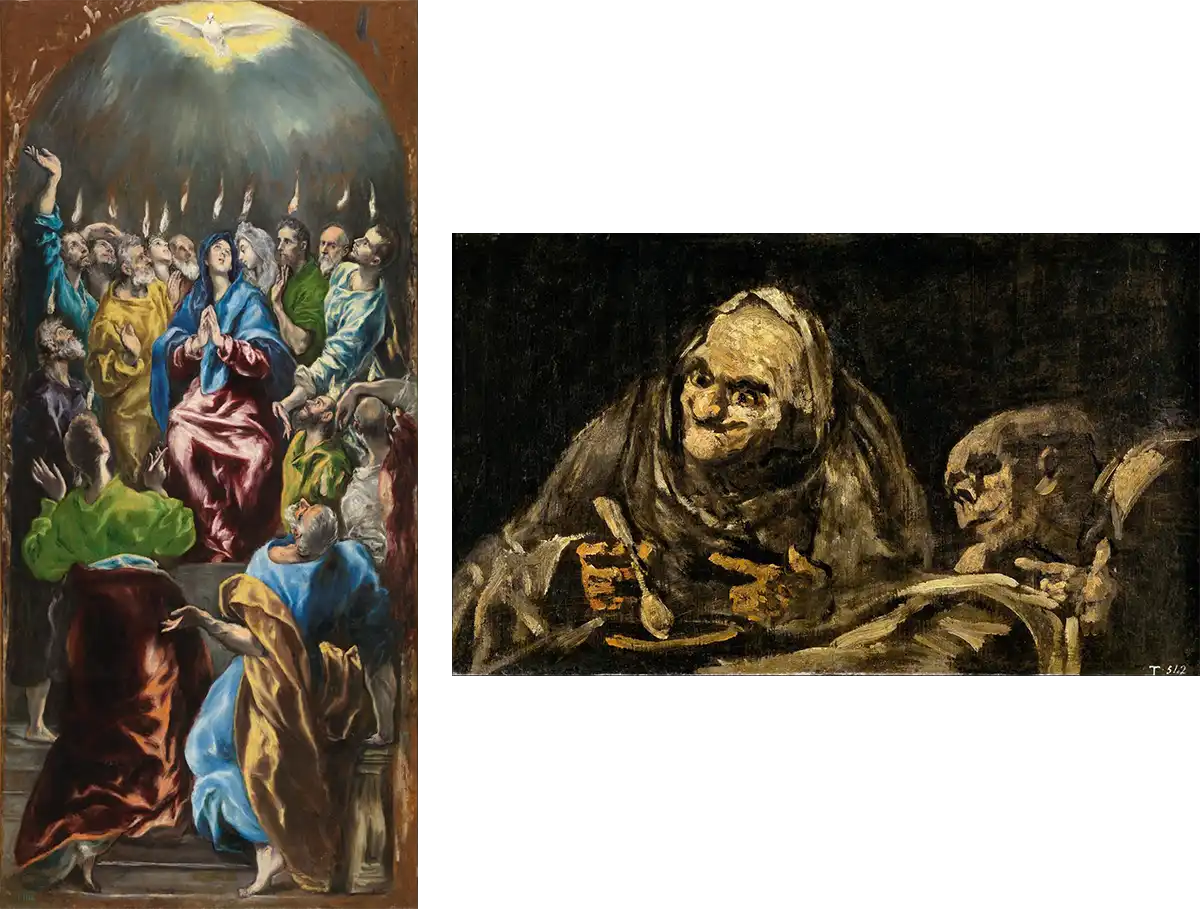
My journey started at the Museo del Prado in Madrid with a large tour group. We moved through galleries of Spanish royal portraits, dramatic biblical scenes, and richly detailed depictions of saints and martyrs. I was especially taken with the rich colors; some paintings appeared almost freshly made, as if the strokes of red and blue had only just dried. The clothing—shimmering brocades, rippled silks, and glittering brooches—drew me into the world of the past. El Greco's elongated figures stretched toward the ceiling, their bodies seemingly drawn upward by the spiritual scenes they inhabited. Goya's Black Paintings seemed impenetrable at first, but details emerged from the darkness when I looked again.
When our tour group reached Las Meninas, a large crowd had gathered around it. The painting centers on the Infanta Margarita Teresa, daughter of King Philip IV of Spain, surrounded by members of the royal household. It’s enormous, more than ten feet tall, and yet the luminous princess in the foreground pulled me in; she appears almost haloed in the light entering from the right side of the room. She gazes straight at the viewer, posing alongside her attendants, several of whom also gaze right at you, as if you’re in conversation with them. Behind them, the chamberlain José Nieto stands in a bright open doorway. Above the scene, there is darkness, with paintings you can barely make out hanging on the walls. Most curiously of all is Velázquez himself, standing to the left, just out of the light, with a brush in his hand and a large canvas in front of him.
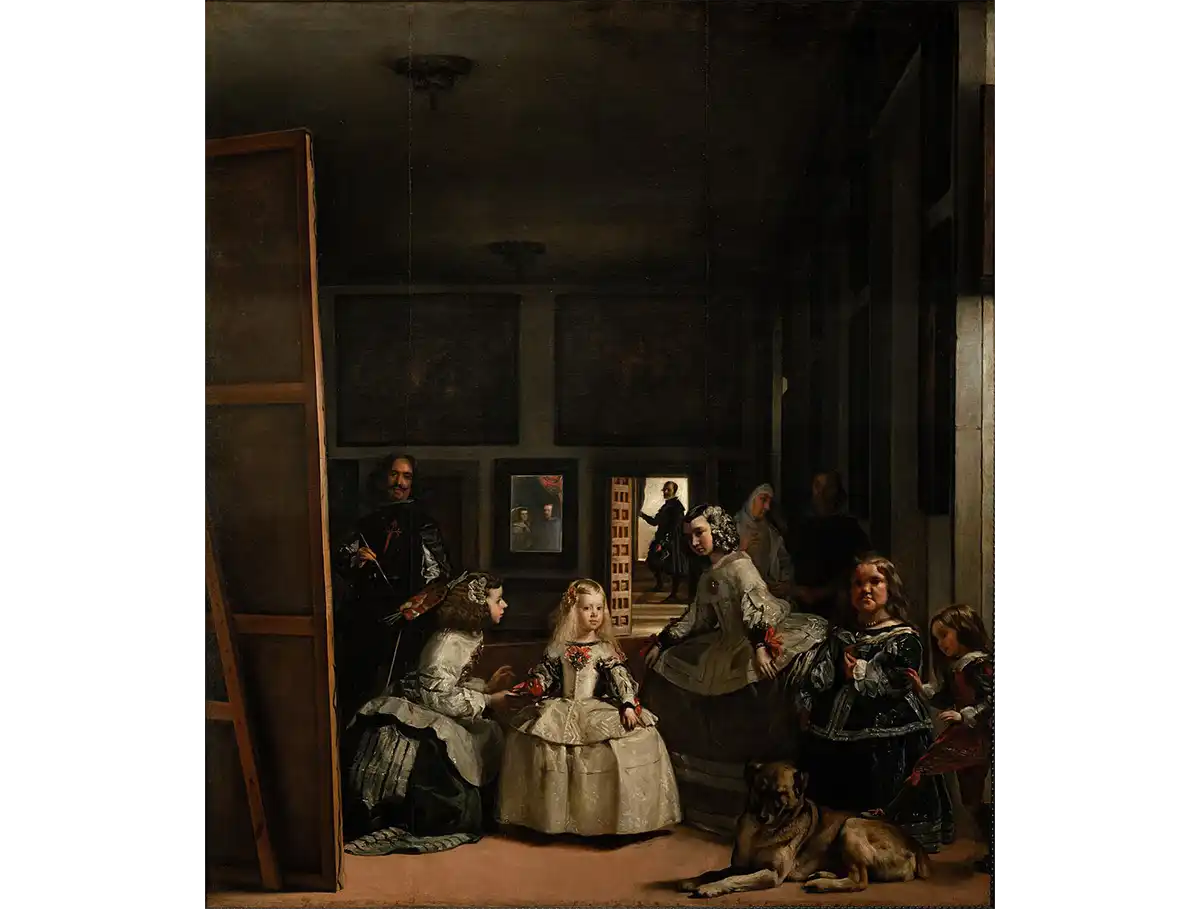
Our tour paused. Who, exactly, is Velázquez painting? he asked. The princess and court members in the scene? The king and queen, whose faces appear in a mirror at the back of the room? Or us, the crowd standing in front of him, hundreds of years later?
I like to believe that Velázquez is painting the crowd of viewers—me, you, every viewer who stands before the painting and finds themself invited directly into the scene. As it turns out, I wasn’t the only viewer to feel that invitation so strongly. Days later, I would discover what Picasso had made of it.
My relationship with Las Meninas had only just begun.
From Madrid to Barcelona, a city filled with outlandish art and sparkling architecture, like Gaudí’s mosaics and the famous Basilica of the Sagrada Família. One rainy evening, we visited the Museu Picasso, tucked into the winding streets of the city’s Old Town. Inside, a collection of around 5,000 works led us from the prolific artist’s childhood creations to the paintings that are so recognizable today.
Walking through the museum with our guide, I suddenly recognized the scene I had just viewed in Madrid. There I was, standing before Las Meninas once again, yet transformed by a different century, a different mind, a different creative experience altogether. No longer was there only one version to pull me in, but an entire series of works, reimagining Velázquez’s masterpiece.
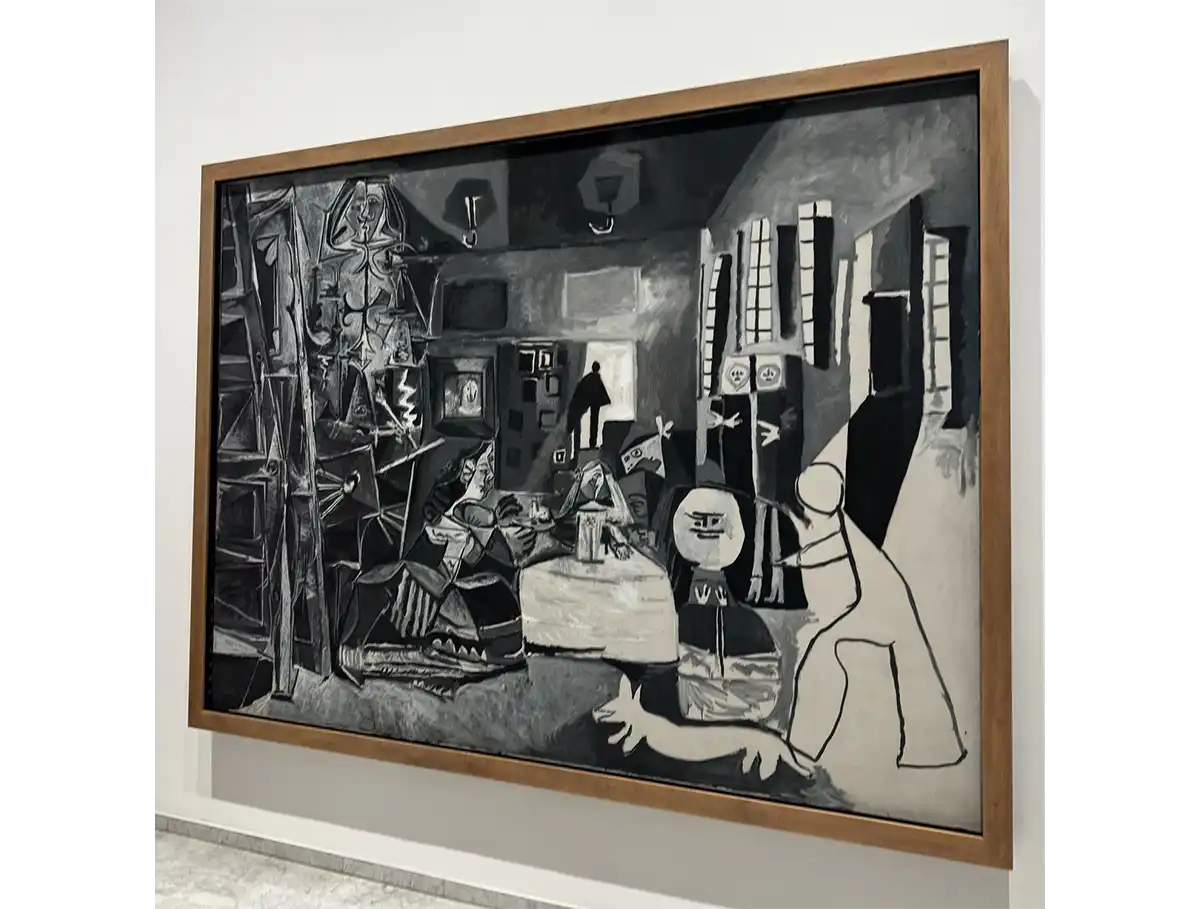
Picasso first encountered Velázquez's painting at the Prado in 1895, when he was just thirteen. More than sixty years later, between August and December 1957, he returned to it at La Californie in Cannes, producing a series of 58 works, including 45 interpretations of the same magnetic painting.
As I stood before this series, I examined the details closely, wonderstruck at how one artwork could inspire so many more. In some versions, there was the shining princess with her attendants, Velázquez to the left, the king and queen in the background, the dog and the dwarf.
In others, Picasso pulled the scene apart and concentrated on individual figures, small groups, or even the tiniest snippet of the painting. A dog became a handful of lines. The princess appeared over and over again, her face and dress taking on different shapes and colors until she was completely distorted, yet somehow still recognizable through Picasso’s signature abstract lens.
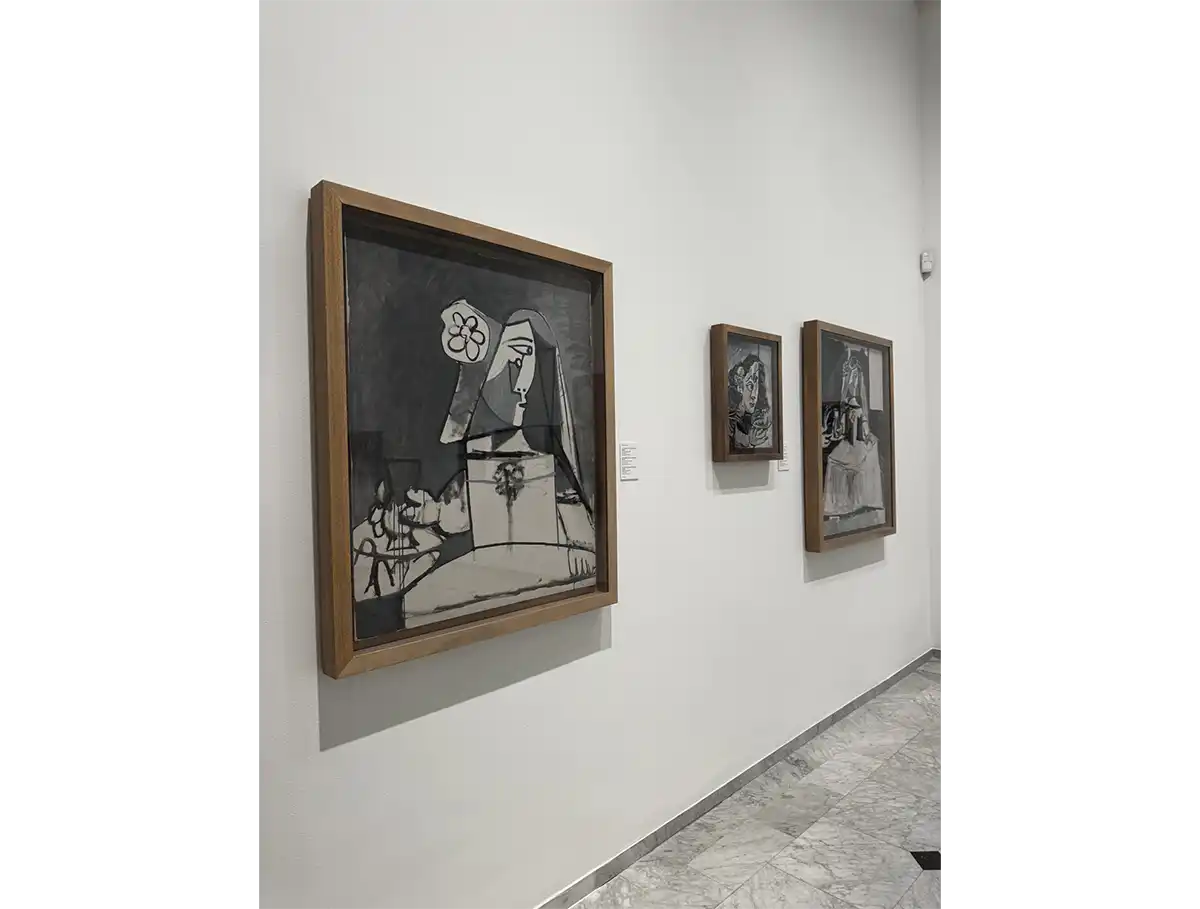
Years before making the series, Picasso had already imagined what it might mean to copy Las Meninas. His friend and longtime secretary Jaume Sabartés recalled his words in his 1952 book, L’Atelier de Picasso: “Let’s say someone set out to copy Las Meninas, in all good faith. If it were me, the moment would come when I’d think to myself: how would it be if I moved this girl a little more to the left? If the case arose, I'd do it my own way, forgetting Velázquez."
Picasso’s words looped through my mind as I finished my stroll through the endless rooms. I could still find Velázquez's scene within the series of paintings, but they were so clearly Picasso's. Through this repeated act of looking, internalizing, and painting, and painting, and painting, something familiar had become Picasso’s own.
But where is the line between copying and invention? Picasso’s series makes that line seem less fixed. One change opened up another possibility, then another, until Picasso gave the scene a different life. “Forgetting Velázquez,” to me, meant giving himself permission to follow those possibilities wherever they led. The original painting offered a world he could enter and rearrange. The source remained recognizable, but admiration had become a starting point for invention.
Today, it often feels like we’re expected to always create something new, something that’s never been done before. With information at our fingertips and inspiration always available, the pressure to produce new work, new ideas, and new formats makes it easy to abandon one thought for another.
I think the lesson from Picasso’s Las Meninas series is the reverse. He could have stopped after five interpretations, or ten, or fifteen. Instead, he made 45, returning to the whole scene or finding new subjects within it. Sometimes the way to make something new is to stay with the same thing long enough to begin seeing it differently.
A creative ritual is made of intentional and sustained acts of repetition: returning to the things that take hold of us. I would bet that all of us have a snippet or a fragment from our favorite artists, a song that we love or a movie that we keep coming back to. I’m equally sure that these fragments have inspired acts of invention and creation in our own lives, whether pieces of our own writing or art, or even just conversations that continue to make us think.
Don’t move on once you see the obvious thing. You might think, “Oh, it's been done before. I shouldn’t do it again.” You can. Picasso did it again. In fact, he did it so many times that, in some versions, the dog from Velázquez's original became just a handful of lines that somehow still evoke a dog. A new kind of dog. Picasso’s dog—reinvented, reinspired, reborn by a new hand. Get to your dog.
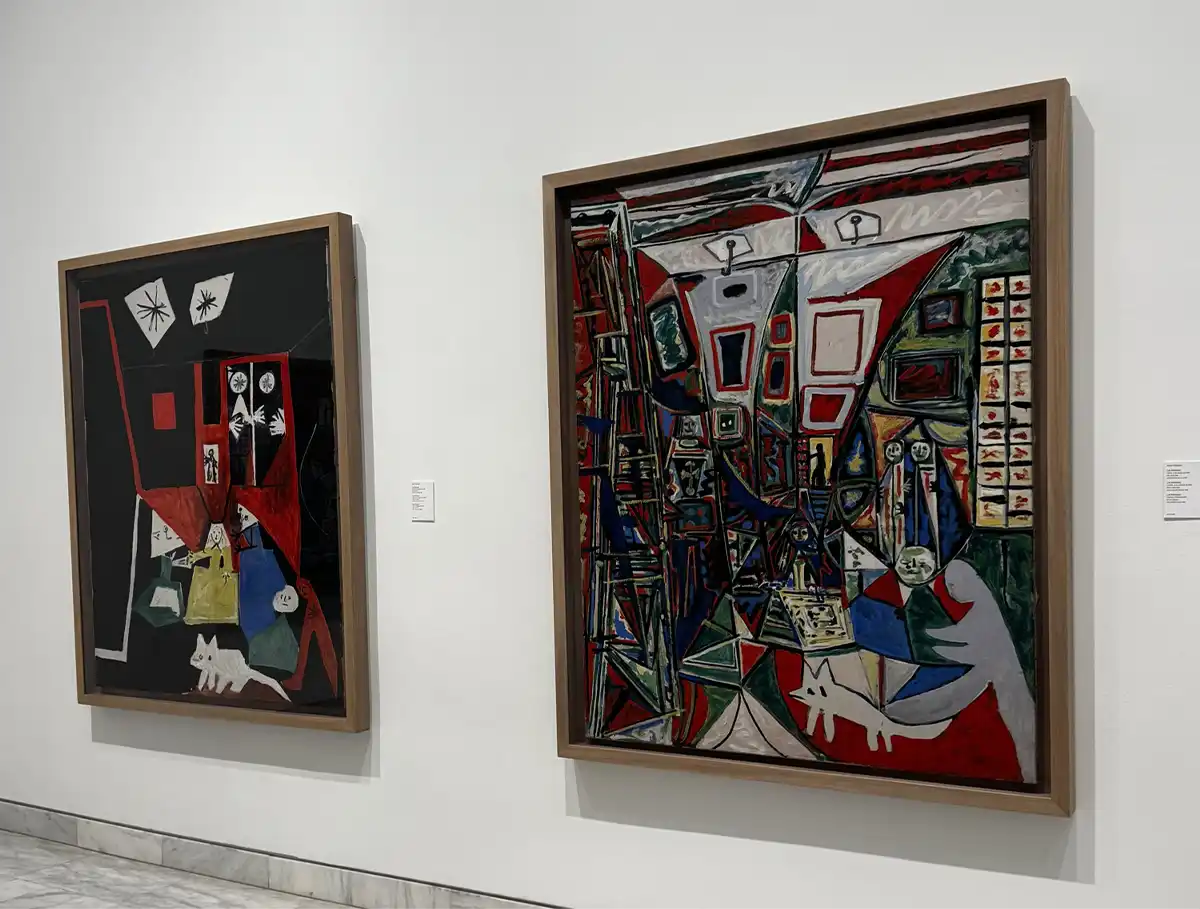
Creating is a shared act. We build on what has inspired us in the world around us, and for me, there's no better place to find that than in a museum. I love the moments when I see something that connects me to people from centuries before me.
Velázquez painted the original in the seventeenth century. Picasso returned to it three centuries later. And decades after that, we are still standing in front of both, looking again.