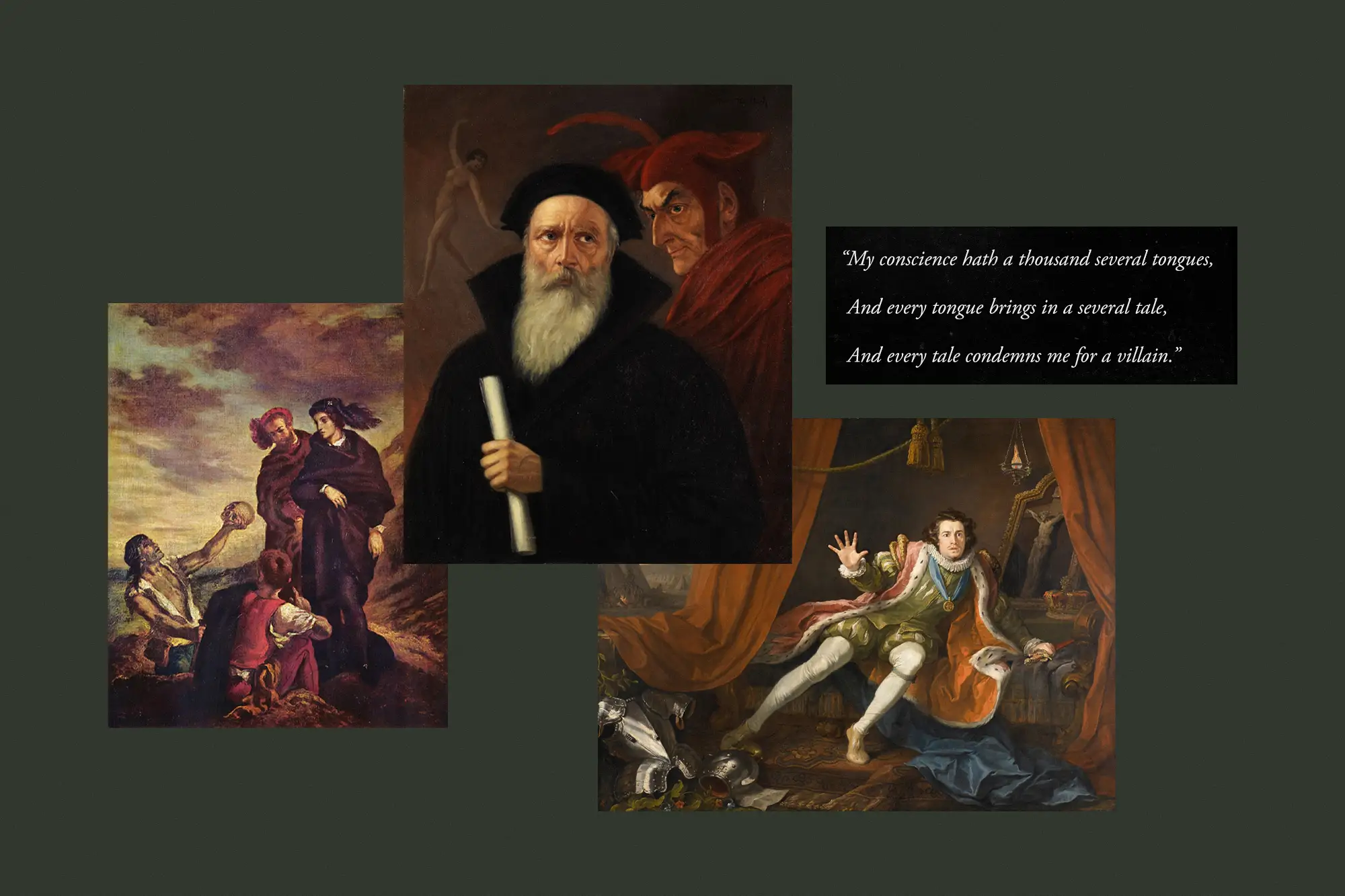
Daydreams, waking nightmares, precognitive visions—the interplay of the conscious and the unconscious has been explored by countless generations of writers. For millennia, humans have been fascinated with the revelatory potential of our dreams. Whether we keep a personal journal or seek insight from horoscopes or psychiatrists, there seems to be a collective belief that a thread of truth weaves its way into our dreams, and that perhaps only in the unconscious can our hidden guilt finally confess itself.
Dreams and morality were particularly common themes in Western literature during the Renaissance, a time characterized by cultural and intellectual upheaval. New human-centered ideologies weakened the iron control religious institutions previously held over civilization during the late Middle Ages, creating societal friction ripe for the literary landscape. During the Elizabethan era, the peak of the English Renaissance, William Shakespeare and his contemporaries often turned to dreams, the devil, and human ethics in their stories, delving deeper into these cultural anxieties. Two of Shakespeare’s plays in particular, Richard III (c. 1592–1594) and Hamlet (c. 1599–1601), address these themes in a similar fashion, yet their stories differ in the framing of their titular characters, branding Richard a villain, while Hamlet is crowned the hero. The answer to this divide may lie in an unexpected source: the German legend of Faust.
A Brief Overview of the Faust Myth
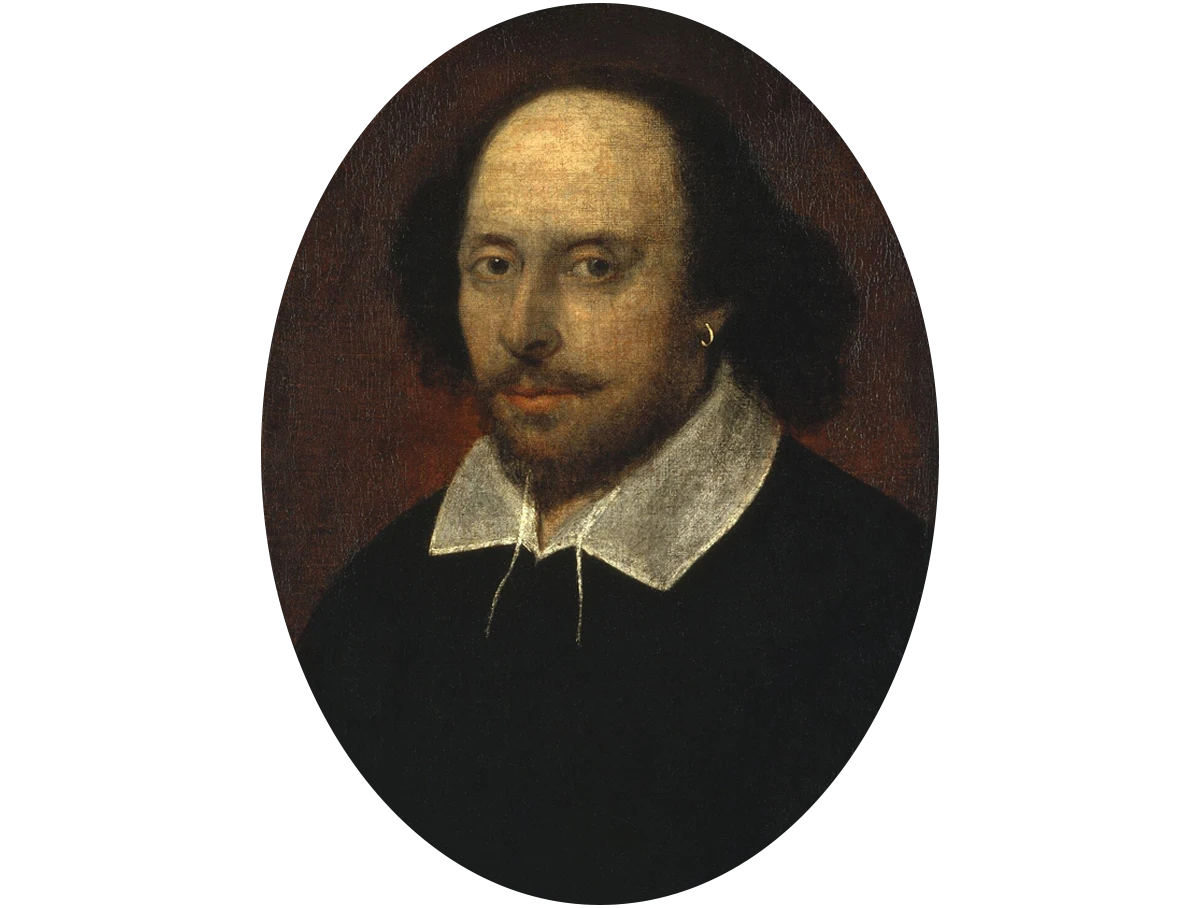
At its core, Faust is the tale of a wandering German scholar who sells his soul to the devil in exchange for success. The myth may have derived from a real figure named Johann Georg Faust, a person who lived from roughly 1480–1541, who, according to historical records, allegedly claimed to be an expert in various scientific and astrological practices. Faust was later labeled a heretic by the Church for his claims of godly power and the ability to recreate Christ’s miracles. The stories of his cons, greed, and sinfulness eventually snowballed into local legend.
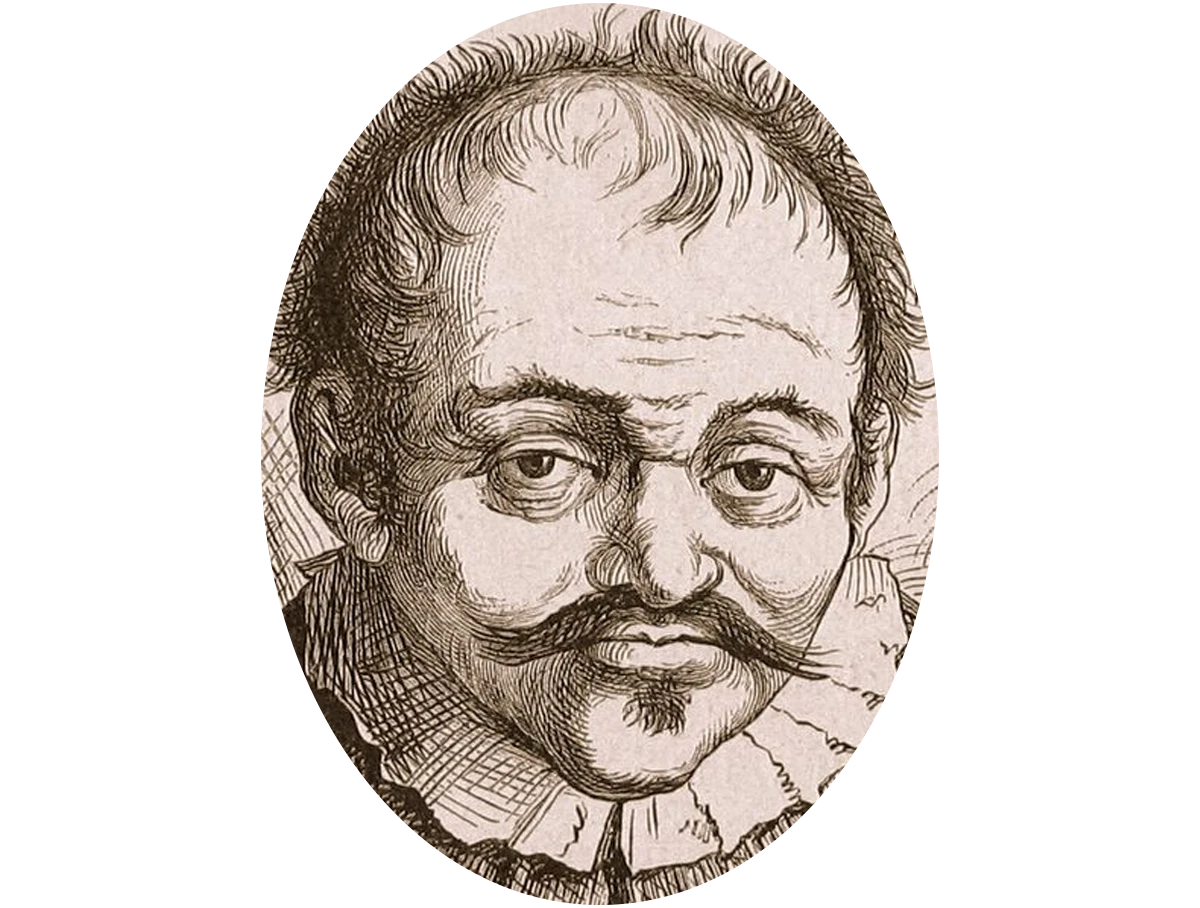
One of the earliest notable works to capture this folklore was Christopher Marlowe’s play, Dr. Faustus (c. 1592–1593). In this interpretation of the myth, the titular Faustus has a doctorate in theology, yet, bored with his scholarly pursuits, decides to study necromancy instead, the practice of conjuring dead spirits to harness limitless knowledge and prophetic powers. While practicing his summoning capabilities, Faustus is visited by Mephistopheles, a devil who works for Lucifer. Through Mephistopheles, Lucifer promises Faustus 24 years of power in exchange for his soul, which Faustus willingly signs away with his blood. Faustus wrestles with his decision throughout the years, but when offered the chance to repent, he ultimately refuses to, damning him eternally.
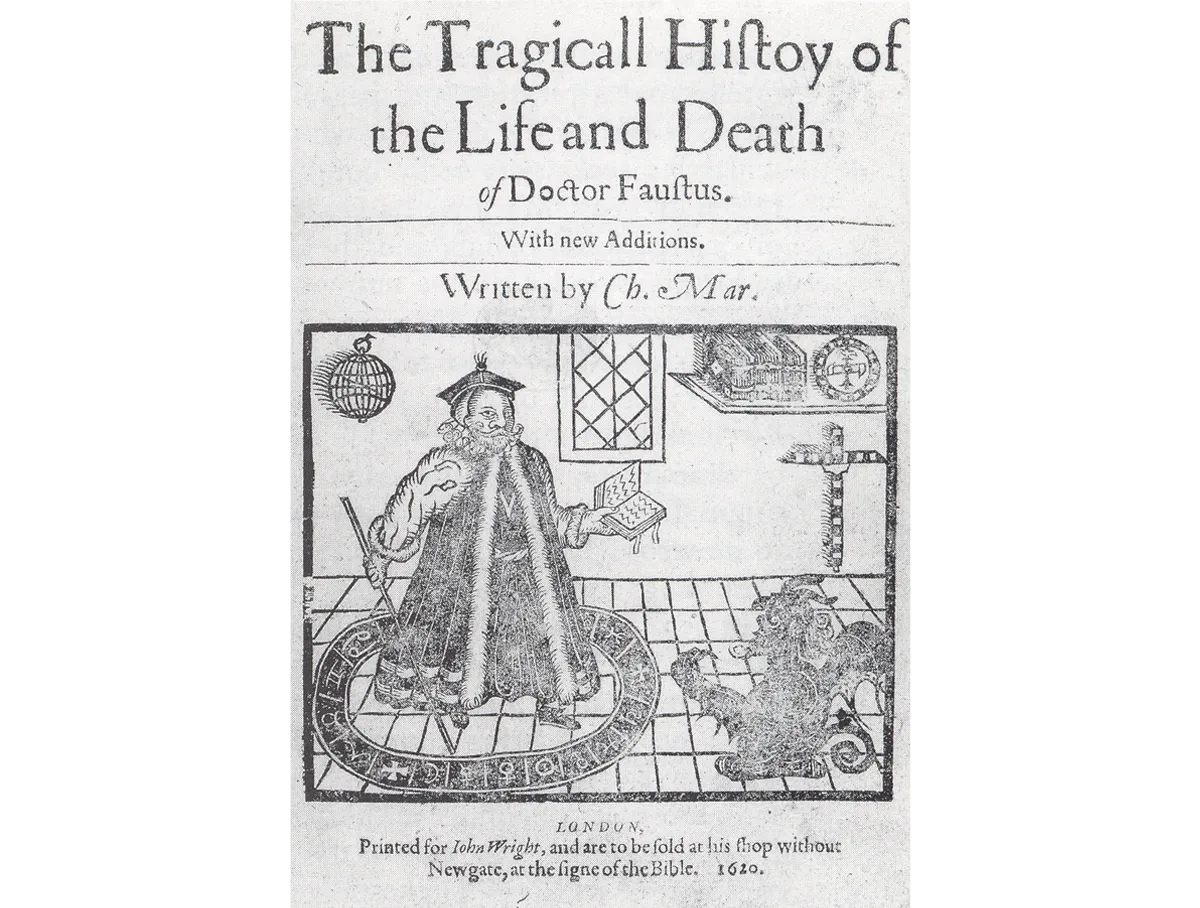
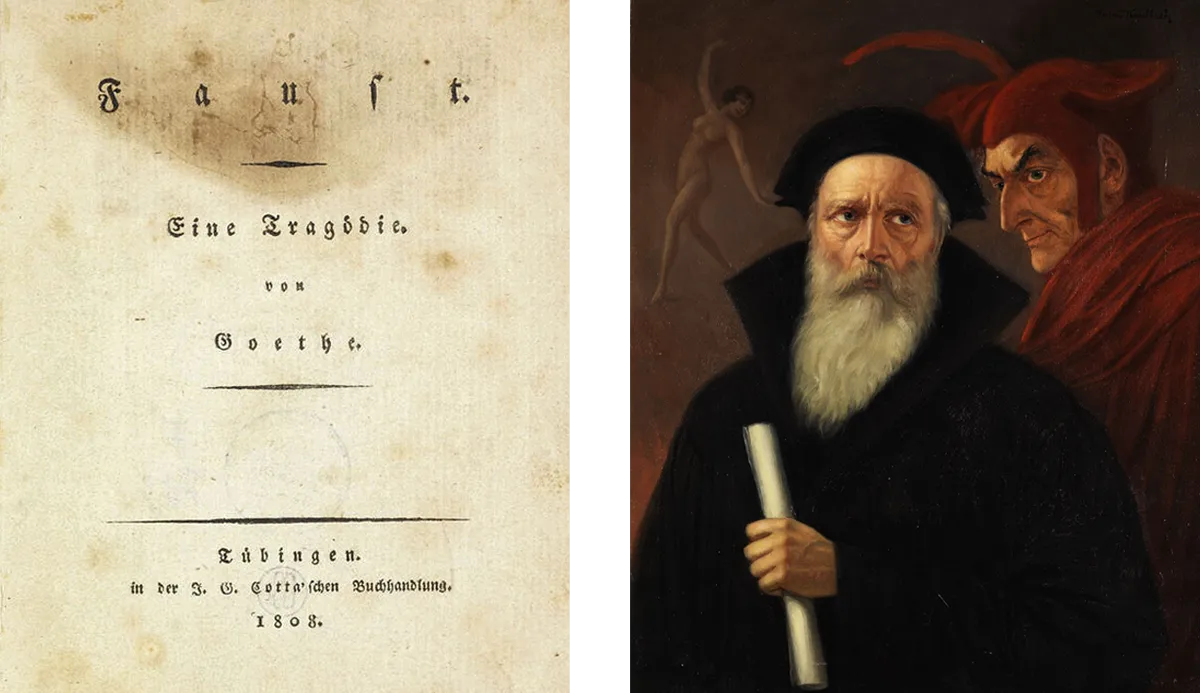
Marlowe’s Dr. Faustus does not contain any literal dreams, but the theme of subconscious thought is still present in both his hidden desires that led him to accept Lucifer’s contract and his underlying guilt, which he consciously rejects. Though the play is more metaphorical in its use of the word “dream,” Faustus’s visions of Mephistopheles and the illusions he later conjures are portrayed in the narrative as waking dreams. Later versions of the Faust legend, like Johann Wolfgang von Goethe’s Faust, a fragment of which was first published in 1790 and later completed in 1808, would more explicitly take Faust’s dealings with Mephistopheles into the realm of dreams. Faust’s story, popularized by writers like Marlowe and Goethe, is perhaps the most famous example of making pacts or deals with the devil, so much so that the motif is often referred to as a Faustian bargain.
Dreams, Cowardice, and Guilt in Richard III
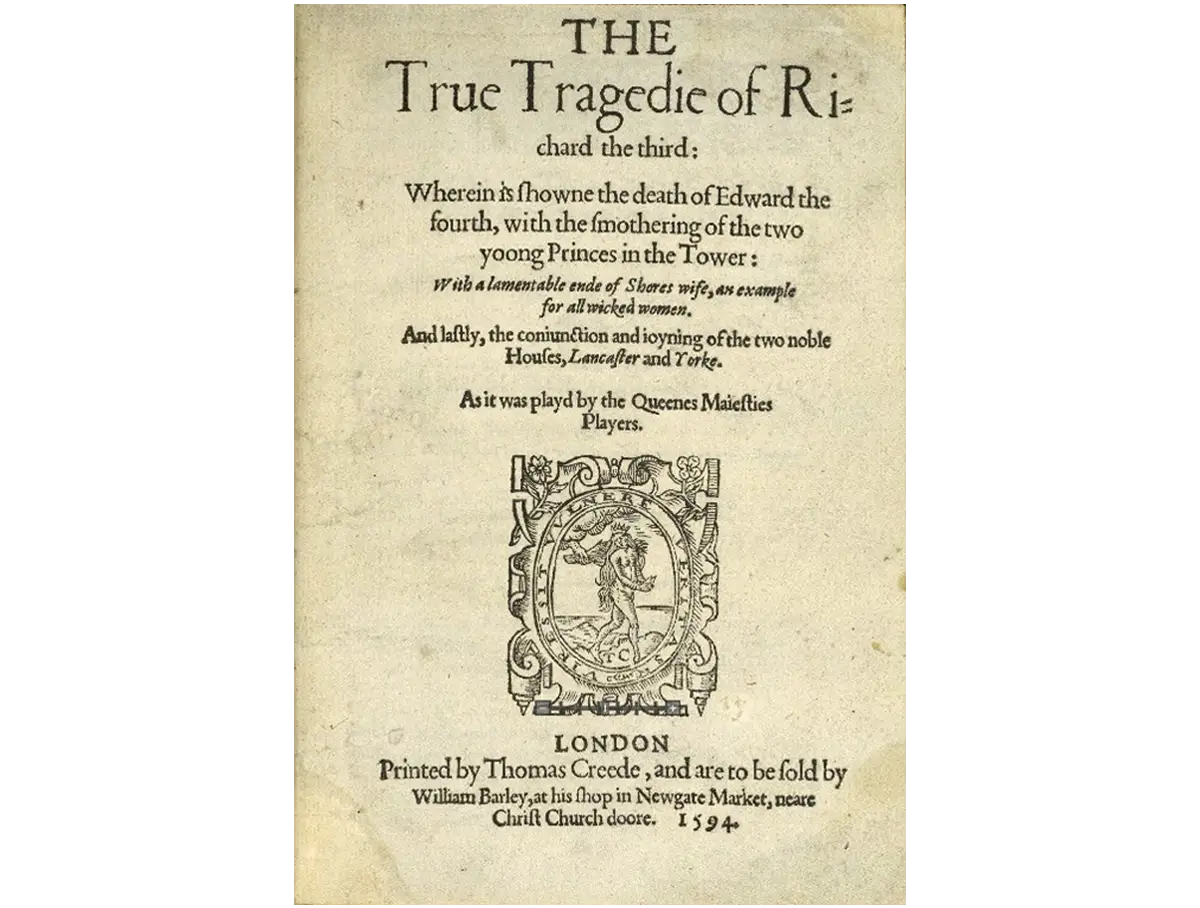
Shakespeare’s Richard III was being developed around the same time as Marlowe’s Dr. Faustus, so the similarities between their stories are likely coincidental, but the comparison is still fascinating. While Richard is not visited by a literal devil as Faustus was, his evil desire for power still draws him to commit multiple murders in his quest to take the throne. Murder, a capital sin, ensures the perpetrator’s fate in hell, making Richard’s willingness to commit such a grave act akin to Faustus’s bargain with Mephistopheles.
One key difference from Marlowe’s work is that dreams do exist in Richard III, and they are plentiful. The first to dream is the Duke of Clarence, who, in Act I, recounts a nightmare in which Richard pushed him overboard, he drowned in the sea, and his soul was tormented in hell for his war crimes. Later, Lord Stanley, a double agent secretly betraying Richard, dreams that a boar, Richard’s symbol, tears off his helmet. In sleep, both men are haunted by their subconscious fears of Richard and, driven by their belief in the prophetic capabilities of their dreams, try to avoid these fates. Clarence is the most overcome of the two, lamenting his past transgressions and begging God to “execute thy wrath in me alone” and “spare my guiltless wife and my poor children.”
In direct opposition to Clarence’s atonement, Richard, like Faustus, rejects his subconscious guilt. In one of the last scenes of the play, Richard falls asleep on the night before the final battle against his adversary, Richmond. While sleeping, Richard is haunted by the ghosts of all his murder victims, who wish death and destruction upon him. When Richard wakes, he is consumed with fear, delivering a frenetic monologue wherein he admits his guilt for the first time.
“My conscience hath a thousand several tongues,
And every tongue brings in a several tale,
And every tale condemns me for a villain.”
— William Shakespeare, Richard III, Act V, scene iii
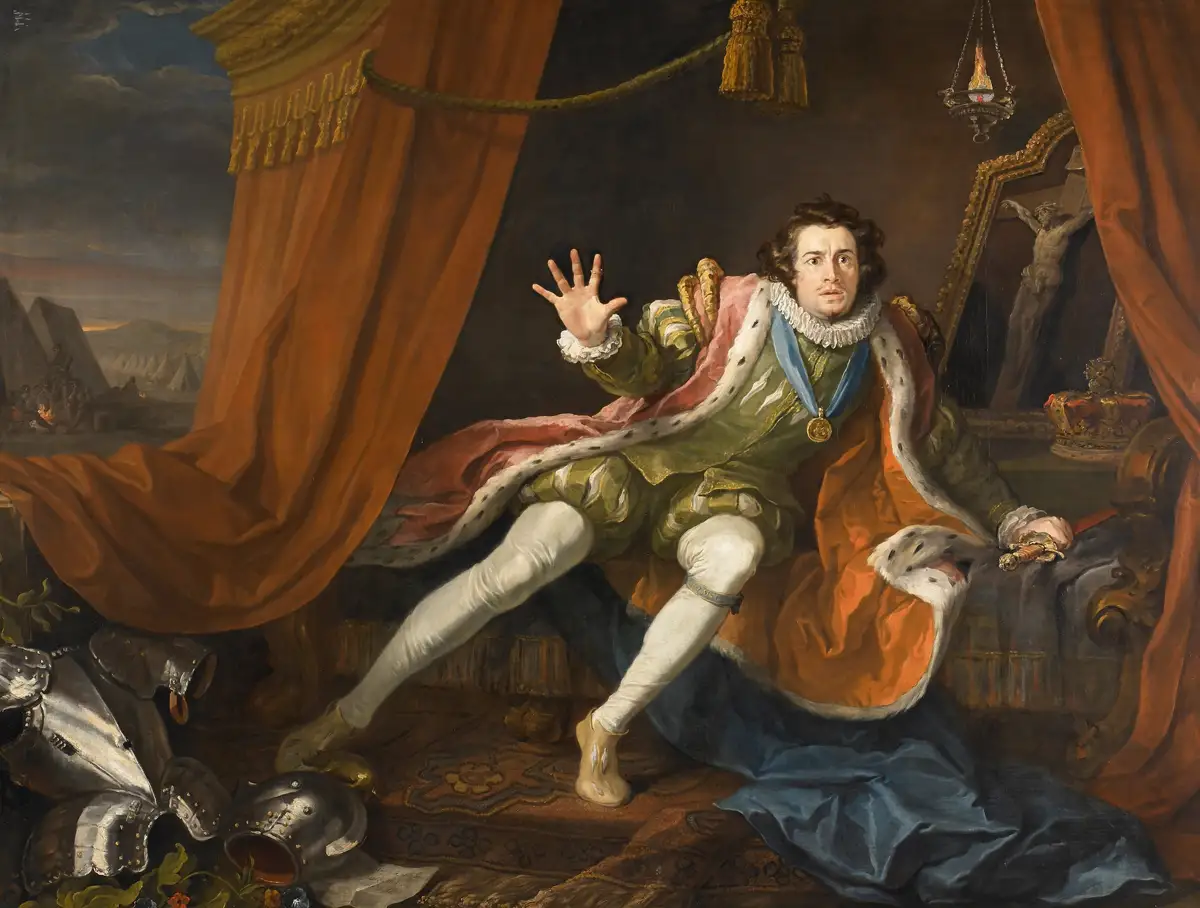
However, like Marlowe’s Faustus, Richard refuses to repent, deciding that his dreams are merely “babbling.” Though his unconscious mind releases the guilt he has suppressed, the waking Richard is unable to confront his villainy, and instead coldly asserts, “Conscience is but a word that cowards use.”
The Dreamy Deaths and Dubious Devils of Hamlet
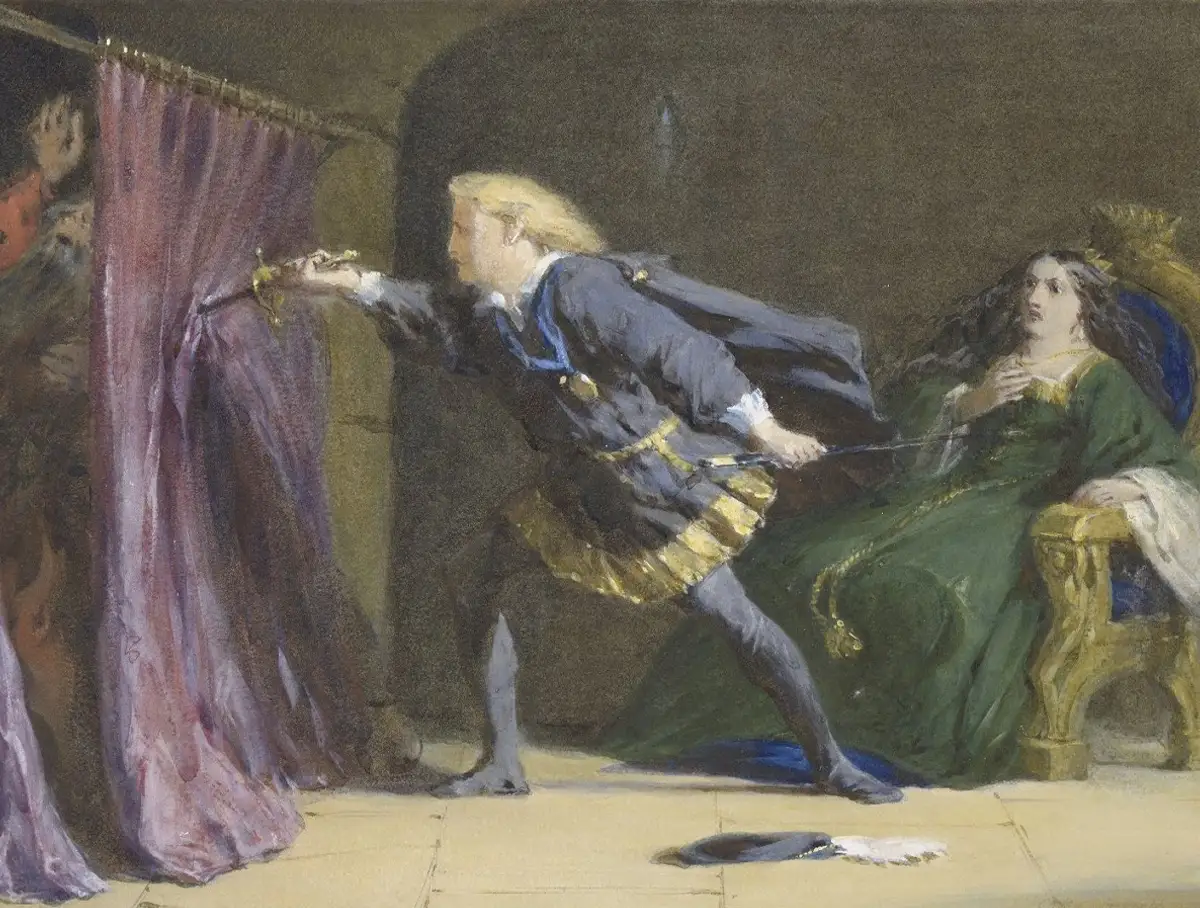
While the comparisons to Faust’s tale in Richard III are merely coincidental, in Hamlet, the references are explicit. Some primary examples of this are that Hamlet goes to school in Wittenberg, Germany, the setting of Marlowe’s Dr. Faustus, and the Ghost of Hamlet’s father is sometimes referred to as a devil. When Hamlet first encounters the Ghost, the apparition tells him that he was murdered by his brother, Claudius, and orders Hamlet to take revenge. Hamlet eagerly accepts the Ghost’s bidding, again hearkening back to the Faustian bargain, yet Hamlet is wiser to his own actions than either Faust or Richard. Before he is certain of his uncle’s guilt, Hamlet says to the audience, “The spirit that I have seen / May be a devil, and the devil hath power / T’ assume a pleasing shape.” Hamlet recognizes that his visions of the Ghost may be tempting illusions created by Satan to lure him towards his darkest desires—in this case, his subconscious wish to kill his hateful uncle.
Death is the strongest theme in Hamlet, due to the play’s central plot revolving around grief. In Hamlet’s most famous speech, he likens death to a long, extended sleep, one in which we never wake and are tortured by horrific dreams. Hamlet reflects that this innate terror of what terrible truths will be revealed in our unconscious minds is what keeps men like himself from succumbing to suicidal ideation. He dryly remarks, “Thus conscience does make cowards of us all,” a line that directly parallels Richard’s own thoughts on dreams and subconscious anxieties.
Though Hamlet contains multiple references and parallels to both the Faust legend and Richard III, Hamlet achieves hero status over his counterparts due to one significant difference in his story: his ability to confront his fears and atone for his sins. In the final scenes of the play, Hamlet confides in Horatio that he regrets the destruction and suffering he has caused on his quest for vengeance, and, most importantly, assures Horatio that he no longer fears death. By consciously making peace with his subconscious anxieties, Hamlet is able to achieve salvation in a way that Faust and Richard never could.
Why We Should Still Fear the Faustian Bargain
While these classical stories are deservedly praised, their supernatural displays of morality may not seem applicable to a modern, secular society. However, the underlying lesson within these narratives still rings devastatingly true. In the last few years, modern society has been bombarded with technology in a way we never predicted, particularly in terms of the pervasiveness of generative AI. This new product promises sinful power—greed, pride, gluttony—to a contemporary audience in a manner that chillingly evokes the temptations of Mephistopheles. And as the artisans whose work was stolen to feed these endless algorithms will tell you, the price for this optimization is humanity. As before, the price for power is your soul.
It is easy sometimes—encouraged, even—to ignore these anxieties, to numb ourselves to the destruction such thoughtless creation will cause. But as the Faust myth, Hamlet, and Richard III will tell you, the inner mind always eventually comes to the surface. It’s the monster under the bed; it’s the skeleton in the closet. And, one way or another, it’s coming to find you.